


Fort Lauderdale, Florida. May 1999.
Wayne Huizenga is chairing the annual meeting of AutoNation. He built Waste Management. He built Blockbuster. Two years earlier his third company traded at 44 dollars and he was the most admired dealmaker in America. Now he owns the largest car retailer on earth, more than 400 franchises, two rental car companies and a chain of used car megastores that cost 25 million dollars each to build. The stock has lost more than half its value.
A retiree from Boca Raton stands up. Her name is Doris Zimmeth.
“What have you done for me lately, Wayne?”
That year Huizenga told Bloomberg, “It ain’t the video business; that much I’ve learned.” Leon Cooperman, who had sold his 2.9 million shares the summer before, needed fewer words. “He has overpromised and underdelivered for years.”
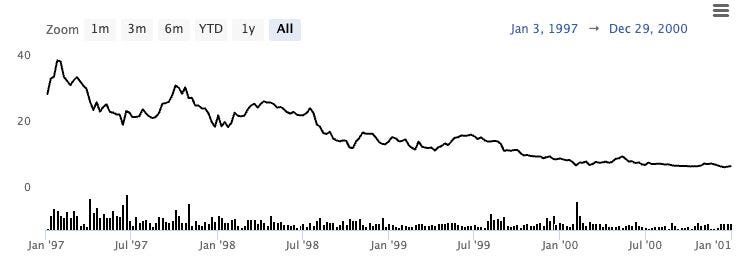
The idea was to earn money on the same car three times. A rental company buys it new. A year later it goes to a used car megastore. The dealerships sell the new ones and take the trade-ins. Huizenga bought all three kinds of business and paid for almost everything with new AutoNation stock. By the end of 1998 there were 467 million shares.
Then the rental cars arrived at the megastores. They were plain and cheap and nobody wanted them. The megastores lost money from the day they opened. And when the share price fell, the stock stopped working as money. The company put that in writing, in its own annual report.
In light of the recent declines in the price of our common stock, we may not be able to issue shares of common stock to complete dealership acquisitions.
On 24 September 1999 Huizenga gave up the chief executive job. The man who took it had never run a public company.
The man who sold everything
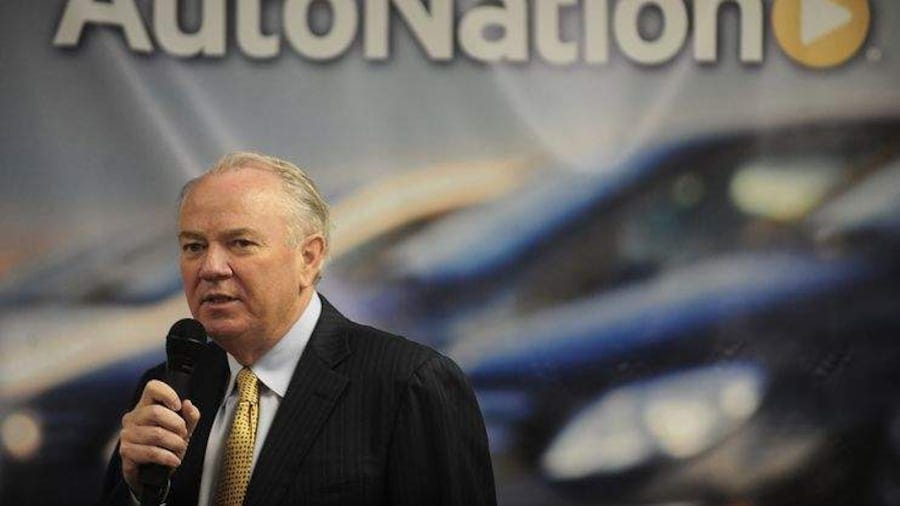
Mike Jackson came from Mercedes-Benz USA. Before that he had spent eleven years running dealerships in Maryland, and there he learned where a dealer earns his money. The new car in the showroom brings the customer through the door. The profit comes later, from the workshop, the parts counter, the loan, and the same car when it returns three years later as a trade-in.
Eleven weeks into the job he closed 23 megastores and took a 444 million dollar charge. The next summer he spun off the rental business, which was bankrupt within a year and a half. He sold the billboard company. He sold the headquarters building and rented it back. By the end of 2000, a conglomerate that had owned garbage trucks, burglar alarms, rental fleets and billboards owned car dealerships and nothing else.
The cash that came out of all this went to one place. The buyback had started under Huizenga in 1998, with the money from selling the garbage business. Jackson made it the only thing AutoNation did with its cash. There was never a dividend and never a schedule.
In 2003 the company retired 39 million shares. In 2006 it offered to buy 50 million shares in one go at 23 dollars, 1.15 billion dollars in total. Eddie Lampert owned 29 percent of AutoNation by then, and he offered every share he had. The company could take only part of them.
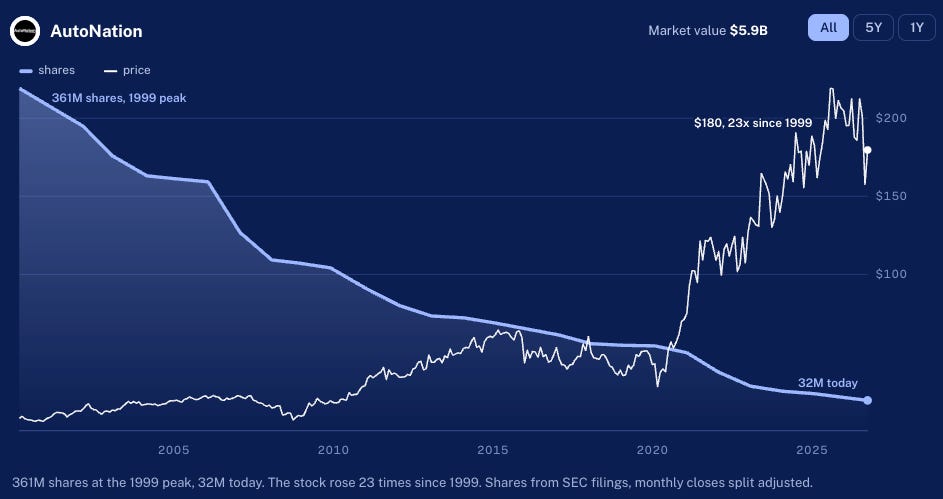
Between 2000 and 2019 Jackson spent about 7.6 billion dollars buying back 355 million shares.
All of AutoNation is worth 5.9 billion dollars today.
He paid more for the shares he destroyed than the whole company now costs.
In the third quarter of 2008 AutoNation wrote off 1.6 billion dollars of goodwill and reported a loss of 1.41 billion. Americans had been buying 16 million cars a year. Now they bought 10 million. Chrysler and General Motors went bankrupt, and eleven AutoNation stores closed with them. The stock touched 3 dollars and 97 cents.
Plenty of companies sold new shares at prices like that to stay alive. AutoNation did not issue a single one. It stopped the buyback, paid back 517 million dollars of debt and waited. In the last quarter of 2009 it was buying again, at 17 dollars. In 2010 it bought 26 million shares at 19. In 2011, 17 million at 34.
Lampert had been a shareholder since January 2000. By 2010 he owned more than half the company. Bill Gates arrived in July 2008 through Cascade, his investment firm, while the stock traded between 7 and 22 dollars, and bought about five and a half percent. Cascade added 1.74 million shares in 2011 and 61,884 more in 2012. Today it owns 21 percent of AutoNation. Gates got most of the way there by sitting still while the company bought out everyone around him.
Ten thousand dollars put into AutoNation on the last trading day of 1999, at 9 dollars and 25 cents a share, is worth about 199,000 dollars today. The same ten thousand in the S&P 500, with every dividend reinvested, is worth about 82,000. AutoNation has never paid a dividend.
The bank inside the dealer
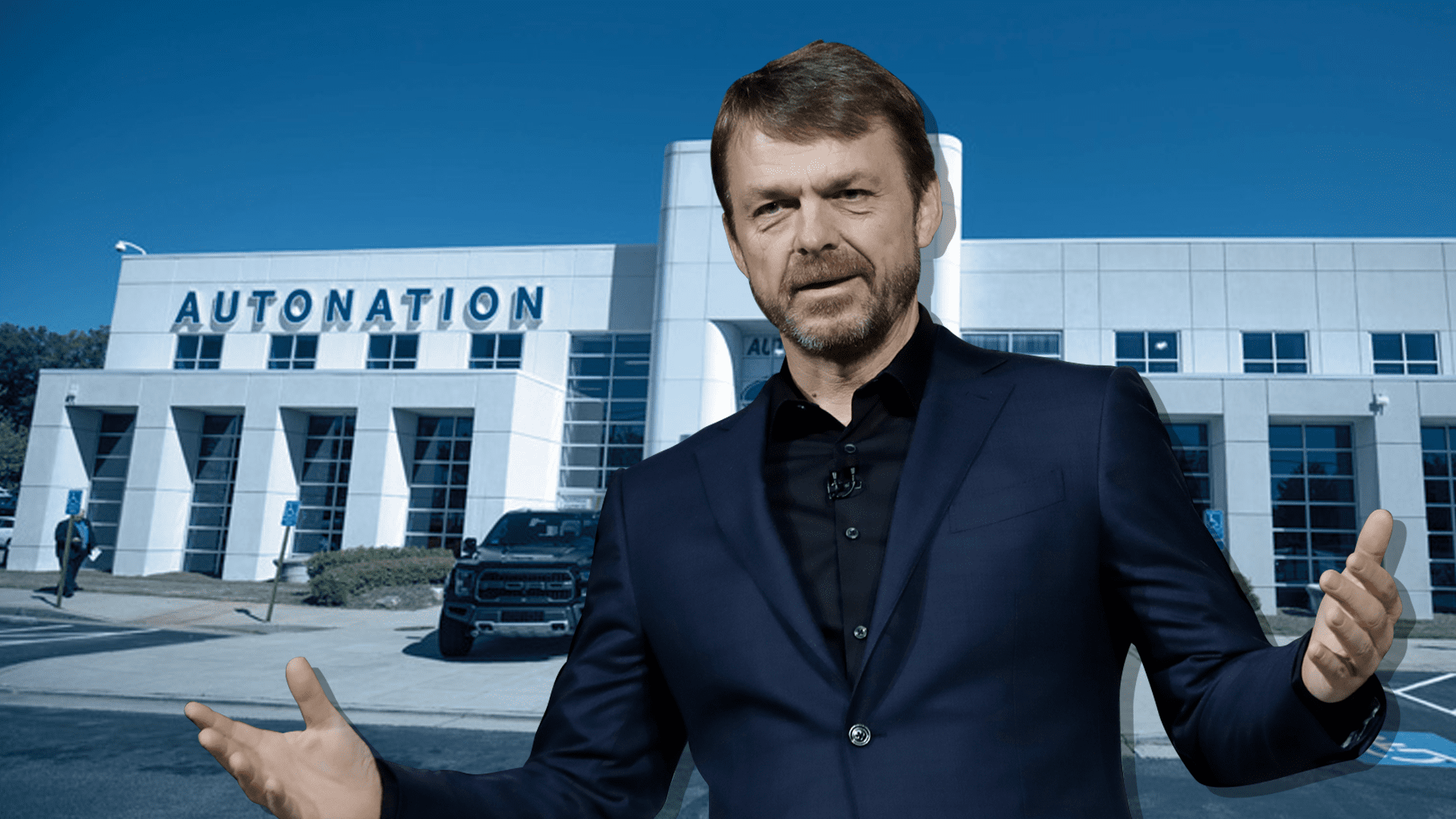
In November 2021 Jackson stepped aside and Mike Manley, who had run Fiat Chrysler, took over. A year later Manley paid 83 million dollars for a small lender called CIG Financial and started lending AutoNation’s money to AutoNation’s customers. The lender is now called AutoNation Finance. It holds 2.86 billion dollars of car loans, and in the third quarter it made 15 million dollars of profit, ten times what it made a year earlier.
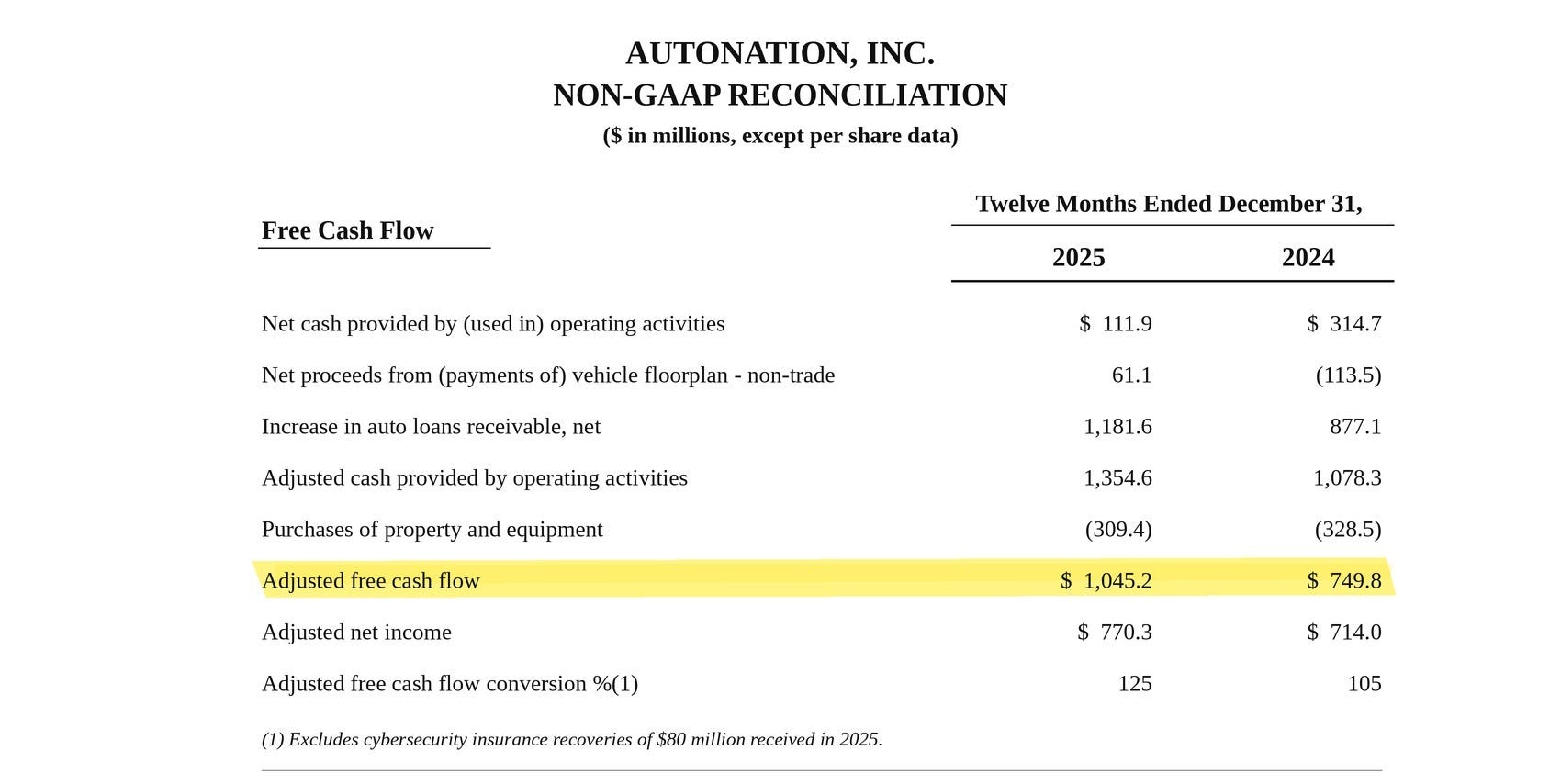
A year ago I opened AutoNation’s cash flow statement and closed it again. Cash from operations, 112 million dollars. Capital spending, 309 million. I saw a company burning 200 million a year, carrying billions of debt and still buying back stock. I did what I always do when I see debt. I got scared and left.
The line I skipped was one row lower. Increase in auto loans receivable, 1.18 billion dollars.
When AutoNation lends a customer 30,000 dollars to buy a car, the cash flow statement shows 30,000 dollars leaving the business, as if the company had paid a bill. But that money is not gone. It comes back over five years, with interest. And most of it is not even AutoNation’s money. The company borrows against the loans, 2.6 billion dollars so far, from lenders who can take the loans if things go wrong and nothing else.
Put the loans back where they belong and the dealerships produced 1.05 billion dollars of free cash last year. I had read 112 million. AutoNation prints this calculation in every quarterly press release. I had seen it and not believed it, because I did not understand why a car dealer was allowed to count like a bank.
CarMax has counted like this for twenty years, so we know what a bad year looks like. In 2009 the profit of its finance arm fell 82 percent. It did not lose money, and a year later the profit was back. AutoNation loses about 1.8 percent of its loans a year and has set aside 4 percent. The money that could really disappear, the slice of the loan book not covered by that ring-fenced borrowing, is about 270 million dollars.
Then there is the number that scared me, 10.9 billion dollars of debt. Four billion of it is floorplan, the loan on the cars standing on the lot, and it is repaid the day each car is sold. Another 2.6 billion is the borrowing against the customer loans. What remains, 4.3 billion, is debt in the ordinary sense. AutoNation earns about 1.6 billion dollars a year before interest, taxes and depreciation, so the debt is 2.7 times that. The banks draw their line at 3.75. To cross it, earnings would have to fall 28 percent. From 2007 to 2009 they fell 24.
AutoNation would survive another 2008. It would have less room than last time, and the buyback would have to stop the day earnings turned.
The rating agencies give it less room than the banks. AutoNation is rated BBB minus, one notch above junk, and Fitch has said it will cut if debt stays above 3.3 times. Group 1 and Asbury carry similar debt, and both have stopped buying back stock until they are below 3. AutoNation added a billion dollars to its buyback authorization last month. Since 2022, 88 cents of every dollar of free cash has gone into its own shares.
Alluvium Asset Management owns the stock. This month it wrote about the buyback and the new lending business.
“With the consequent increase of debt, and introduction of lending risks, we are not so sure.”
The loan book is four years old and has never been through a recession, so nobody knows how it behaves in one. If the rating is cut, two of the bonds have coupons that step up on their own. If the economy turns, the buyback goes to zero, as it did in 2008 and in the spring of 2020, and the share count stops falling for a year or two.
What Doris owns
The stock closed at 184 dollars on 6 November. There are 32.3 million shares left. The company earns about a billion dollars of free cash a year and spends nearly all of it on its own stock. In the first nine months of this year it bought 3.1 million shares at an average price of 199 dollars. On 2 November Mike Manley bought a million dollars of that stock at 184, with his own money.
On the morning Doris Zimmeth stood up, there were 453 million shares. If she kept hers, she holds exactly as many today as she did then. Of the rest, 421 million no longer exist. Her piece of every dealership, every workshop and every car loan is fourteen times larger than it was that morning, and she has not paid a cent for it.
She asked Wayne Huizenga what he had done for her lately, and he had no answer. Four months later he handed the company to a car dealer from Maryland.
Every year since, AutoNation has come back to Doris with a question of its own. Will you sell us your shares?
In 2000 it offered 7 dollars. In 2003 it offered 15. In 2006 it offered 23. In 2009, in the worst car market since the war, it offered 17. In 2011 it offered 34. In 2015 it offered 60.
This year it is offering 199.
I hope she is still saying no.
Cheers, Sandro
While I was finishing this post, new filings landed. CFO Thomas Szlosek bought again on 5 and 6 November, another 200,000 dollars. Director Jacqueline Travisano bought 98,000 dollars the same week.
Four insiders, ten purchases, 1.73 million dollars in seven days. Nobody sold. Members now get an email the day an insider buys at a company they follow.
Next.
Mike Manley takes the driving test. What he did at Fiat Chrysler, what he is paid, what he owns, and whether the man who built a bank inside a car dealer is the next Jackson or the next Huizenga. Part 3 is for members.

P.S. The price goes up on 1 January.
Cannibal Stocks costs $169 a year today. From 1 January new members pay $30 more. Join before then and you keep $169 for as long as you stay.
What members get:
My portfolio, real money. Every buy and every sale on the day, with the reason.
New: what each company paid for its own shares last quarter, and how much is left in its buyback program.
New: what the superinvestors bought and sold among the cannibals, every quarter.
New: an email the day an insider buys at a company you follow.
Buyback Radar for Japan, Europe, Canada and China. 400+ cannibal stocks outside America.
Part 3 of AutoNation, and every deep dive after it.
Already a member? Nothing changes for you.
Like if you enjoyed it. Restack before Manley takes the wheel. If we hit a tree, I’ll call it a soft landing and raise my price target. 😂