


This is not a stock pitch. This is an autopsy.
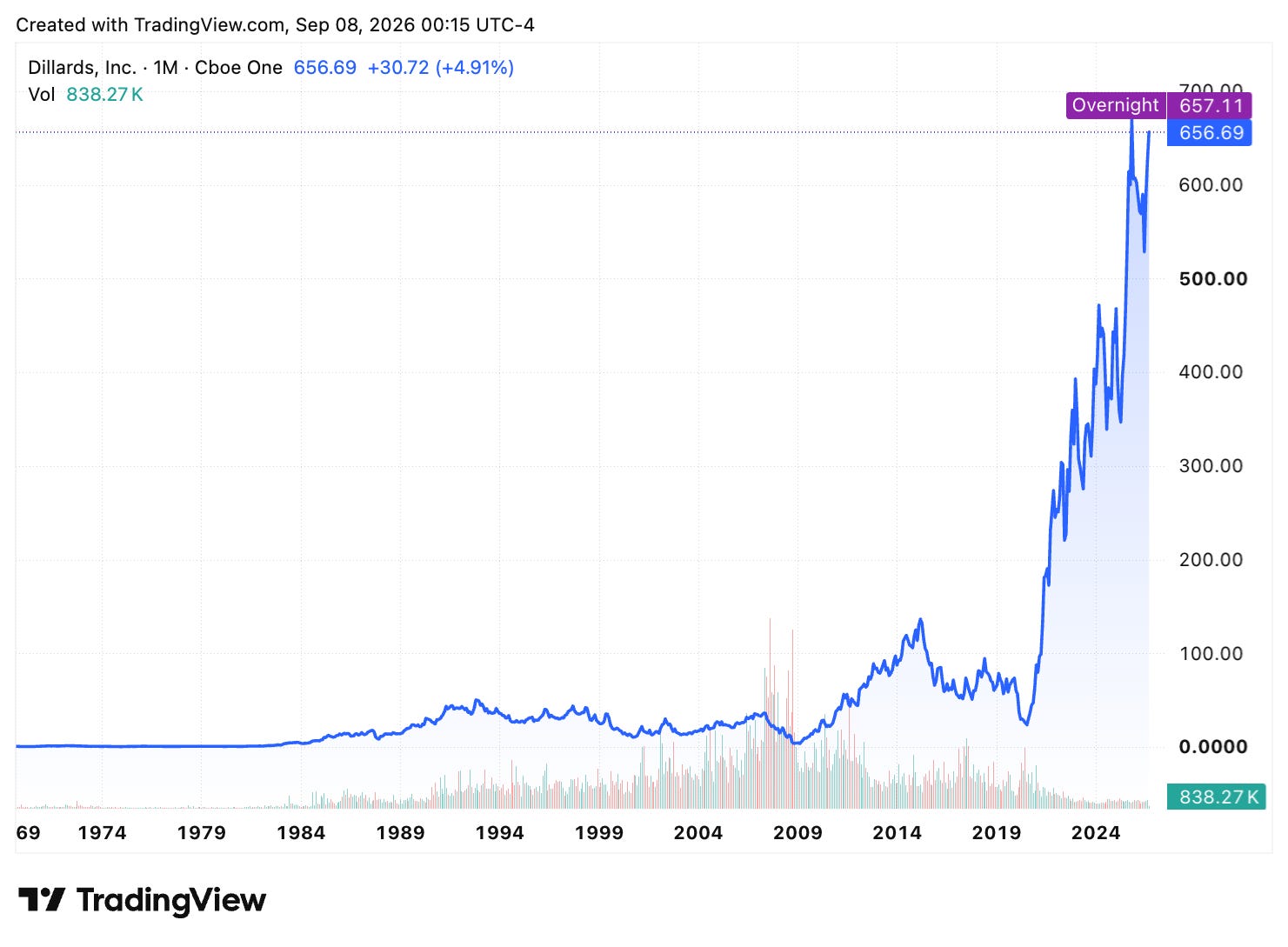
Dillard’s is a department store chain. Department stores are supposed to be dead. This one went from $50 to $600 and paid a $30 special dividend on the way. I want to know what the hell happened here.
In 1938 a man named William Dillard borrowed $8,000 from his father and opened a store in Nashville, Arkansas.
Not Nashville, Tennessee. Nashville, Arkansas. Population around two thousand.
He had an accounting degree and a master’s from Columbia. He had done the Sears training programme. He knew exactly what he was doing, and he did it for the next sixty four years. He bought failing department stores across the South one at a time, fixed them, and kept the buildings. When a journalist asked him about his hobbies late in life he said he had none. His wife said he would not live long if he retired. He worked into his eighties and died in 2002 at eighty seven, still going to the office.
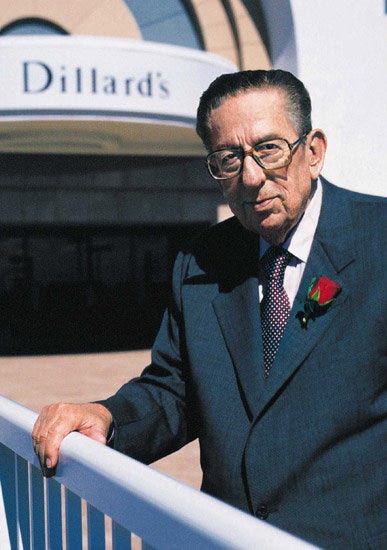
His son has been CEO since 1998. Another son is president. A third son and a daughter are executive vice presidents. Grandchildren are vice presidents. The family holds a class of shares that elects two thirds of the board, so none of this is going to change.
Wall Street has a nickname for the company. Dullard’s.
Three analysts cover it. Two say Sell.
What the company actually is
Dillard’s runs 271 department stores in 30 states. Malls in Texas, Florida, Arizona, the Carolinas. Ladies’ apparel, shoes, cosmetics, a home department. The kind of store your mother took you to for a suit.
It does three unusual things.
It owns its stores. 248 of the 271 outright. The land, the building, the parking lot. No landlord. When the pandemic shut every store for two months, nobody could send a rent bill.
It does not talk. No earnings calls. Ever. The press release each quarter is a few paragraphs and a table. The CEO’s entire commentary last year was two sentences. There are no transcripts to read because there is nothing to transcribe.
And its employees own it. The staff retirement plan holds about forty percent of the public shares. The family holds the rest of the control. When the company declares a dividend, the press release says the majority of its shareholders are its own associates.
Keep that last point. It is why the rest of this works.
Fifteen years, three numbers
But what happened between fiscal 2010 and fiscal 2025?
Revenue went from $6.12 billion to $6.47 billion. Up six percent. In fifteen years. Inflation alone was more than that. In real terms this company shrank. Net income went from $180 million to $570 million. Up about three times. Most of that came after Covid, when the company cut store hours, ran with fewer staff, stopped discounting, and found that its gross margin went from 33 percent to 41 percent and stayed there.
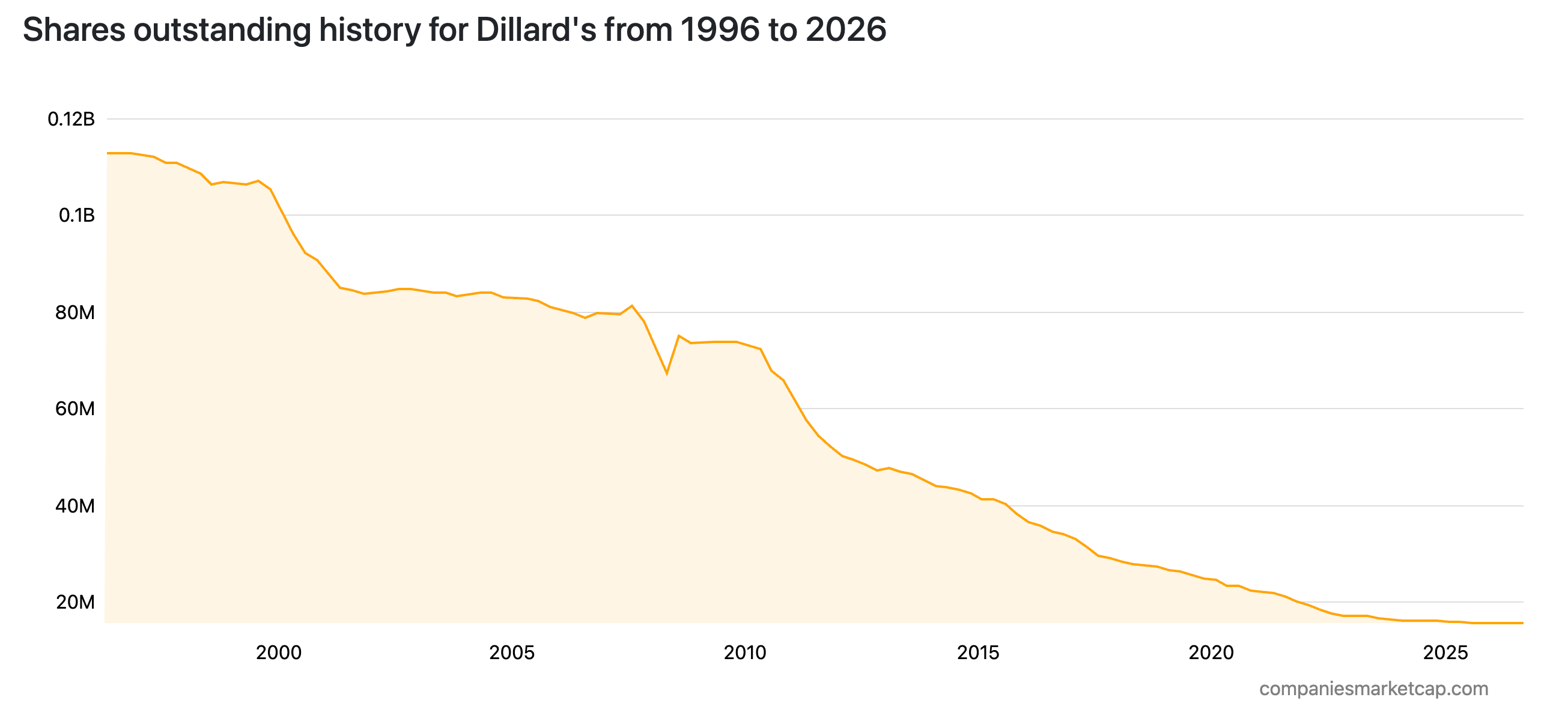
Shares outstanding went from 74 million to 15.6 million. Down seventy nine percent.
Now the result.
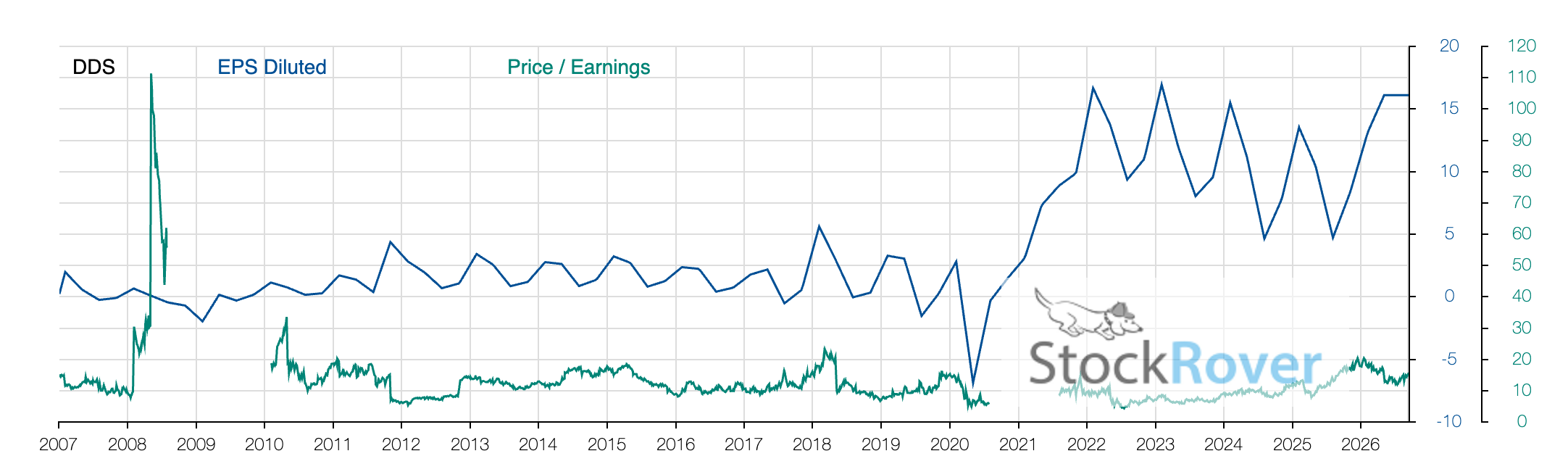
Earnings per share went from $2.67 to $36.42. Thirteen and a half times. The stock went from $28, the average price the company paid for its own shares that year, to $657 today. Twenty three times. It touched $730 last December.
Revenue up six percent. Stock up twenty three times.
Nothing about the shirts explains that. Something else happened.
Where the rest came from
Profit tripled. If the share count had stayed at 74 million, earnings per share would have tripled too. From $2.67 to about $8.50. At today’s multiple that is a $150 stock.
The stock is $657.
The difference is the share count. The company took its cash every year and bought its own shares and destroyed them. The profit stayed the same size. The number of slices it was cut into got smaller. Each slice got bigger.
That is all a buyback is. Same pie. Fewer people at the table.
Say you owned a thousand shares in January 2010 and did nothing for fifteen years. Never bought. Never sold. Never read a filing.
In 2010 you owned one thousand out of 74 million. Today you own one thousand out of 15.6 million. Your share of Dillard’s rose four point seven times while you slept. The company bought out roughly four of every five other shareholders, at whatever price they were willing to leave at, and handed you their piece.
In 2010 and 2011 alone, Dillard’s bought 26 million shares. More shares than exist in the entire company today. It paid $905 million for them. About $35 a share.
At today’s price, 26 million shares would be worth $16 billion. They cannot be worth that, because they no longer exist. That value did not disappear. It moved. Into the 15.6 million shares that are left.
That is where the $657 came from. Not from selling more. From owning more of what was already being sold.
The people who noticed
In October 2020 the stock was $50. Malls were half empty. Department stores were filing for bankruptcy one after another. JCPenney in May. Neiman Marcus in May. Stage Stores in May. Lord & Taylor in August.
That month a man named Ted Weschler filed a form with the SEC. Weschler is one of the two people Warren Buffett trusts to run Berkshire’s money. This was not Berkshire’s money. It was his own. He had bought a million shares of an Arkansas department store, about six percent of the company, with his personal savings, in the middle of the retail apocalypse.
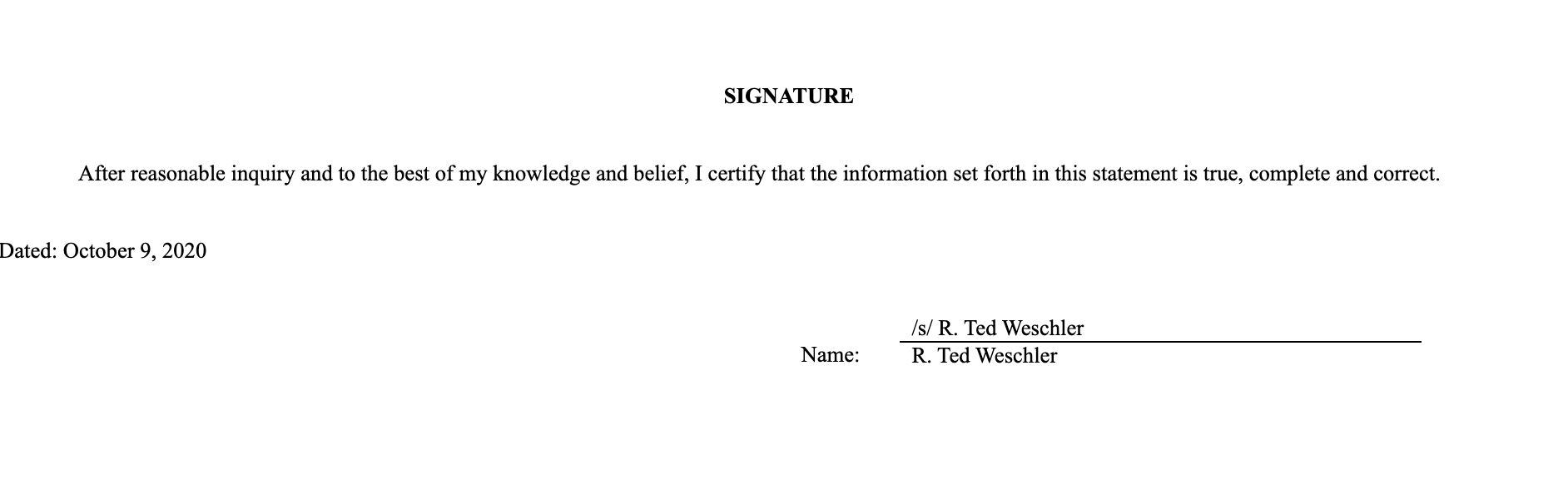
The stock rose 27 percent that day.
He had done the same arithmetic you just did. A company with no debt to speak of, which owned its buildings, whose owners would not sell, and which had been eating its own share count for a decade. The business did not need to grow. It just needed to survive and keep chewing.
It did both.
The man who bet against it
In February 2025 an investor posted a short thesis on Value Investors Club. Stock at $467. Target $160. Downside 65 percent.
The argument was fair. Sales below the 2022 peak. Margins below the peak. Wages rising. EBITDA falling ten quarters in a row. Macy’s and Nordstrom had been bid for at five times EBITDA and Dillard’s traded at seven. Apply five times and you get $160.
He listed his catalysts. The second one was, word for word:
“DDS keeps repurchasing overvalued shares.”
Ten months later the stock hit $730 and paid a $30 special dividend.
Every fact in his thesis was true. He simply never mentioned the share count. He analysed what the company earned and ignored how many pieces it was divided into. He watched the pie and forgot to count the plates.
What is not clean
This is a case study, not a recommendation, so no scorecard. But I owe you the other side.
The buyback has stopped. Zero in the last quarter. The family chose a $30 dividend over buying stock at $600. When people who have bought aggressively for fifteen years stop, that tells you what they think of the price.
Revenue is flat. Earnings per share have fallen three years in a row. The last quarter looked good until you remove the one-off tariff refund. The stock is at eighteen times earnings for a business that does not grow.
A cannibal only works when it is cheap. That is how it eats. This one is no longer cheap, and it knows it.
Back to Nashville, Arkansas
The founder borrowed $8,000, bought buildings, kept them, and never took on a partner who could tell him what to do.
His children took the buildings, the cash flow, and the shareholder register full of their own employees, and spent fifteen years buying out everyone else. Revenue went nowhere. The stock went up twenty three times.
I wanted you to see it once with real numbers, from a company boring enough that nobody argues about the story. Because the next one I show you will not be boring, and I want you to already know what to count.
Related Cannibal Stocks research
Li Lu Bought Crocs: Follow the Free Cash Flow (CROX)
See the five-step screen behind the Cannibal Watchlist
Cheers, Sandro
Two out of three analysts rate this post Sell. 🙂
Like and Restack.
Tangshan, China, 1976. A ten year old boy wakes up because the ground is moving. The earthquake kills 240,000 people. He survives. Thirteen years later he is a fugitive from Tiananmen Square. Later, Charlie Munger hands him 88 million dollars and calls him the only outside manager he ever trusted. In 1998 he bought a boot company at five times earnings and made seven times his money. This year he bought a shoe the whole internet laughs at. So did I.

Great article!