


What’s the difference between a coal company that collapses in a downturn... and one that earns billions while everyone else bleeds?
In commodities, price doesn’t determine who survives. Cost does. If you’re not in the lowest cost quartile, you’re one downturn away from bankruptcy.
Alpha Metallurgical Resources and Mongolian Mining Corporation are companies that can be classified as low-cost producers. In this post, we will analyze two companies through the following lenses:
Production Costs & Realized Prices
Reserves and Resources
Valuation
Capital Allocation
Customer Base and Market Exposure
Risks
Should both go bankrupt, at least I’ll have enough coal to burn the analysis. 😂
Let’s uncover why, in commodities, the cheapest always survive.
The Moat of Low-Cost Commodity Producers
“One of the best moats in any business is being the low-cost producer. When you find a company with a very large gap in operating costs compared to its peers, you have a highly attractive investment situation.”
Warren Buffett
I only truly understood this during COVID.
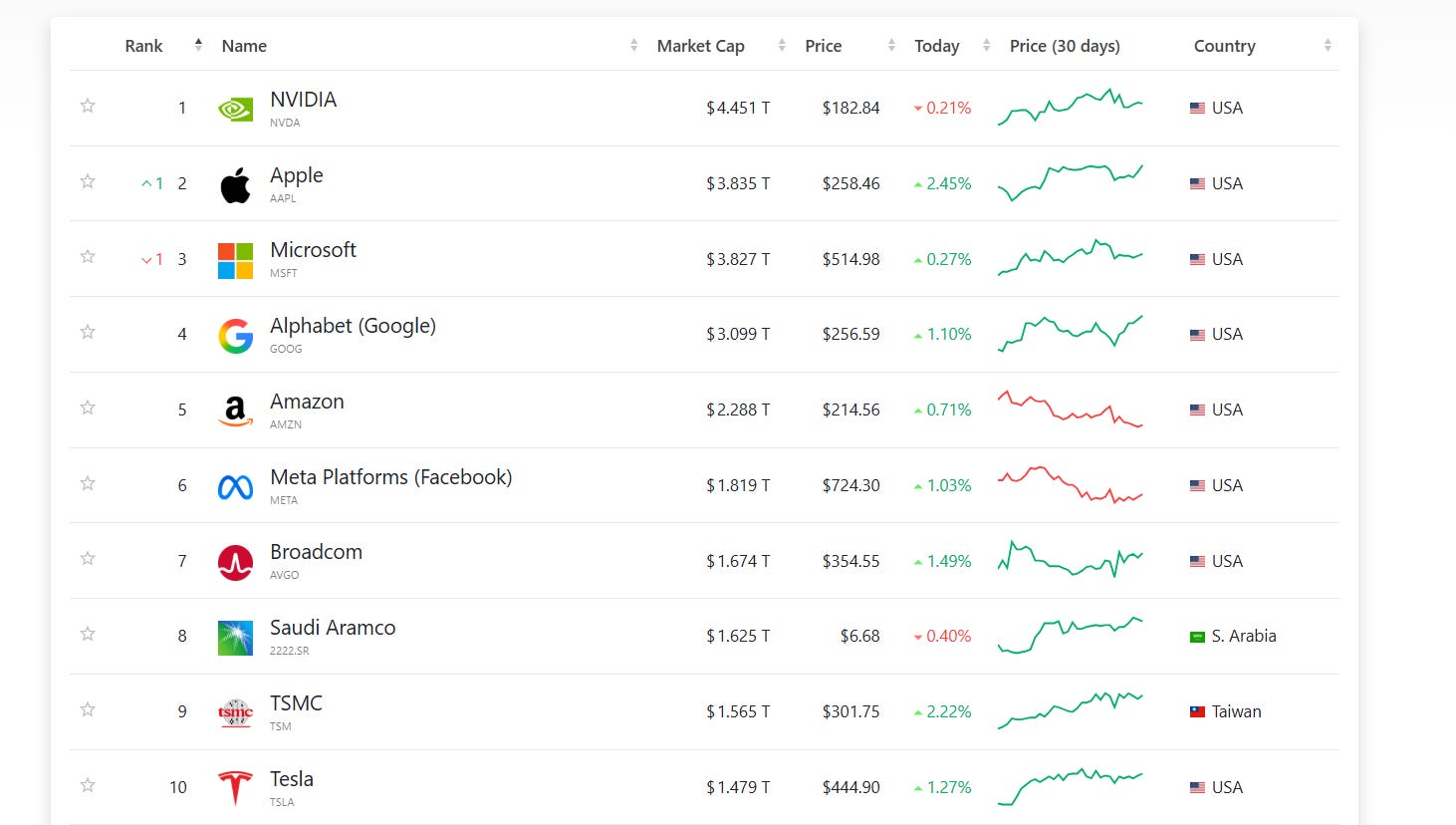
Take Saudi Aramco. A state-owned oil company from Saudi Arabia, yet it has been among the most valuable companies on Earth for years, standing shoulder to shoulder with Apple, Tesla, and Nvidia. Why would an oil company be in the same league as the tech giants?
When the pandemic hit, the price of crude oil collapsed below 20 dollars per barrel. Every oil stock crashed. Every company in the sector lost money. Except Aramco. In 2020, at the peak of the crisis, Aramco still reported 49 billion dollars in net profit, down 44 percent from 2019 but still massive. By 2021, profits had more than doubled to around 110 billion. Even in a global collapse, they made a lot of money.
How? Because they are the lowest cost producer on the planet.
According to Reuters, Aramco’s average lifting cost in 2023 was about $3 per barrel, with another $6 in capital spending for exploration and production. In some years, total costs were as low as $5 to $8 per barrel. No matter what happens to oil prices, whether it’s a recession, crisis, or pandemic, Aramco keeps printing money. It’s a moat bigger than Coca-Cola’s and what Buffett would call an enduring competitive advantage. That’s why, when I look at any commodity business, I start with one question: Which cost quartile are they in?
Let’s get back to coal and find out which of these two actually earns the title of lowest-cost producer.
Production Costs & Realized Prices
When comparing Alpha and Mongolian, it’s important to remember this isn’t exactly a fair fight.
Alpha sells into the global seaborne market, where benchmark prices like the Australian PLV set the tone. Mongolian, on the other hand, sells domestically to China through land routes, competing with local producers of lower-grade coal.
When comparing commodity producers, it’s crucial to separate two types of costs:
Mining cost refers to the direct cost of extracting and processing coal at the mine site — including labor, fuel, equipment, and basic handling.
All-in cost includes everything: mining, transport to port, royalties, maintenance, and infrastructure — the full cost of delivering coal to the customer. In Alpha’s case, costs are reported FOB (Free on Board), meaning they cover expenses only up to the port, not the shipping to the buyer.
Most companies tend to obscure their true all-in costs in reports. Alpha has transparent reporting, but it never discloses its full all-in cost, which I don’t like. Those numbers matter because they show the true economics of the business. Below is a side-by-side comparison of Alpha Metallurgical Resources and Mongolian Mining Corporation, using 2023 and 2024 data, focusing primarily on all-in costs, the only costs that really tell the whole story.
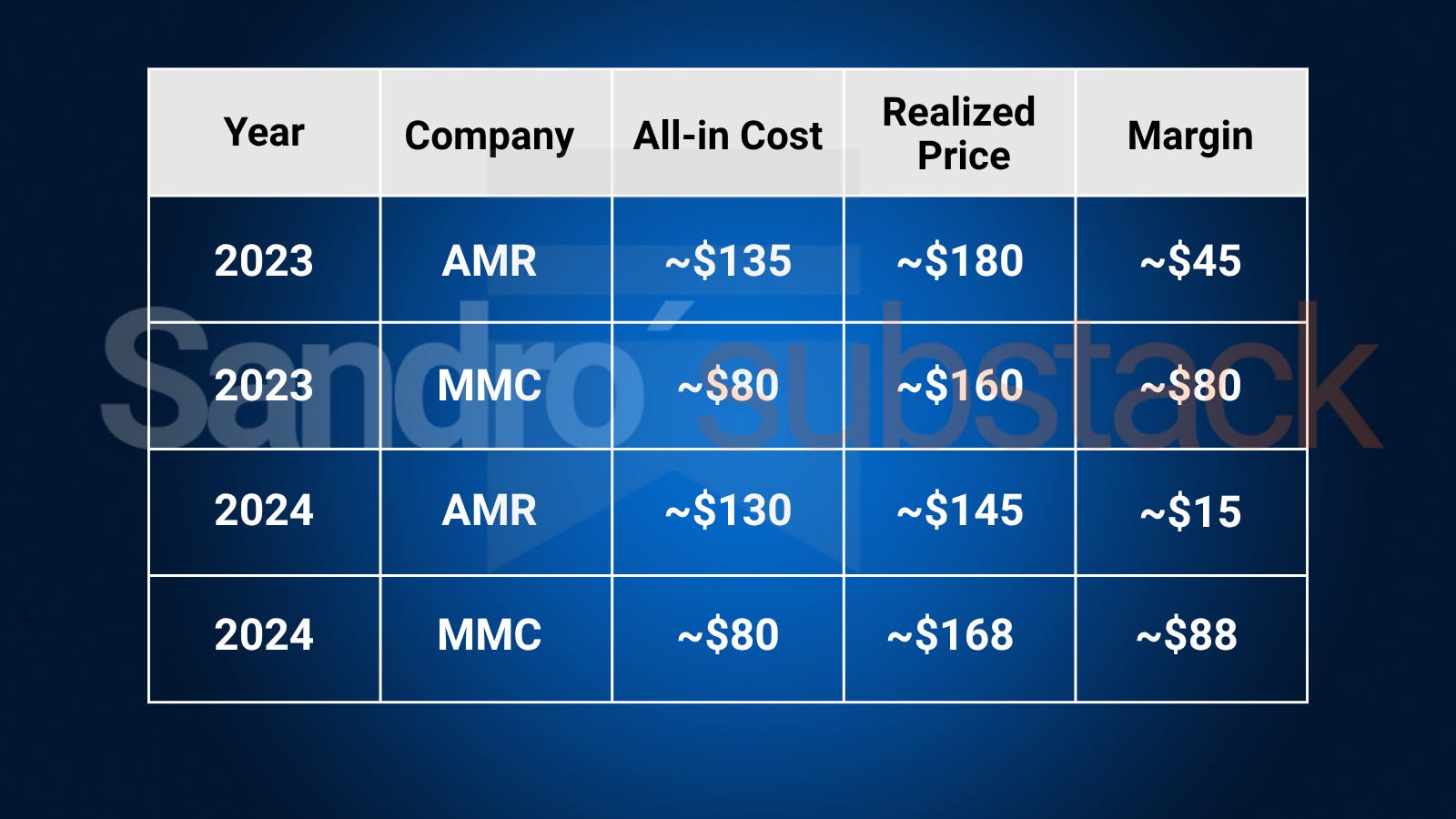
When it comes to coal quality, the realized prices show that both companies sell at very similar levels, suggesting comparable product grades. It’s worth noting that Alpha produces some coal that commands premium pricing, but because its portfolio includes a mix of metallurgical coals — low-vol, high-vol A, high-vol B, and mid-vol — the company’s overall realized prices tend to be near-premium rather than fully premium.
So while the coal prices these companies receive are fairly similar, it’s the production costs that make the real difference. With the new Mongolia–China railway set to become fully operational, MMC’s logistics costs, currently about 25–32 dollars per ton, are expected to drop by more than 20 dollars per ton. This will push its total all-in cost from roughly 80 down to around 60 dollars per ton, making it the lowest-cost metallurgical coal producer in the world. At those levels, even moderate price increases would translate into exceptional margins.
In this round, there wasn’t much of a fight.
1:0 for Mongolian Mining Corp.
Reserves & Resources
When it comes to the resource base, this one isn’t even close.
Mongolian Mining Corporation sits on a geological treasure, roughly 1.6 billion tons of combined reserves and resources across its two massive operations, Ukhaa Khudag and Baruun Naran. That’s enough high-grade coking coal to feed China’s steel industry for decades. At a production rate of 10 million tons per year, that’s enough coal for roughly 160 years of output.
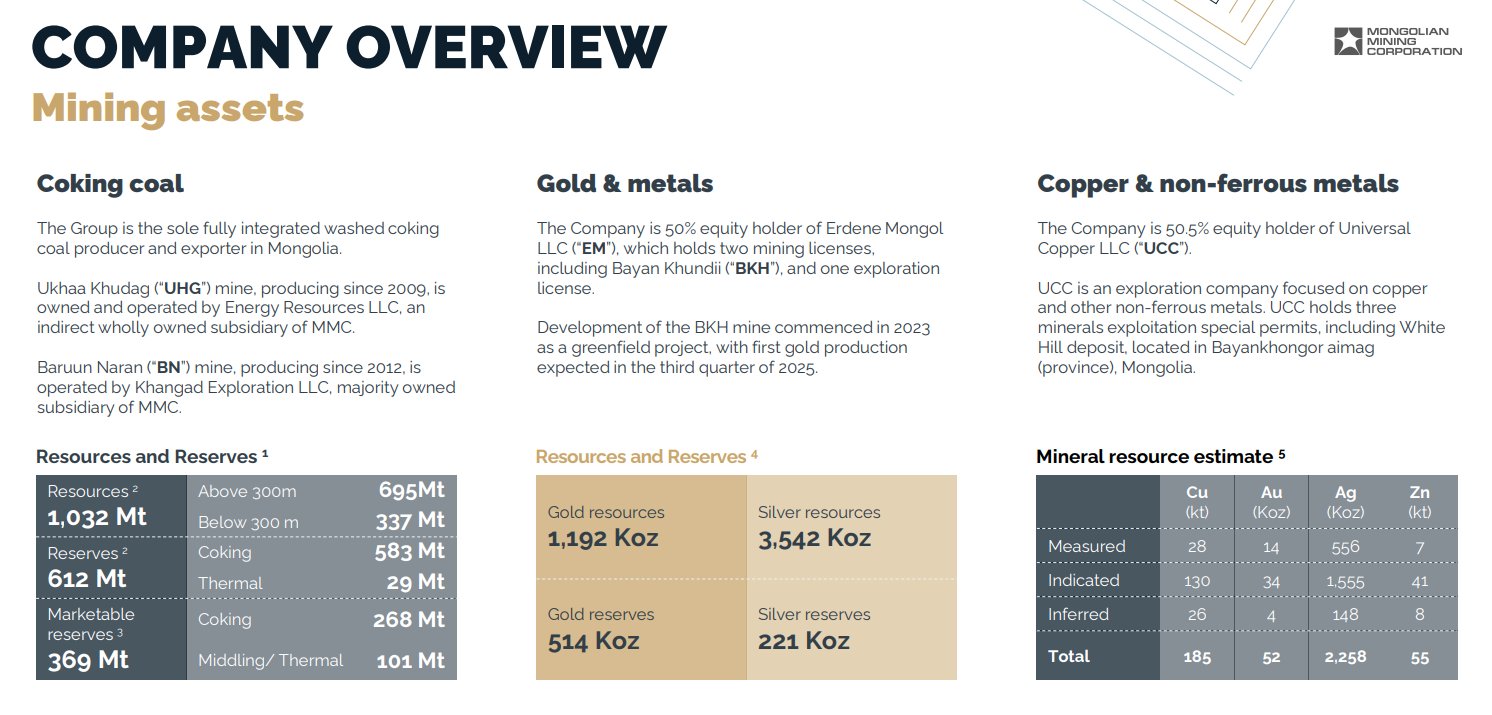
Alpha Metallurgical Resources, by comparison, controls about 0.8 billion tons in total. It’s still substantial, but barely half of what MMC has in the ground. That’s about 50 years of life left.
Mongolia brought a bazooka to a chess match. A clean 2:0 for Mongolian — Alpha didn’t even get a shot off. Did my most trusted coal company just get outplayed?
Let’s see what the valuation reveals.
