



June 2003. Alan Greenspan sits before Congress.
The most powerful economist on Earth has come with a warning. America is running out of natural gas. Storage is low. Prices have tripled. Fertilizer plants are fleeing to Trinidad.
His solution was to build import terminals and bring gas in from Qatar on ships.
America listened. Billions flowed to the Gulf Coast. Sabine Pass, Freeport, Cameron. Giant facilities rose along the water, built for one purpose.
To receive.
Then a stubborn son of a Greek immigrant named George Mitchell cracked the code on shale rock in Texas, and American gas production did something no forecaster had on paper. It doubled. Prices collapsed and stayed collapsed for fifteen years.
Every one of those import terminals was reversed. The pipes built to flow in now flow out. Sabine Pass, constructed because America was running out of gas, is today the largest gas export facility in America.
The men who bet on the shortage had Greenspan. They had the data. They had storage charts that looked terrifying.
They were wrong anyway.
Hold that story in your head. Because a man has appeared with the most detailed gas shortage call I have ever read.
And this time, I cannot fully dismiss it.
The letter
Matthew Smith runs a fund called Chronometer Partners. In June he sent a letter to a small circle of investors. It found its way to me, and I have now read it more times than I want to admit.
Matthew Smith’s June 2026 letter laying out Chronometer Partners’ natural gas shortage thesis.
Smith spent fifteen months building a model of the entire American natural gas system. Every producing well, fit to its own decline curve. Every pipeline. Every storage facility. Every LNG terminal. Every power plant and every data center. All of it in one database, connected the way the real system is connected.
Here is what it said, argument by argument.
Argument one. Supply has a ceiling.
America produces about 112 billion cubic feet of gas per day. Smith’s model says the absolute maximum the country can reach by the end of 2030 is 132.
“That is the maximum we see.”
Why a ceiling? Because the myth of infinite shale belongs to the past. The best rock has been drilled. What remains is deeper, worse, and more expensive. Many producers, he claims, have far less quality drilling inventory left than they publicly admit. The gas that does remain needs much higher prices to be worth drilling. And even where it exists, there are no pipelines planned to carry it.
Argument two. The exports are already sold.
America currently exports about 15 billion cubic feet per day as LNG, liquefied gas on ships. Approved projects take that to 35 by the end of 2030. More than doubling. These terminals are financed, under construction, and their gas is already sold to foreign buyers on contracts that run twenty years. Japan, Korea, Europe. The contracts were used to finance the construction itself.
That gas is leaving the country. It has, in effect, already left.
Argument three. AI eats gas.
Every data center needs power around the clock. The sun sets and the wind stops, but a chatbot answering questions at 3 a.m. does not. Only two sources deliver that at scale. Nuclear, which takes fifteen years to build. And gas, which takes three.
Smith counts more than 5 billion cubic feet per day of new gas demand from approved power plants alone, most of them built to feed AI. Two to three times more have been proposed. He did not even include those.
Argument four. The infrastructure cannot be built in time.
Suppose the gas exists somewhere. You still need pipes to move it. Building major gas infrastructure in America takes five to eight years. The country has completed exactly one large interstate gas pipeline in the past decade, and that one needed almost ten years and an act of Congress.
If the pipes needed to solve a 2028 problem were coming, they would be under construction today.
They are not.
Argument five. The cushion is gone.
Storage is the system’s savings account. When winter hits, America lives off gas injected underground during summer. In the last fifteen years, that savings account grew 7 percent.
Demand grew 54 percent.
In 2010, storage could cover 72 days of key demand. Today, 50. By 2030, on Smith’s math, 37. The system got bigger. The cushion got smaller. And nobody is building more.
Put it together. A supply ceiling. Exports that doubled and cannot be recalled. An AI power boom. No new pipes. A shrinking savings account. Smith’s model shows a deficit of more than 5 billion cubic feet per day by 2030, storage draining in a way that has no precedent starting in 2028, and working storage potentially hitting zero by 2030.
Not a price increase. A shortage.
Follow the buyers
Smith ends his letter with a challenge I respect. Do not take my word for it, he says. Ignore me. Watch what the smartest money is doing.
Shell paid 16.4 billion dollars for ARC Resources, one of Canada’s top gas producers. Mitsubishi paid 7.5 billion for Texas and Louisiana shale gas. Williams is paying up to 5.5 billion for Momentum Midstream, a gas pipeline system. Devon received an 8 billion dollar offer for its Marcellus gas position. Antero bought HG Energy for 2.8 billion. EQT bought Olympus for 1.8 billion. And the Financial Times ran a piece on how Citadel, the most profitable hedge fund in history, has built itself into an energy trading giant.
All of this in roughly the last twelve months. All of it gas.
One more data point, and it is my favorite. In January, one winter storm hit the system. Weekly gas prices brushed thirteen dollars. EQT, largely unhedged, made about a billion dollars in a single month.
Today gas trades at 2.88.
Thirteen dollars and 2.88 in the same year. That is what a market without a cushion looks like. The crisis Smith predicts for 2028 already sent a postcard in January.
I tried to kill it
Every good investment starts with the risks first. So before I let this thesis anywhere near my money, I want to kill it.
The first weapon is history, and you already met it. It was the opening of this post. The 2003 panic was so convincing that America built import terminals, and shale turned them into the punchline of the century.
It was not the only time. High prices from 2004 to 2008 summoned the shale revolution that crushed gas for fifteen years. The 2022 spike above nine dollars died within nine months. Every structural gas shortage call of the last twenty five years has ended the same way, with new supply showing up faster than anyone modeled.
Betting on American energy scarcity has been the fastest way to lose money for a generation.
The second weapon is geology. Independent data from Enverus counts over 800 trillion cubic feet of American gas resource with breakevens below three dollars, and hundreds more above that. The gas is not gone. It is waiting for a better offer. Smith’s ceiling of 132 is real, but it is a price wall, not a rock wall. Give this industry five dollar gas and two years, and it will embarrass every model ever built. It always has.
The third weapon is the escape hatches. About 145 gigawatts of coal plants will still be standing in 2028, and when gas spikes, utilities switch back to coal and demand falls fast. And those sacred LNG contracts? Contracts are sacred until a government watches households pay triple for electricity in an election year while a quarter of the country’s gas sails away on ships. Some of those exports would be slowed or renegotiated long before storage hits zero.
So no. I do not believe in empty storage and twenty dollar gas.
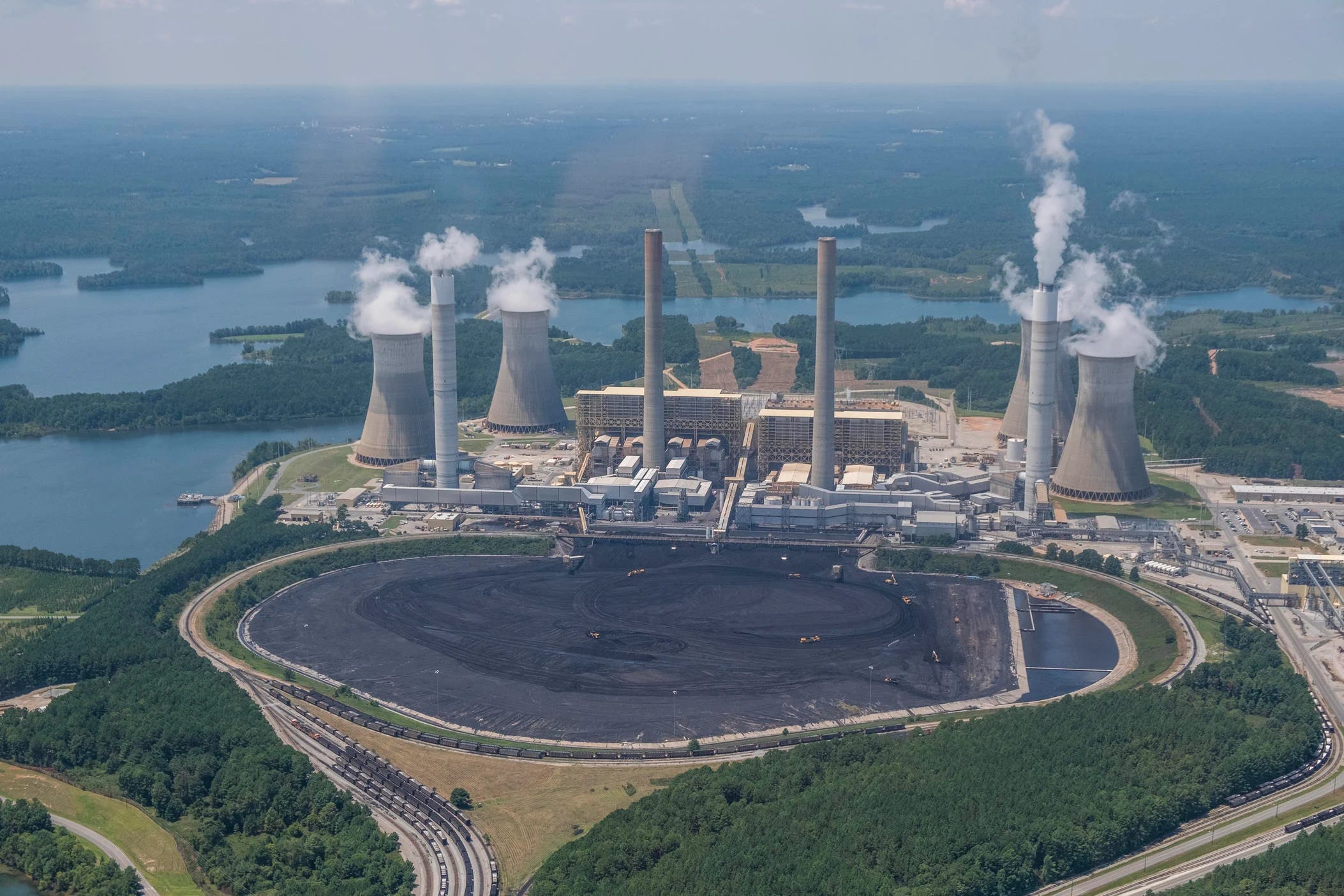
Where I land
Numbers, because opinions are cheap.
I put the probability at roughly 70 percent that Smith is directionally right. That the market tightens hard around 2028 and gas prices must jump, meaningfully, for a window of about two years before the machine catches up.
Why 70? Three reasons.
First, this demand is different in kind from 2003. Back then the shortage lived in spreadsheets. This time it lives in poured concrete, financed terminals, twenty year contracts, and turbine factories that are sold out through 2030. You cannot cancel demand that has already been built.
Second, the cushion that saved every previous scare is gone. Storage grew 7 percent while the market grew 54. January showed you what one cold week does now.
Third, and this is the almost poetic part, today’s low price is manufacturing tomorrow’s squeeze. At 2.88, producers are shutting wells and starving investment. The weaker this year gets, the tighter 2028 becomes. The cure for low prices is low prices. It just needs time.
And why only two years? Because that is the other side of the same coin. It takes the industry roughly two years to answer a price signal with rigs, wells, and coal switching. The squeeze is real, and so is its expiration date. That is why every spike in gas history has been violent and temporary, and I expect this one to be the same. Just bigger, because the cushion is smaller.
The market is slowly waking up. When Smith wrote his letter, 2028 gas was priced around 3.60. As I write this, January 2028 trades near 4.67.
The curve is walking toward him.
The game
“Heads, I win. Tails, I win.” – Mohnish Pabrai

You do not need to bet on the shortage. That is the whole trick.
You need companies that win both sides of the coin. They exist, and the test for finding them is three questions.
Do they make real money today, at 2.88, at the bottom of the cycle?
Do they hand that money back through buybacks and dividends instead of drilling it away?
And is their 2028 production unhedged, unsold, and waiting?
I ran every meaningful gas producer in North America through those three questions. Most failed. But three passed.
Heads. Smith is right. Gas jumps in 2028 and these three catch it with open books across hundreds of billions of cubic feet. Cash flow doubles or triples, and every share they bought back at today’s prices multiplies the effect. Hallelujah.
Tails. Smith joins Greenspan in the museum of gas shortage calls. Prices stay low. These three keep printing money anyway, because their costs sit near two dollars, and they keep swallowing their own shares at depressed prices, which is exactly when swallowing shares creates the most value. You do not lose. You compound while you wait.
Either way, you get paid. The biggest risk now is picking the wrong one of the three.
The autopsy table
Which is exactly why part two exists.
Read Part 2: Three Natural Gas Producers, One Table
I will open the hedge books year by year, because the hedge book decides who actually catches the spike and who watches it through a window. I will read the insider filings and show you who sold at the bottom and who went silent. I will dig up a four billion dollar corpse one of these companies buried in Louisiana, and check whether the men who held the shovels still work in the building.
And at the end, one answer. The best bet in the entire gas market.
If you want the answer, upgrade before the autopsy begins.
And bring gloves.

Back to 2003
Greenspan was not wrong about demand. He was wrong about what price does to supply, and the men who built the import terminals lost fortunes because they made a one way bet on scarcity.
I am not making that bet. I am buying companies that get paid at 2.88 and get rich at six.
The coin is weighted. Both sides pay.
Flip it.
Cheers, Sandro
Like button costs less than natural gas. For now. If gas hits $13 again, I’m charging for likes. Act now. 😂⛽
Updated as of August 9, 2026. Sources include EIA, company SEC filings, Enverus, Wood Mackenzie, GE Vernova disclosures, and Bloomberg.
Looking forward to part 2!
Do you believe SMRs are not scalable as Matthew said?