


Before I get into the thesis, I need to explain something about how helium is priced.
Helium is tricky to price. There is no transparent spot market like there is for oil or natural gas. Most helium is sold through long-term contracts, so price discovery is opaque. Official spot prices usually appear only after industry reports are published, and for March 2026, I have not found any official report yet. What I get comes mostly from media reports, analyst notes, and broker commentary. It can be inaccurate.
With that caveat clearly stated, here is what just happened.
IMARC Group reported that European helium prices in February were close to $56 per cubic meter. That number has been confirmed by other sources.
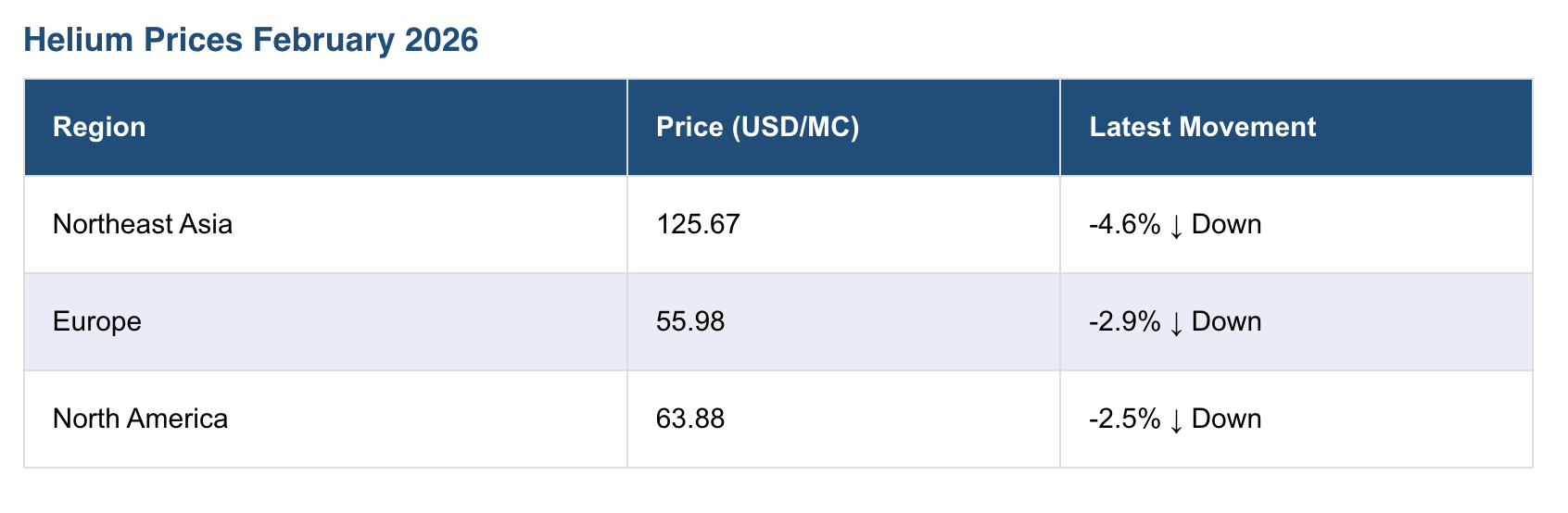
On March 12, a new report claimed that European spot helium has jumped to $450.
“As of March 12, 2026, spot helium prices in Europe hit $450 per thousand cubic feet, a level unseen in over a decade, signaling persistent pressure on industrial and scientific sectors reliant on this irreplaceable gas.”
From $56 to $450. In weeks. Do you understand what that means for companies with fixed production costs?
I want to be careful here. The source is not the most reliable, and I have not been able to independently verify this number through official channels. But even if the real figure is half of that, the move is extraordinary. And some analysts are now modeling scenarios above $2,000 per Mcf if the Middle East disruption holds through summer.
Let me explain why this is happening. And why the timing matters more than anything else in this trade.
The United States of Commodities
The United States is the world’s largest oil producer. The world’s largest LNG exporter. The largest helium producer. And a major exporter of fertilizers.
Every single one of those markets has repriced sharply since the conflict began. Oil is up roughly 40%. Fertilizers up 77%. Helium spot prices have jumped approximately 50% on the conservative end, and likely much more based on the latest reports.
You do not have to be conspiratorial to notice this. You just have to be honest.
I have written about helium extensively over the past week. If you missed those posts, start here:


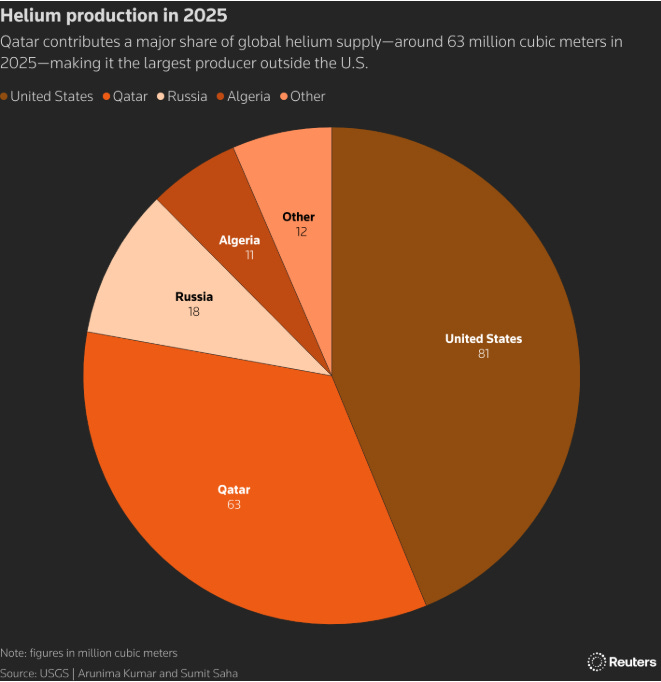
The short version: Qatar produces more than one third of the world’s helium as a byproduct of LNG production. The Ras Laffan facility — the heart of that operation — has now been hit by a drone strike. The LNG complex is effectively offline.
And here is where it gets interesting.
[Curious where this leads? The two companies I am watching — both of which flew completely under my radar until recently — are below the paywall. One is already generating cash. The other is weeks away from it. Both could deliver brutal returns if this disruption lasts even half as long as the historical average suggests it will.]
