


A man in Queensland siphoned fuel from a stranger’s car last Saturday. Not because he was poor. Because there was no diesel left to buy.
This is Australia. A G20 country. A functioning democracy with a stock exchange and a central bank and a defense treaty with the United States. And last week, 107 of its gas stations ran completely out of diesel while ordinary people crawled under other people’s vehicles with a hose and a plastic container.
Nobody on CNBC mentioned it. I’m mentioning it.
Because what happened in Australia is not an accident. It is the inevitable result of a thirty-year decision made by the Western world to feel good about energy rather than think clearly about it. Close the refineries. Ban the drilling. Import the rest. Trust the system.
The system just broke.
And Australia didn’t run out of oil. The world has plenty of oil. Australia ran out of the infrastructure to get it where it needed to go, processed the way it needed to be processed, at the moment it was needed. They outsourced that to China. China took care of itself first. Australia waited in line.
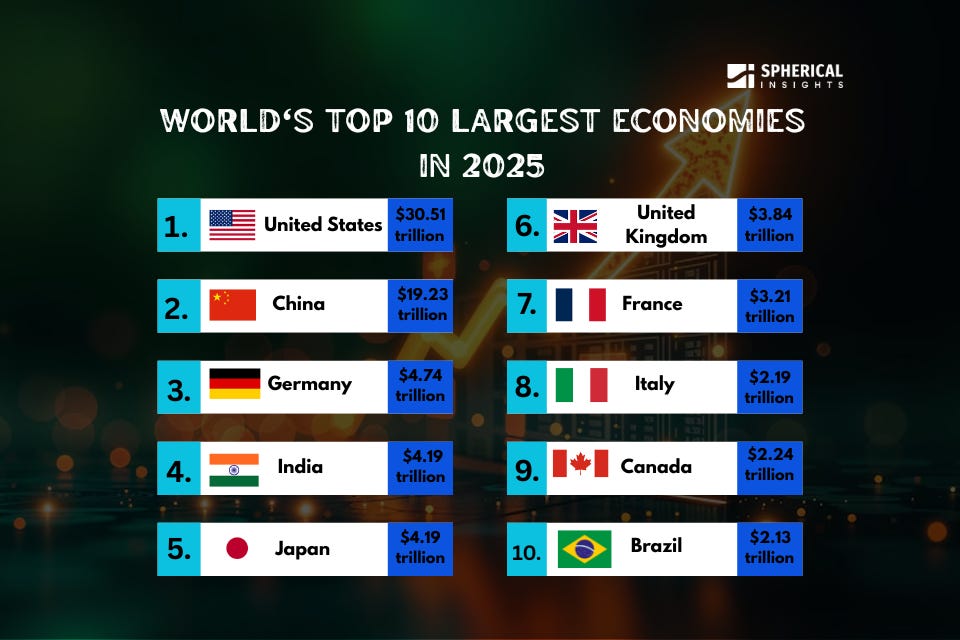
Four of the world’s ten largest economies are European. Sounds like a solid result. But if I’m right that we’re entering a decade of structurally expensive energy, that list will look completely different by 2035. And I think I am right. Which is why I only care about one thing: who has their own energy, and who has to beg for someone else’s?
United States
The United States will be fine. They produce their own oil, their own gas, their own coal, their own food, their own helium, their own sulfur. When the rest of the world scrambles, America tightens its belt one notch and keeps moving.
When this crisis hit, the Trump administration didn’t hold a summit. They used the Defense Production Act and restarted the Sable Offshore system in California the same week global fuel prices started climbing. That’s what energy sovereignty looks like in practice. It’s not green. But it works.
The rest of the hemisphere is sitting on roughly ten million barrels of untapped daily production from Argentina to the Arctic. Washington knows this. Washington is moving toward this. When North America turns inward, the rest of the world competes for what’s left.
China
China has no oil. China has everything else.
16 to 17 million barrels per day of refining capacity. Control of nearly all global rare earth processing. A solar supply chain so dominant that even their competitors buy from them. Australia learned this the hard way. You can own the raw material and still lose if you don’t control what happens to it next.
China has 300 days of strategic reserves. That number matters more than anything else in this crisis. It is the exact length of time before Beijing stops being patient and starts being dangerous. After 300 days, China will pressure whoever closed Hormuz to reopen it.
That ceiling is the most important fact in energy markets right now.
Europe
Europe is an energy disaster waiting to fully arrive.
In early March, Iranian drone strikes hit Ras Laffan and knocked a massive chunk of global LNG supply offline. And Europe, the most LNG-dependent continent on Earth, had no emergency lever to pull. But what makes it genuinely hard to watch is what European leaders are doing about it.
Nothing. Or worse than nothing.
The US pays three to four dollars for gas. Europe pays twenty. In 2022, during the peak of the crisis, TTF hit €350 per megawatt hour — ten times what Americans were paying at the same moment. American fertilizer companies, chemical plants, steel mills — every industry that runs on cheap energy — have a structural cost advantage that widens every single year.
The continent consumes roughly 14 million barrels of oil per day and produces three. The rest is imported. And the political response?
Don’t drill. Don’t build. Keep the continent pretty.
The politicians behind the nuclear exit, the reliance on Russian gas, and the erosion of domestic production capacity haven’t disappeared. They’re still winning.
It’s insane. Absolutely insane.
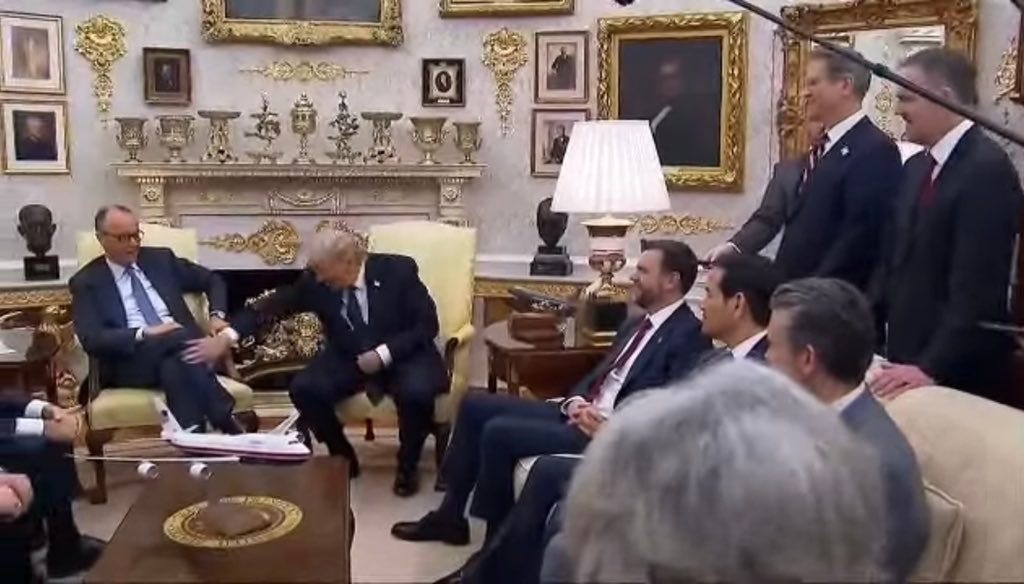
On March 3rd, Trump sat knee-to-knee with German Chancellor Merz in the Oval Office. At one point he turned to his advisors and asked — half joking, half not — “How are we going to treat Germany? I think we should hit them very, very hard.” Then he slapped Merz on the leg. Merz smiled and shook his head. That image tells you everything about where Europe stands right now.
Where This Is All Going
Saudi Arabia has spent a decade building export routes that bypass Hormuz entirely. Not because they saw this war coming. Because they understood that whoever controls the flow controls the price. Full stop.
The next twenty years will see the largest investment wave in energy transport, storage, and processing in human history. New pipelines. New terminals. New corridors across continents that haven’t moved hydrocarbons before. Trillions of dollars chasing infrastructure that doesn’t exist yet because nobody thought they’d need it.
They need it now.
I’ve spent the last few weeks going through balance sheets looking for the companies that collect tolls on this wave regardless of where oil prices go. Ten names. All profitable. All paying dividends or buying back stock. All completely ignored by mainstream financial media.
The full breakdown is below the paywall.
But before you go there, I want you to sit with one question.
When Australia ran out of diesel, the oil was still in the ground. The ships were still sailing. The refineries were still running somewhere. The problem was never supply. The problem was getting it there. Processing it. Moving it. Storing it. Delivering it.
That problem does not go away when this war ends.
It gets worse.
