“Pay attention to cannibals, spinoffs, and cloners.”
Charlie Munger said it. Three categories where pattern recognition beats IQ. Three places where smart money keeps finding ten baggers while the rest of the market hunts for the next Nvidia.
Cannibals you know. The reason this newsletter exists.
Spinoffs you know. Joel Greenblatt wrote the book.
Cloners might be the most misunderstood category of the three.
Why Mohnish Bought Kaspi
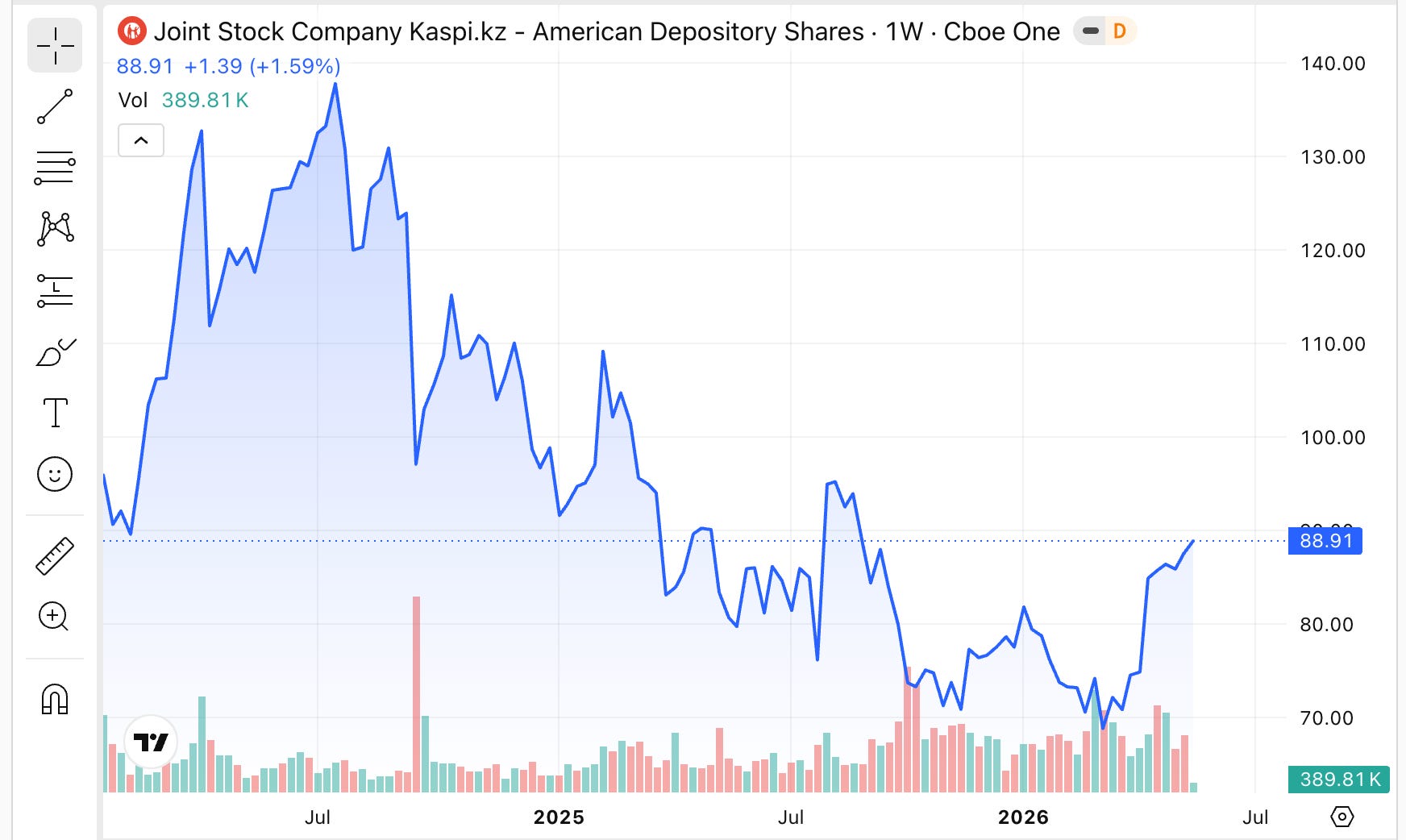
When Mohnish Pabrai disclosed Kaspi.kz as a top ten position in his Wagons ETF in March 2026, I spent some time trying to figure out what he saw.

The numbers were obvious. 7 times earnings. 50 percent ROE. Founder owning 23 percent. A super app with 16 million monthly users in a country of 20 million people.
But Mohnish does not buy stocks only for the numbers. He buys for the framework underneath the numbers. Mohnish did not buy only a cheap fintech.
He bought a cloner.
Microsoft Has Never Had an Original Idea
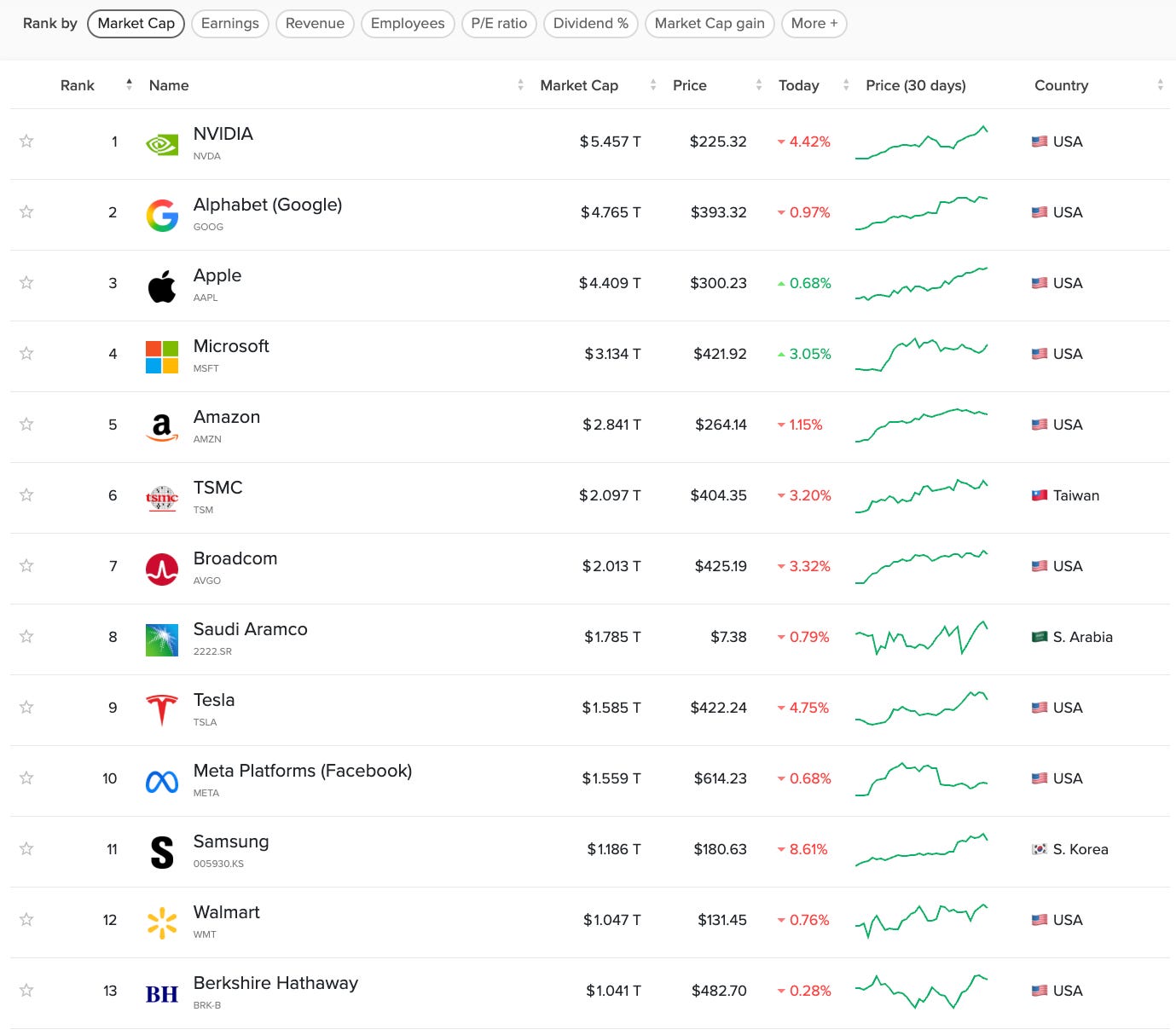
For more than a decade Microsoft has sat in the top five most valuable companies on Earth. Most people assume that means Microsoft invents things.
Microsoft invents nothing.
Mohnish laid it out recently.
“You look at Microsoft. Windows is copied from Apple. Word is copied from WordPerfect. Excel is copied from Lotus. Bing is copied from Google. Warren Buffett tells me, do you know what Bing stands for? Bing stands for “But It’s Not Google.” Everything that has worked for Microsoft, including now AI, has been copied from other places.”
Microsoft spends billions every year on internal research. PhDs. Labs. Nothing comes out of them. The most valuable software company in history has never produced a single category-defining product from its own minds.
Everything came from somewhere else. And that is not an insult. Cloning is better than inventing. If you know how to clone a product or service and improve it at the same time, you have an incredible advantage.
The inventor has to guess what people want. The cloner already knows.
The best cloner alive today is not in Seattle.
He is in Almaty. He runs a 16 billion dollar super app. I think he has never had an original idea in his life.
That is why I think Mohnish owns the stock.
His name is Mikheil Lomtadze.

The Boy Who Was Built to Clone
Georgia. 1980s. Soviet collapse on the horizon. A family with no money for food but money for tutors.
In his own words.
“My parents had to work really hard but everything that we had went into our education. I always had tutors in math and physics and English. We might not have food on the table but I always had a teacher. I might have secondhand clothes but I definitely would have a teacher.”
Food was optional. A teacher was not.
That is not how poor families raise inventors. That is how poor families raise cloners. The message is clear. You are not smart enough alone. Find someone who already knows. Sit at their feet. Absorb everything.
He did it for the rest of his life.
He read about Guivy Zaldastanishvili, the first Georgian to graduate from Harvard. Decided to copy the path. Applied to HBS. Rejected. Flew to Boston, sat with the head of admissions, made his case. Applied again. Accepted.
He did not invent a new way in. He found someone like him who had already done it and refused to stop.
His first company was a clone of Andersen Consulting. He built the global accounting franchise in Tbilisi while still a student. When Andersen collapsed in 2002, the franchise rolled into Ernst Young. He took a proven developed-world model and operated it where the originals had not yet entered.
This is the cloner’s signature move. Find a proven model. Operate it where the original cannot go. Collect the difference between developed-world quality and emerging-market pricing.
Twenty years later he would still be doing the exact same thing. Just at a different scale.
Everything Kaspi Is, Lomtadze Cloned From Somewhere Else
The super app. Cloned from WeChat. His own confession.
“The only mobile application in the world that enjoys such engagement is WeChat in China.”
He built the only WeChat outside China by copying the model exactly. 16 million monthly active users in a country of 20 million people. 11 million daily active users.
He did not invent the super app. He cloned it into a market Tencent could not enter and pushed engagement to a level only the original beats him on.
QR payments. Cloned from Alipay and WeChat Pay. China removed Visa and Mastercard from the equation by building closed-loop QR networks. No interchange fees. No third party middlemen. The payment goes from consumer wallet straight to merchant wallet.
Lomtadze cloned the architecture exactly. In his own words.
“The only place in the world where QR payments are more popular than in Kazakhstan is China.”
By 2023 Kaspi was processing 78 percent of all payment network transactions in Kazakhstan. Visa, Mastercard, and every other network combined had 22 percent. Kaspi’s Payments segment now produces a 65.7 percent net margin. For comparison, Visa runs around 55 percent. Mastercard around 46 percent.
The cloner produces fatter margins than the originals he copied.
Postomats. Cloned from Amazon Lockers. In his own words.
“Pick up in the lockers like Amazon Locker style.”
Over 10,000 Postomats across Kazakhstan today. Density per capita higher than the United States. Higher than Amazon’s home market.
Alaqan palm payments. Cloned from WeChat and Amazon. His admission on stage at the launch.
“Palm scan based payments are getting popular in China on WeChat. They are developing this tech just like Amazon in the States.”
He named both originals out loud. Then he shipped the clone in three months. 500,000 customers registered in Almaty before either original had reached that scale outside their home cities.
BNPL. Klarna invented Buy Now Pay Later for consumers. Lomtadze cloned the mechanic and adapted it. Buy Inventory Now Pay Later. A wholesaler delivers goods to a small shop. The shopkeeper scans the supplier’s Kaspi QR. Kaspi pays the supplier in full. The shop repays Kaspi in 30 days from its Kaspi Pay sales.
E-commerce. He admitted the entire methodology in one paragraph.
“For example we want to launch e-commerce, so I will be reading about e-commerce. I will be reading about Amazon, or I will be reading about MELI annual report, I will be reading about Rakuten which we visited, HBS grad, marketplace in Japan. Before launching we did a 4 day trip to Japan.”
He reads Amazon. He reads MercadoLibre. He flies to Tokyo for four days to meet Rakuten. Then he builds his version.
The whole company in few words from the founder himself.
“We are definitely learning like crazy. Always.”
Many Clones. One Result.
Add up everything Lomtadze cloned.
WeChat super app. Alipay closed-loop QR. Amazon Lockers. WeChat palm payments. Klarna BNPL. Reichheld NPS. Amazon customer obsession. Buffett discipline. Munger ability to kill bad ideas.
Microsoft did exactly the same thing for forty years. Cloned Apple. Cloned Lotus. Cloned WordPerfect. Cloned Google. Today Microsoft sits at the top of the global market cap rankings.
Lomtadze is the same playbook. At an earlier stage. In a market the West has barely discovered. The question is no longer what Mohnish saw.
The question is what the Kaspi stock is worth. And what am I doing with the stock?