


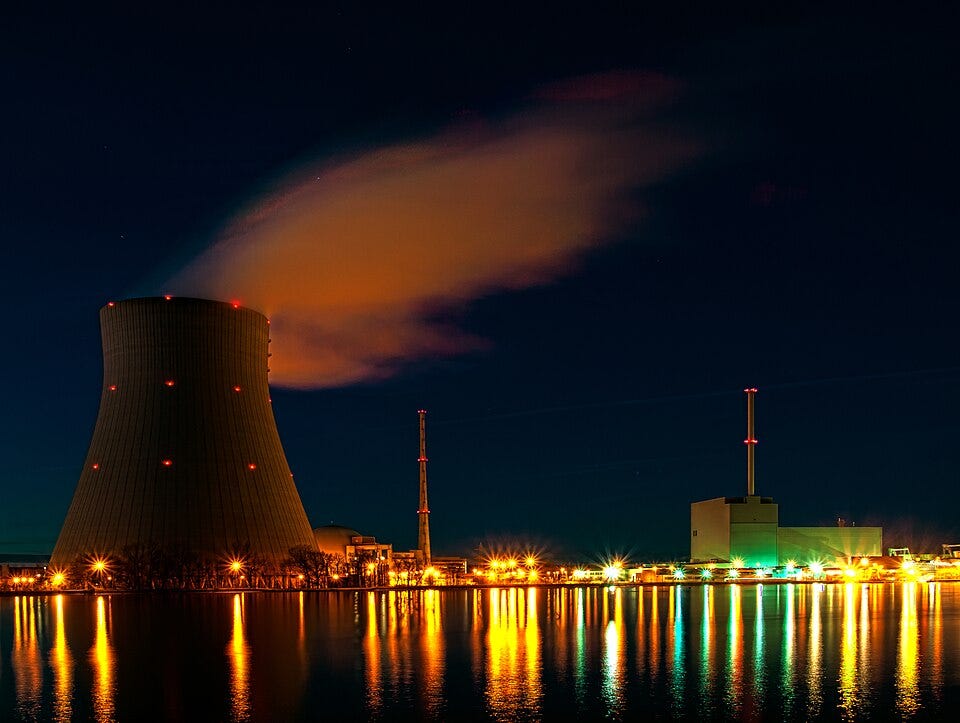
On April 15, 2023, Germany switched off its last three nuclear plants. They worked fine. There was a war next door. They were switched off anyway.
I have lived in Germany for thirteen years. This September the bill arrived.
German gas storage is at 57 percent, the lowest September on record. On Sunday the chancellor’s party got 4.9 percent in Mecklenburg-Vorpommern and won no seats. The same morning diesel in France hit a record.
The cause fits in two numbers. The EU imports 95 percent of its oil and 88 percent of its gas. And the suppliers are dropping out.
Qatar declared force majeure on LNG in March. On September 10 drones hit the Saudi East-West pipeline, and Aramco told European refiners they get zero crude in October.
This month Ukraine hit the refineries at Ryazan, Saratov and Syzran. Kyiv celebrates every hit and Europe cheers along. Russian seaborne diesel exports are 81 percent below normal. The diesel that still reaches Europe now comes mostly from India, refined from the same Russian crude, and sails past the Houthis to get here. On September 18, Trump signed a law allowing tariffs of up to 100 percent on countries that buy Russian energy. India is Russia’s largest seaborne oil customer.
Europe cheers the fire, then buys the smoke.
And then the cherry on top. In Washington, Senate Majority Leader John Thune says he is “open to exploring” a diesel export ban.
“It is a commodity now that I think we’re exporting, and if we need more supplies in this country, and if that would take pressure off of prices, I’m open to exploring it.”
A ship. A strait. Someone else’s election.
Put every supplier Europe has through those three words. America fails the third. The Gulf fails all three. Russia is Russia.
One country is left. It shares an ocean with the Arctic and a seabed with Germany.
Norway
Norway sold 120 billion cubic meters of gas last year, equal to more than 30 percent of what the EU and the UK consume. Ninety five percent of it goes by pipe. Europipe to Germany. Franpipe to Dunkirk. Langeled to England. No tanker, no strait, no force majeure letter. Germany alone took 58 billion cubic meters.
But a pipe does not make gas. Fields do, and fields decline.
The Norwegian Offshore Directorate says gas can hold near today’s level for three or four more years. After that, every one of its scenarios goes down. The warning in its own report is blunt.
“Failure to invest will lead to rapid dismantling of the petroleum activities.”
Ninety one discoveries on the Norwegian shelf are waiting for a development decision. Somebody has to drill them.
The rigs
You cannot drill the Norwegian Sea with just any rig. You need a harsh environment semisubmersible, built for forty foot waves and certified by the Norwegian regulator.
The world has 27 modern ones. Westwood says every one of them is committed. The last time that happened was February 2014. Esgian, another rig research house, said this month that the harsh fleet is largely booked from late 2026 into 2028.
And the fleet is leaking out of the North Sea. One harsh rig just finished a campaign for Shell in Namibia. Another leaves Norway for Canada in early 2027.
Nobody is building more. A new one costs close to a billion dollars and takes four years, and no dayrate today pays for it. So the oil companies book early. In June Equinor reserved three Transocean rigs for over a billion dollars, starting in 2027 and 2028. On September 10 Vår Energi signed a rig for three years for 518 million dollars. The work starts in 2028.
Half a billion dollars, paid in September 2026, to hold a machine for 2028.
Vår did not sign that with a country. It signed with an old Bergen shipping family most investors have never heard of.
Now look at where their rigs are this week.
The Deepsea Aberdeen is drilling production wells on Troll, the field that alone covers more than a tenth of Europe’s gas. The Deepsea Bergen is drilling the third phase of Johan Sverdrup, Norway’s largest oil field. When Aramco cancelled October, European refiners ran to Sverdrup crude and reportedly paid a record premium of about $24 a barrel to get it. The Deepsea Stavanger is on Yggdrasil, Aker BP’s big new development. The Deepsea Nordkapp is drilling Symra and Solveig. The fifth, the Deepsea Atlantic, is on Rosebank, west of Shetland.
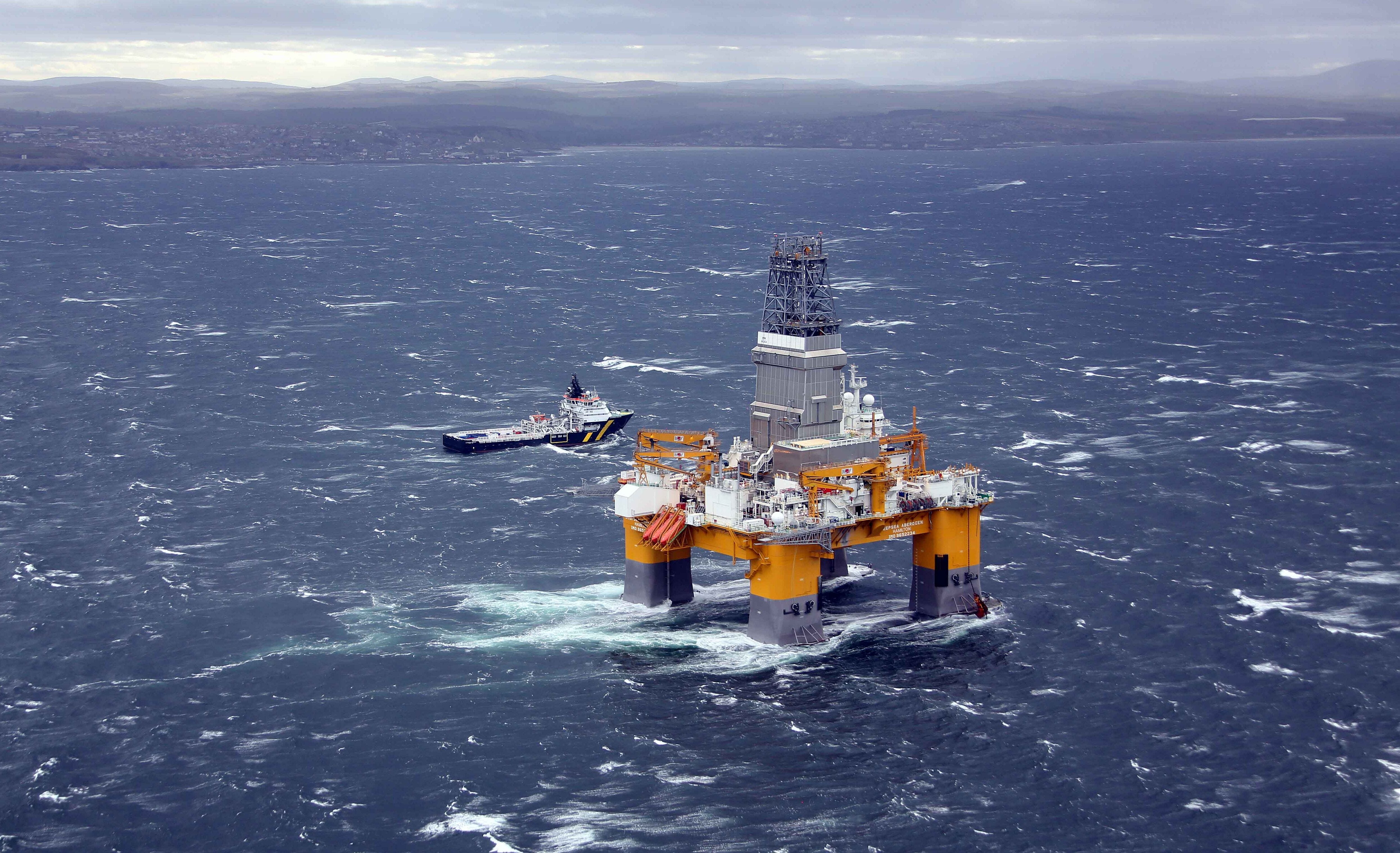
The gas Germany is short of this winter. The crude Europe is fighting over this month.
Their steel is in both.
Odfjell
Odfjell Drilling has drilled since 1973. It owns five of the 27 rigs. Esgian describes this market as split mostly between two companies. The other is Transocean.
Odfjell came through the offshore crash of 2014 without going bankrupt. The only other driller that can say the same is the one I already own. That is the first sign that something unusual is hiding here.
Helene Odfjell, the founder’s daughter, still controls half the shares. She held in 2016, when the stock fell from 42 kroner to 4.20.

Anyway, back to Odfjell.
All five rigs are booked into late 2027. More than 2 billion dollars of work is signed. The balance sheet was rebuilt last December. Nothing comes due before 2031.
Now the money.
The dividend is $1 a year. With the shares trading around $11, that works out to a yield of just over 9%. That is a dangerously attractive yield for a market that has only just begun to tighten.
One thing you will not find. Odfjell has never bought back a single share. This is not a cannibal. It is a company that sends you the cash and lets you decide.
Why I think it grows
Most of those contracts were priced before this summer. Before Qatar. Before the Saudi pipeline. Before 27 out of 27. The rates reset one rig at a time. One of the five gets a new rate before Christmas, set by two independent brokers. The number will be public. I already have a guess.
This is Odfjells Deepsea Nordkapp at work in a North Sea storm. For the rig, just another day at the office.
Transocean’s Equinox is drilling in Australia right now at $540,000 a day. Odfjell’s rigs earn less than that today. What happens to the dividend when they don’t is the whole second post. It will not come at once. Contracts roll slowly. That protects the dividend when oil falls. It also slows the upside when rates rise.
But the direction looks clear to me. The fleet cannot grow before 2030. Norway needs more wells, not fewer. Europe has nowhere else to go.
Part two
A 9 percent dividend that has never been cut, on a company Europe cannot replace, run by a family that survived the worst decade in offshore.
Next comes the full autopsy. All five rigs, by name, with the client, the rate, and the exact day each one comes free. What the dividend becomes at $450,000, at $500,000, at $550,000. What a share bought at $11 returns by 2030 if I am right, and what it returns if I am wrong.
There is also one line in the accounts that makes the yield smaller than it looks. I almost missed it. And one trade by the family, two years ago, that I cannot stop thinking about.
I own Transocean. I do not own a single Odfjell share. The next post explains whether that changes. Does this become position number six?
I already know my answer.
Twenty seven rigs in the world. Five of them in one family’s hands. One winter to find out what they are worth.

Like if you think Helene and I belong together. Restack if you think she should call security. 🙂
Cheers, Sandro