


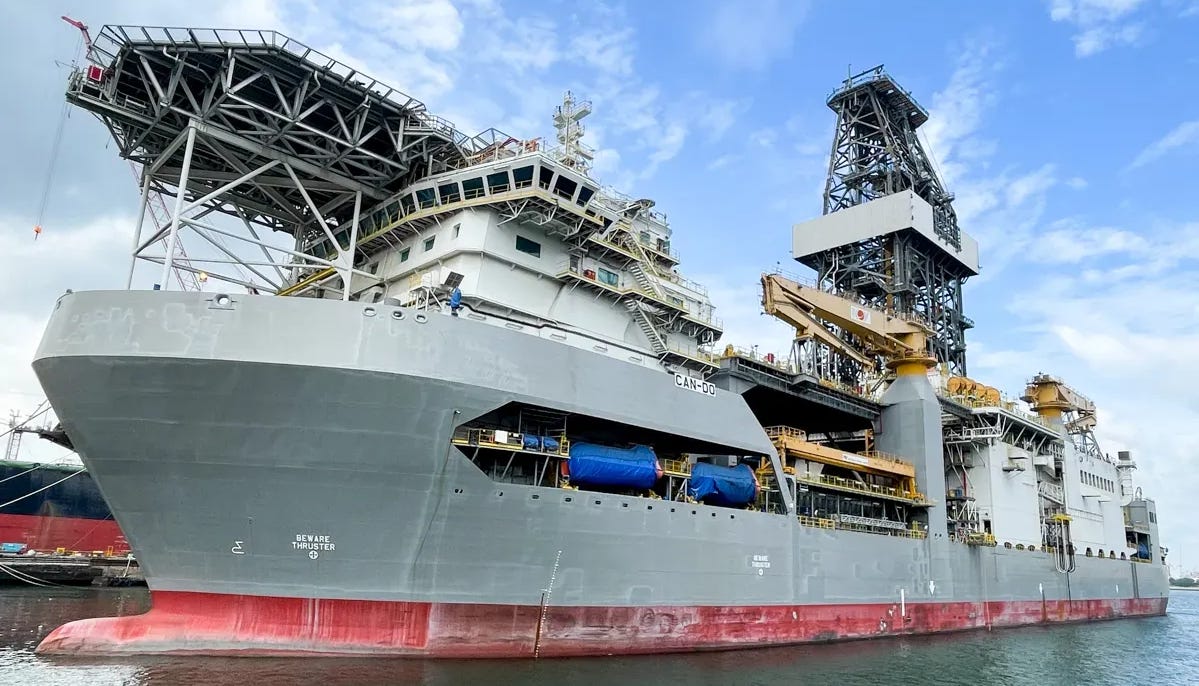
In 2013 a shipyard in Singapore started building a drillship called Can Do. A drillship is a ship that drills for oil in deep water. It was supposed to be ready in 2016. It never left the yard. Two weeks ago RigCo and Seatrium agreed to finish it. Delivery in 2027.
That makes a ship from 2013 the next new drillship the world will get. Nobody has ordered a new one since 2014. Twelve years. Apple released thirteen iPhones in that time.
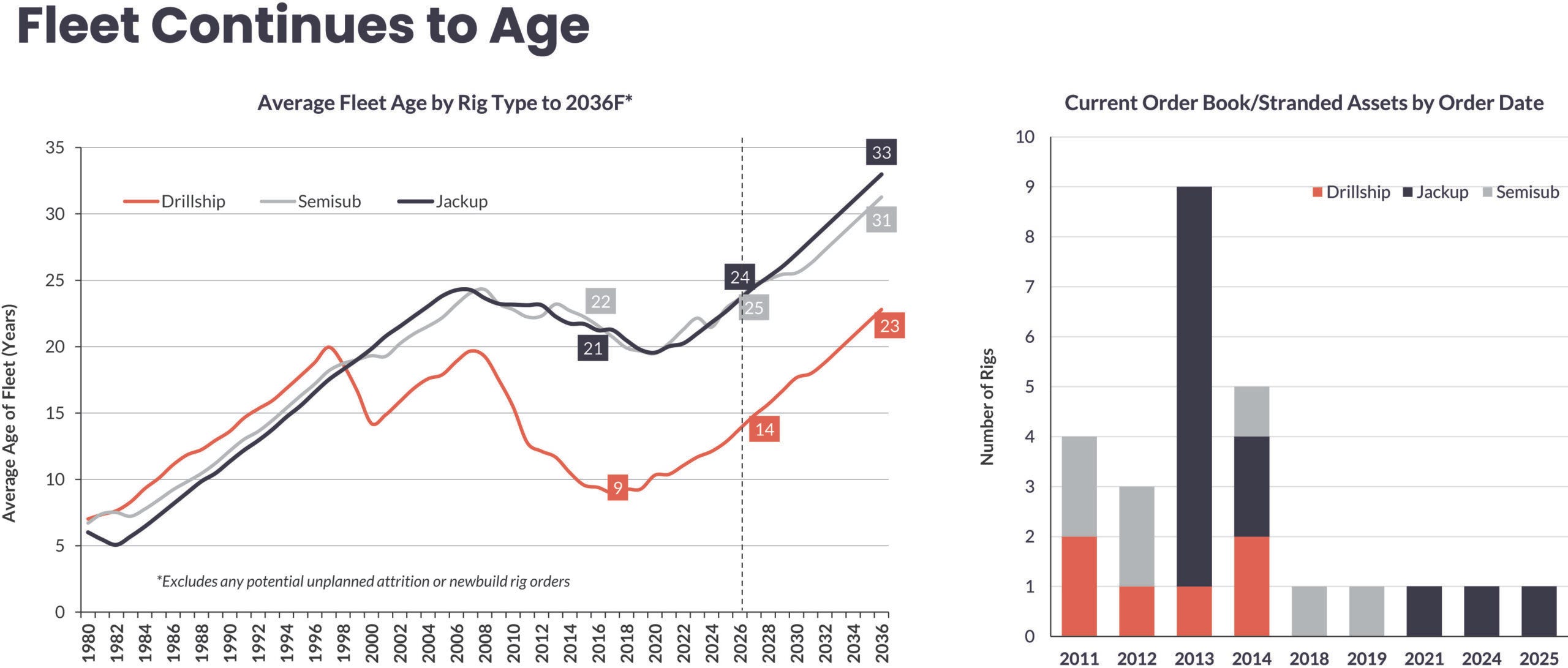
The right side of the chart is every unfinished rig still sitting in a yard. Can Do is the first one anybody has touched. The left side shows the result. The average drillship was 9 years old in 2017. Today it is 14. The ships are getting old and no new ones are coming.
Nobody is ordering.
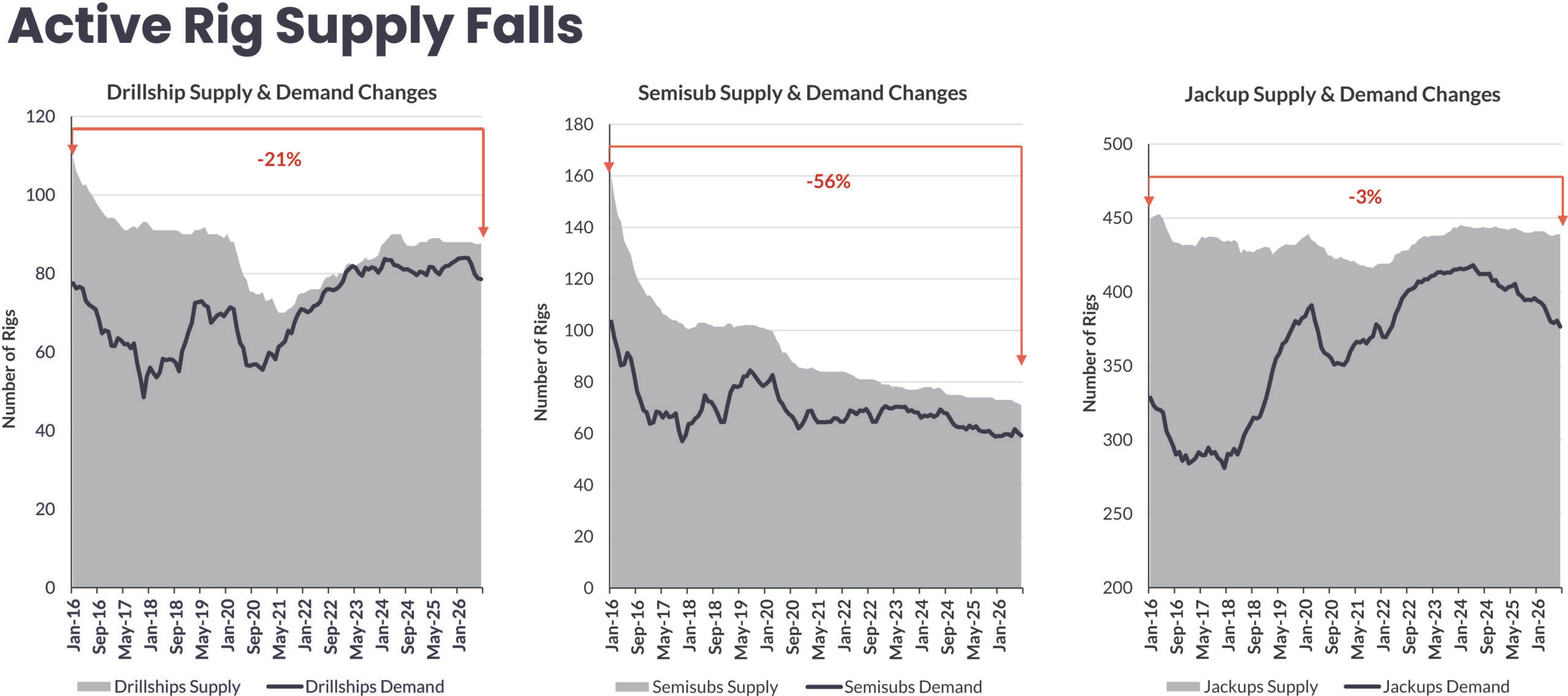
Since 2016 the world lost a fifth of its drillships and more than half of its semisubmersibles, the other type of deepwater rig. The gray area is supply. It only goes down. The dark line is demand. In 2016 there were 33 drillships more than anyone needed. Today there are four, and most of those are not offered for work.
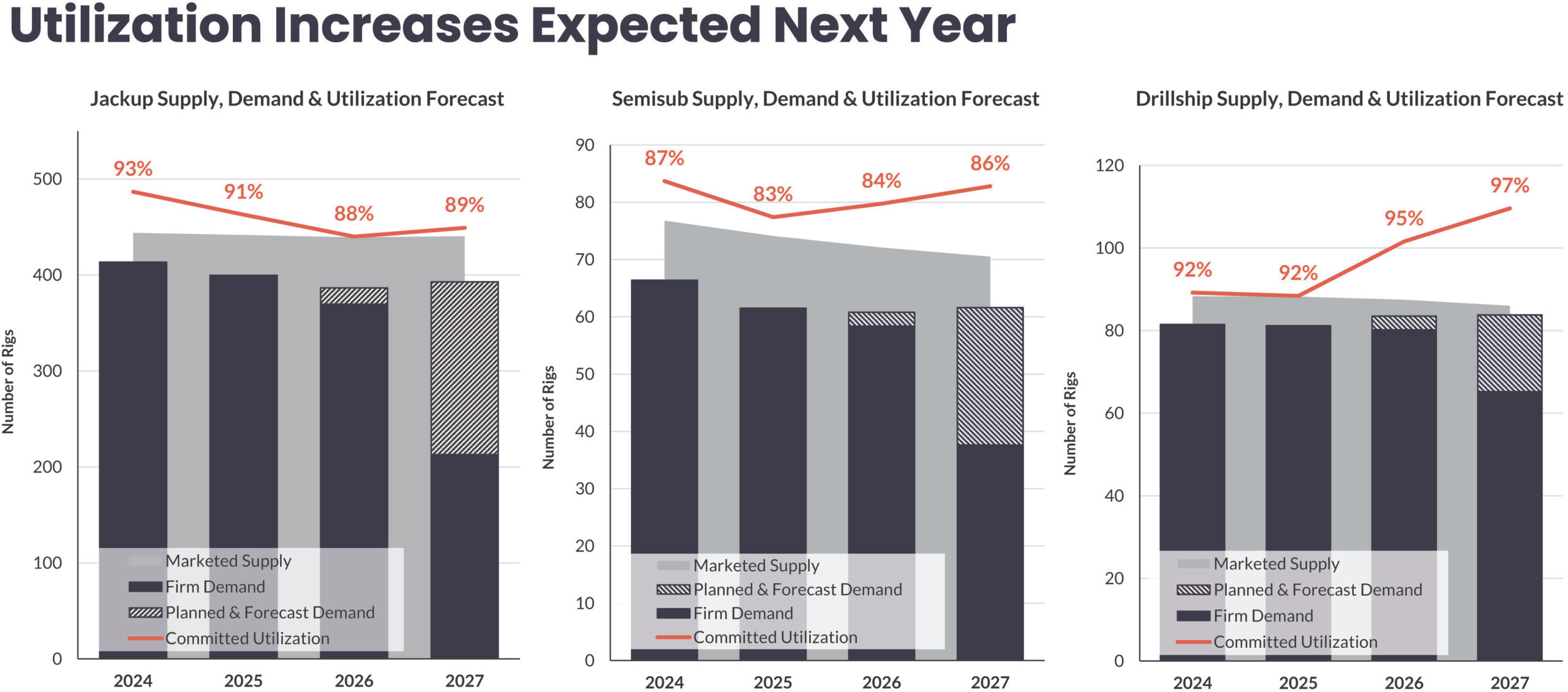
Westwood expects 97% of drillships to be working in 2027. The weak spot is jackups, the simple rigs for shallow water. Half of next year’s jackup work is still uncontracted, and Transocean inherits 31 of them from Valaris.
Deep water is the thesis. Noble’s CEO counted 110 deepwater rigs on earth that are offered for work. 109 have a contract. One is free.
On October 23 the CEO of SLB said this on the earnings call.
“We believe indeed that the cycle has started.”
SLB is the biggest oil service company in the world. Almost every large fund owns it. Very few own Transocean. When that man says the cycle has started, people start looking for the stock that gains the most. There is one obvious answer.
The banks were a week ahead of him. On October 15 Transocean signed a new credit line. The banks offered more money than Transocean asked for. Not long ago the market treated this company as a bankruptcy candidate. And one line in that agreement, section 6.25, allows dividends and share buybacks. Transocean has not paid a cent to shareholders since 2015.
Two things from the same month do not fit.
On October 19 Transocean signed two drillships for $550 million together. One got a raise of about 6%. The other took a pay cut of about 7%. In a market where 109 of 110 rigs are taken, a ten year old drillship took a pay cut.
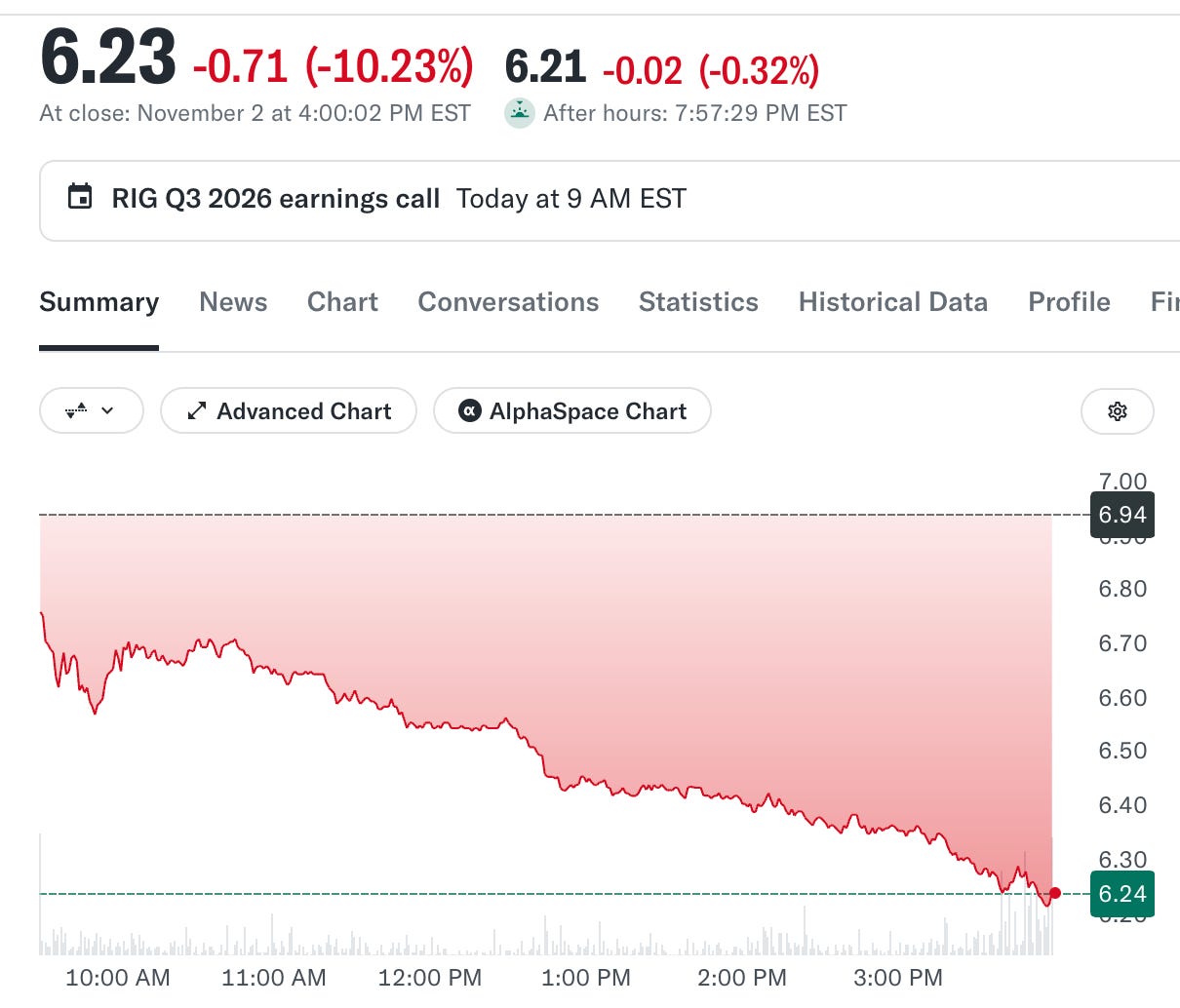
And the revenue. In August Transocean told us to expect $920 to $960 million for the third quarter. A year ago it made $1.03 billion. The tightest deepwater market since 2023, and the biggest driller on earth made less than a year ago.
I wanted one answer from Monday’s report. Not the merger. That gap. I found it. It is one line in the report, and it is the best thing in it. Before I show it, one number that is not in the report.
On October 15, 313 million Transocean shares were sold short. A record. A short seller borrows a share, sells it, and hopes to buy it back cheaper. A year ago the count was 125 million. It went up while 109 of 110 rigs found work. It went up while the banks oversubscribed the credit line. It went up the week SLB said the cycle has started.
Transocean has 924 million shares that trade freely. 313 million of them are borrowed and sold. One in three. That is two billion dollars betting the biggest driller on earth is worth less than $6.41. About 36 million shares change hands on a normal day. If every short wanted out at once, it would take eight and a half days. The longest exit in a year.
Shareholders vote on November 24. The merger closes December 1. Thirty-three drillships under one roof, almost twice the next company. And a third of the float is betting against it a month before it exists.
Below the line is that one line from Monday’s report, what it means for next year’s revenue, the cash the new company takes into December 1, and whether section 6.25 is decoration or the first money back to shareholders since 2015.
And the question nobody shorting this stock wants to hear a month before December 1.
Is a short squeeze likely here?
