


On a Friday night in late May, a coal mine in Shanxi exploded. 82 miners died. The owners had hidden tunnels and faked the drawings. Within days China shut 109 coking coal mines. Since then 209 mines in Shanxi have been shut at some point, 280 million tons of capacity. As of November 2, 40 were still idle.
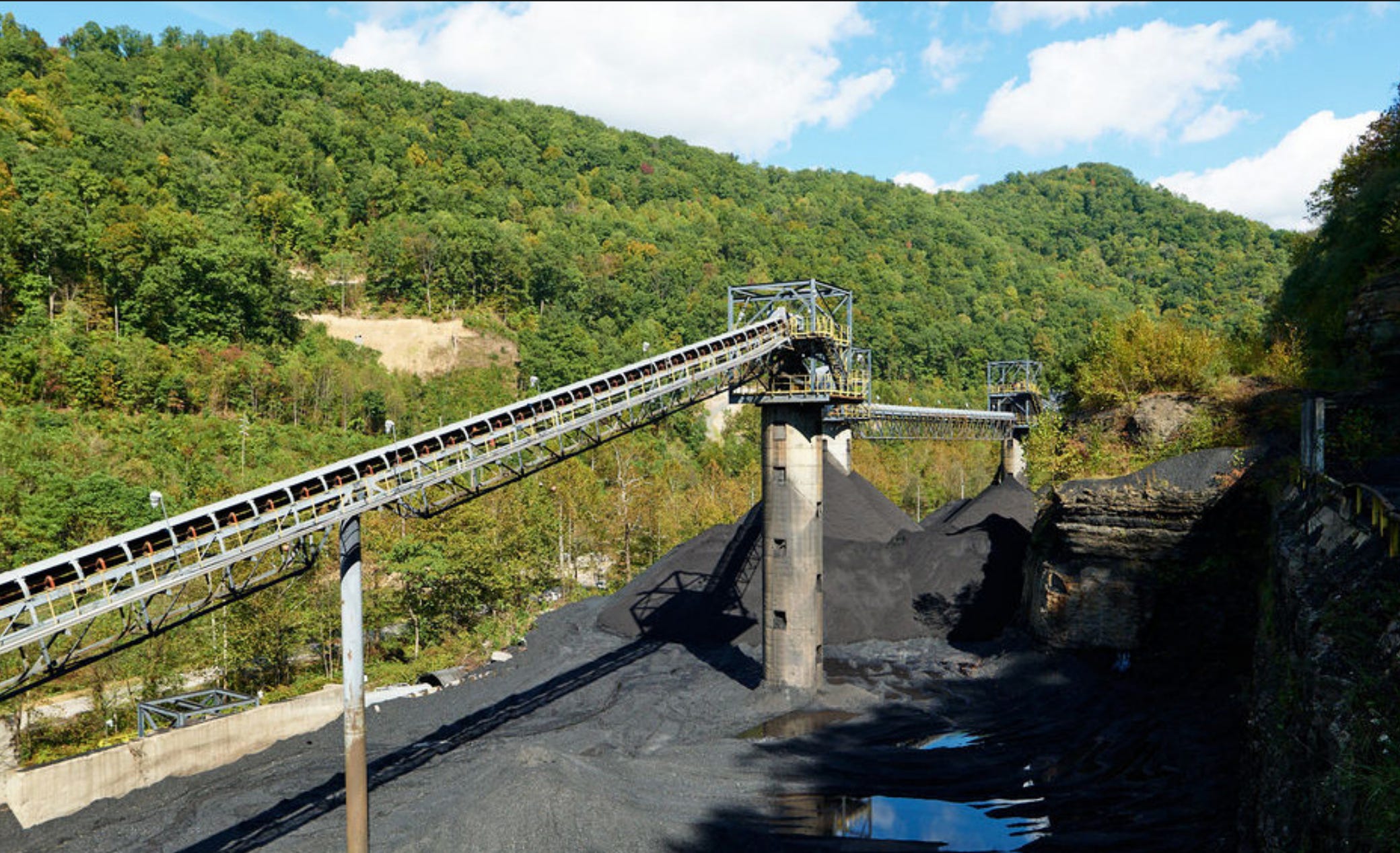
Coking coal is the coal in the thumbnail. You bake it into coke, and coke is what burns inside a blast furnace. No coke, no blast furnace. Two thirds of the world’s steel is made this way.
In September Russia’s biggest coking coal mine caught fire. Raspadskaya is shut for 90 days. On Monday POSCO, one of the biggest steel makers on earth, said coking coal got too expensive and it is raising steel prices to pay for it. The Australian benchmark, the price the whole industry watches, averaged $216 a ton in the second quarter. A year ago, $167.
Warrior Met Coal digs coking coal in Alabama. It sold its coal in the second quarter for $138 a ton.
A year ago, Warrior got 83% of the benchmark. This spring it got as little as 62%. By the second quarter it was back to 66%. Why was the discount still so wide?
I am looking for the reason. It is not China. It is not freight. It is Warrior.
In October 2025 Warrior started the longwall at Blue Creek, a new mine it built for $1 billion, eight months ahead of schedule. Blue Creek’s coal has little sulfur and makes strong coke, two things steelmakers like about premium low-vol coal. It still sells as High Vol A. Two other mines brought more of that grade to market within a year. Leer South in West Virginia came back in December after a fire, and Longview came back in September after a bankruptcy. The US will export 7% more coking coal in 2026 than in 2025, and nearly all of the extra is High Vol A. Warrior’s CEO said it on the call, in his own words.
“There is an abundant supply of that quality of coal.”
The world is short of one kind of coking coal. America dug a glut of another. Warrior built the mine that broke the price of its own coal.
In February Coronado gave up. It sold its Logan complex, 1.8 million tons of the same coal, 530 miners, for what the filing calls nominal cash. It called American high vol structurally challenged.
And Warrior’s cash profit nearly tripled on a year ago. With Blue Creek, its cost fell to about $93 a ton. At 66% of the benchmark, Warrior makes more money than it made at 83% without the mine. Coronado is leaving the market at the price that makes Warrior rich.
This morning Peabody reported.
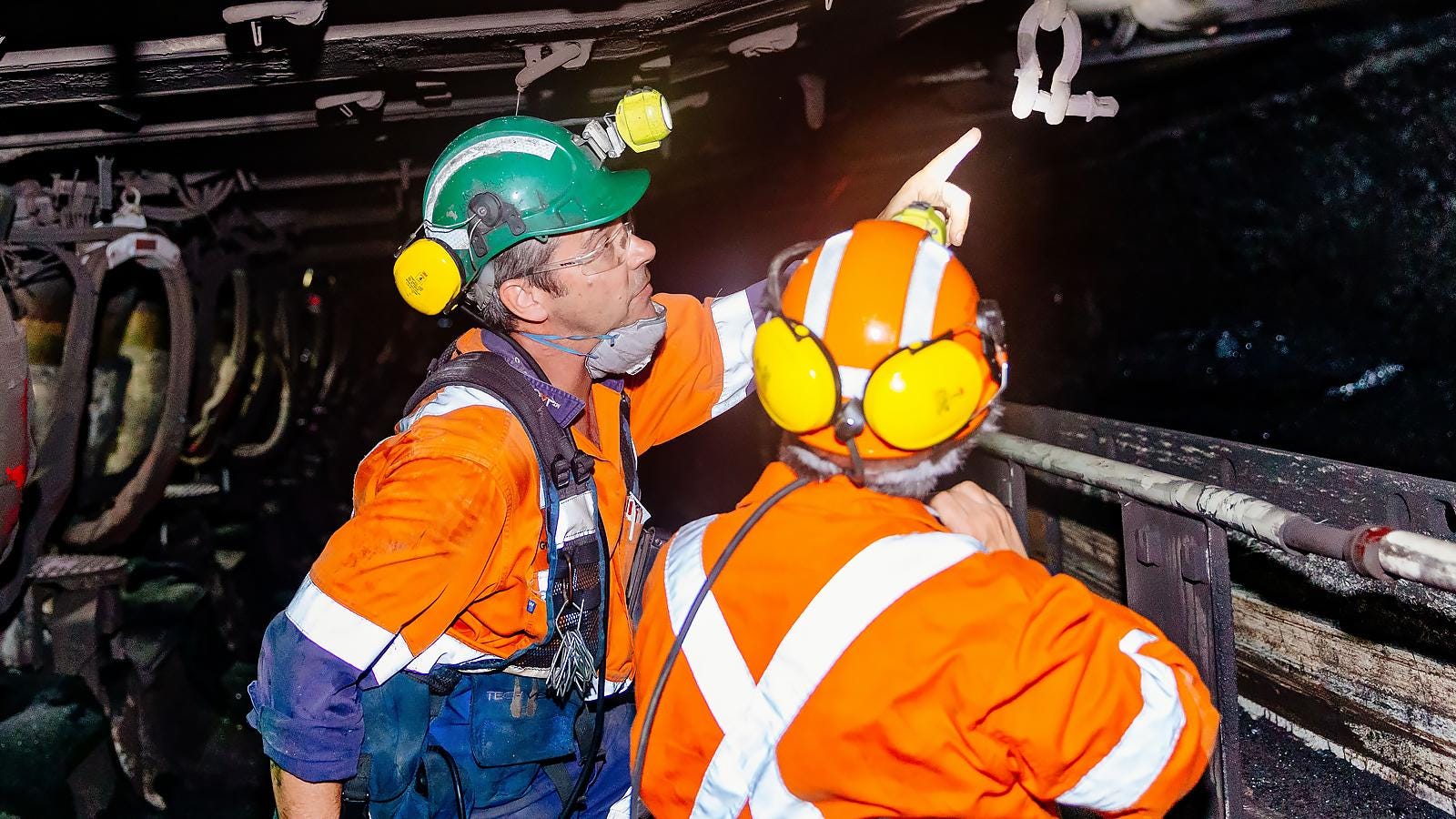
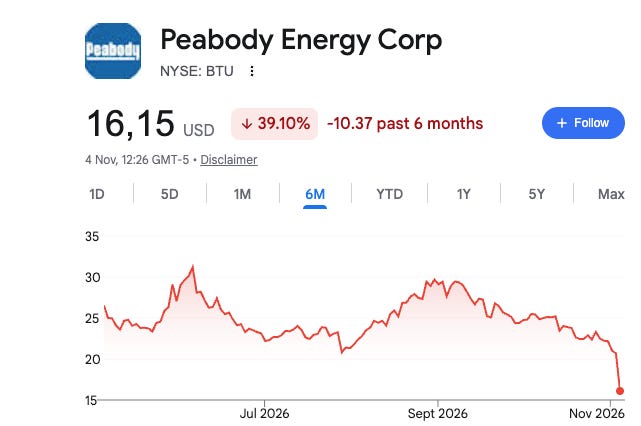
Its seaborne coking coal brought in $164 a ton in the third quarter against costs of $162. That left $2 a ton. Centurion, the new longwall Peabody spent years and hundreds of millions on, ran into faulted rock across the panel. In October it produced 45,000 tons. Warrior’s Blue Creek does that in a few days. Peabody expects 300,000 to 500,000 tons from Centurion in the fourth quarter, down from 580,000. The full fix waits for the next longwall move, in the third quarter of 2027. Peabody fell 22% today.
On October 29, six days before this report, Warrior announced a special dividend. $2 a share, out the door on November 20. Through September it had not bought back a single share. In February the stock was $111.
Then the Democrats won. Coal stocks were crushed today, and Warrior closed at $81, down 27% from February. The company walks into its own report with $302 million in the bank at the end of June.
Below the line is what the 66% did in the third quarter and whether Blue Creek got its first raise. One number that is not in the report. The short interest in Warrior was 23% of the float a year ago. It is 11% today. The shorts left before the report came out.
And the question I care about more than any number in the report. $300 million of cash, a stock down 27% from February, and a buyback that has not bought a share all year.
Tonight I find out whether Warrior finally starts eating itself.
