

While You Were Buying Nvidia, Mohnish Pabrai Was Buying Kazakhstan.
The Kaspi Bet: What Did Pabrai See?

Three of the smartest investors on the planet just bought the same stock.
In late March 2026, Mohnish Pabrai disclosed Kaspi.kz as one of the top ten holdings in his Pabrai Wagons ETF.
Three weeks later, on April 20, Tencent entered Kazakhstan’s fintech sector for the first time in its history. Around 518 million dollars for a 3.2 percent stake in Kaspi.
On the same day, the founder bought more.
Three buyers. Same stock. Same quarter.
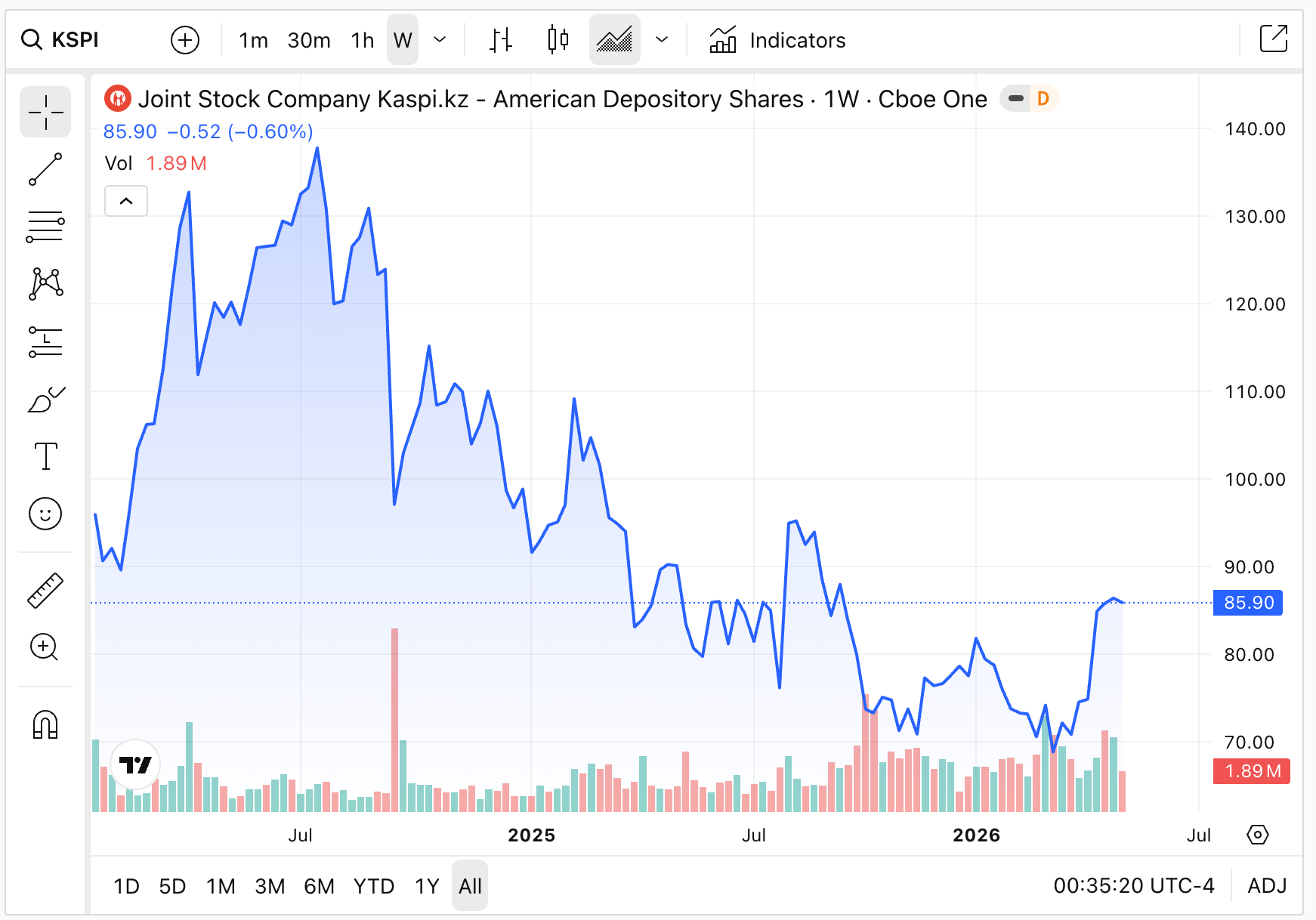
The stock is Kaspi.kz. Market cap around 16 billion dollars. Trading at 7 times earnings while Nvidia trades at 45.
The man who paid 650 thousand dollars to have lunch with Warren Buffett. The Chinese company that invented the super app. And the founder himself.
All three of them looked at this stock at 7 times earnings and bought more.
What Is This Thing?
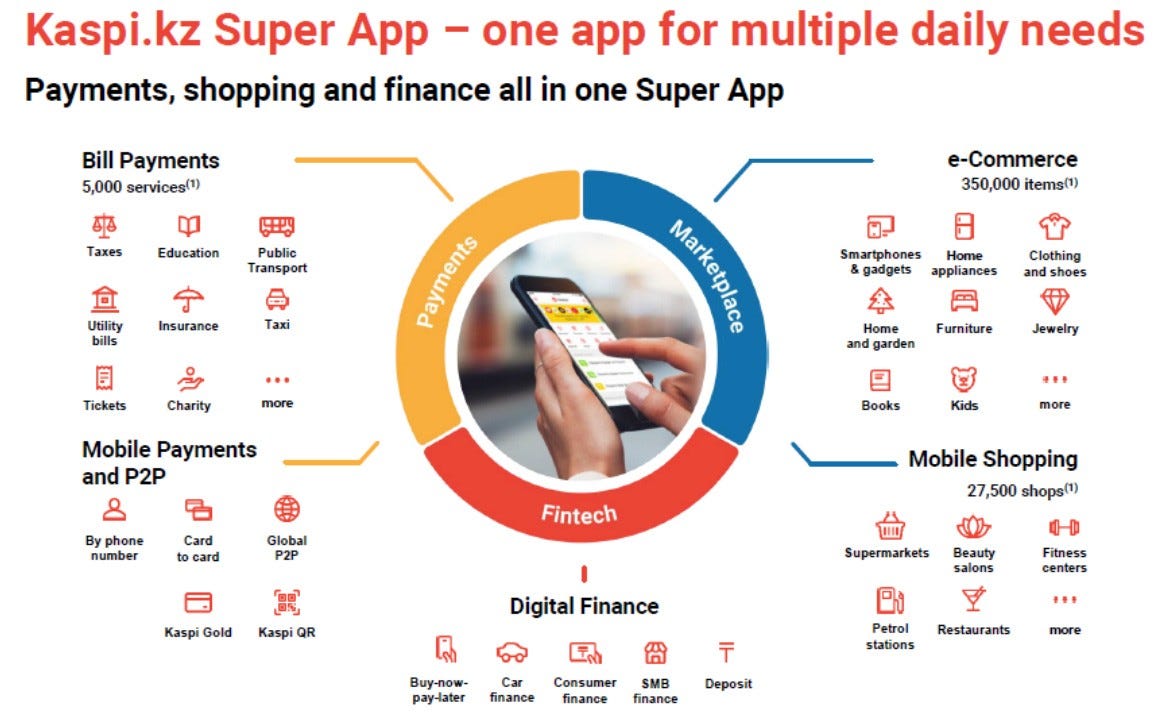
Kaspi is the operating system of Kazakhstan.
Across Kazakhstan and Türkiye the platform now serves more than 25 million consumers and nearly 1 million merchants. The average user makes 77 transactions per month inside the app. There is one other app on Earth with this kind of engagement. WeChat. Built by the company that just bought into Kaspi.
Inside the app you pay bills. Buy electronics. Order groceries. Book flights. Apply for a business license. Get married. Sell your used car over coffee. File your taxes. Renew your driver’s license. Get a loan. The entire life of a Kazakh citizen lives inside one icon.
The numbers from the 2025 annual report tell you the scale. Total payment volume of around 87 billion dollars per year. Marketplace of around 13 billion. Fintech originations of around 23 billion. Revenue including Türkiye was 8 billion dollars in 2025. Net income was 2.1 billion. Return on equity over 50 percent.
The only companies on Earth with returns on equity this high are called Visa, Mastercard and Moody’s.
The stock trades at 7 times earnings.
How.
One Word.
Kazakhstan.
Say it to your wife. “Honey, I’m putting our entire savings into Kazakhstan.”
Watch the look on her face.
That is the entire reason this stock trades at 7 times earnings instead of 30.
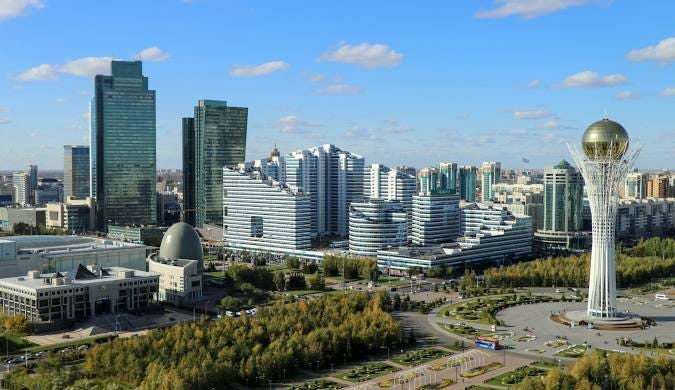
Real Kazakhstan went from a 90 percent cash economy to a 90 percent cashless one in less than ten years. The government digitized everything. You register a business in three minutes. You transfer car ownership with a tap. Try doing that in Germany, where I live.
The country leapfrogged the developed world. Kaspi was the rail it ran on.
The discount is not about the business. The business is exceptional. The discount is about a stereotype that has nothing to do with the country that exists today. This is the gap. The Kazakhstan in Wall Street’s head versus the Kazakhstan that exists on the ground. That gap is your edge.
The Founder Who Will Not Sell
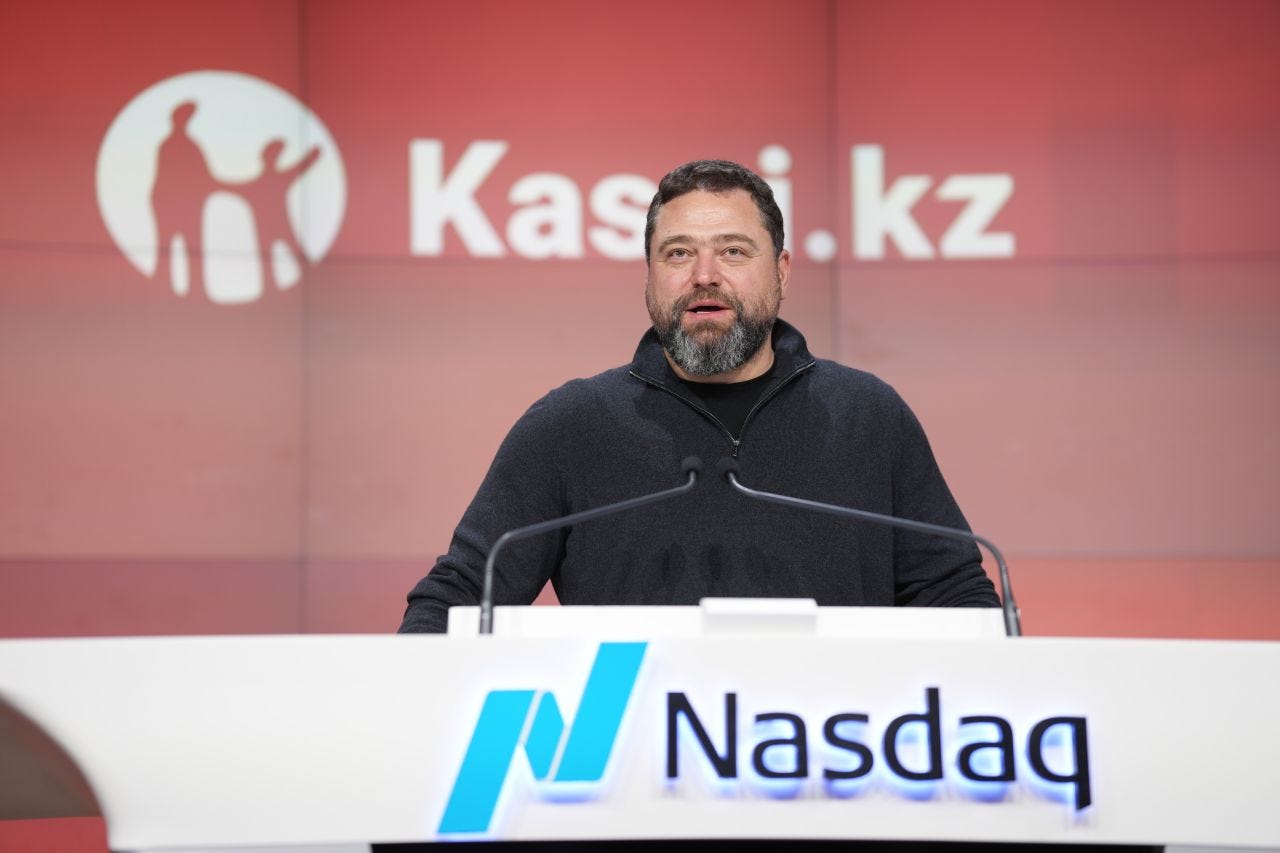
When the Tencent transaction closed, a founder bought more.
He already owned around 23 percent of the business. He took the chance to add to his stake personally. Senior management did the same. Insiders at a company trading at 7 times earnings are buying. And they are buying alongside Tencent and Pabrai.
This is not a man who needs more money. This is a man telling you, with his own checkbook, that the stock is mispriced.
Lomtadze took a small failing bank in 2007 and built it into a 16 billion dollar super app. Harvard Business School wrote two case studies on him. He survived a bank run, an attempted coup in January 2022, and Russia’s invasion of Ukraine the very next month. The man does not break.
His policy is to return capital to shareholders. The dividend, just resumed after the Hepsiburada acquisition closed, runs at roughly 8 percent of the current share price.
A super app. Growing 20 percent. Paying you 8 percent.
Find me another one.
The Bad Money Story
Ten years ago, Kaspi had a credit card product. It generated roughly one third of the company’s net income. Hundreds of millions of dollars per year, straight to the bottom line.
Lomtadze killed it.
Not because it was unprofitable. Customers did not love it. He called the revenue “bad money.” Cash the company should not be earning because it was not making customers’ lives better.
He shut it down. Walked away from a third of his profits.
You cannot manufacture this. You cannot reverse engineer this culture. You cannot fake it. It either exists, or it does not.
The Part Tencent Could Not Stop Thinking About
There is one specific dynamic about Kaspi that, once you understand it, makes the 7x multiple feel almost criminal. It is the single asset that turns a cheap stock into an inevitable one.
It is not the dividend. It is not the founder ownership. It is not the user engagement.
It is a specific catalyst inside the Türkiye business, combined with one ambition the CEO put into writing in his 2025 letter, plus a statement made publicly by Xi Jinping in Astana that quietly rewrote the geopolitical risk equation on this stock. Almost no Western analyst has internalized it yet.
If you are a free subscriber, this is the decision point.
The first half of this post was the setup. The second half is the trade. The 100 million user ambition. The Türkiye engagement gap that nobody is modelling correctly. The Xi statement in full. The Kaspi launch that tells you the product machine is still accelerating. The peer multiple breakdown showing exactly how much room this has to re-rate. The honest risks, including what Elon Musk just dropped on the entire super app industry. And the one sentence that captures the whole thesis.
Paid subscribers get all of it. Plus every position update going forward. One cup of coffee per month.
If you made it this far, you already know this is not a normal Substack.
Welcome to Cannibal Stocks.
