


“From the end of 1950 through the next ten years, my returns averaged about 50% a year... But I was working with a tiny, tiny, tiny amount of money. I would pore through volumes of businesses and I would find one or two that I could put $10,000—$15,000 into that were just ridiculously cheap.” - Warren Buffett, 1998 Berkshire Hathaway Annual Meeting
This series looks at the early Buffett and how he bought tiny positions in absurdly cheap businesses and turned them into extraordinary returns. His method was to buy below liquidation value, sell the assets if needed, and lock in a profit.
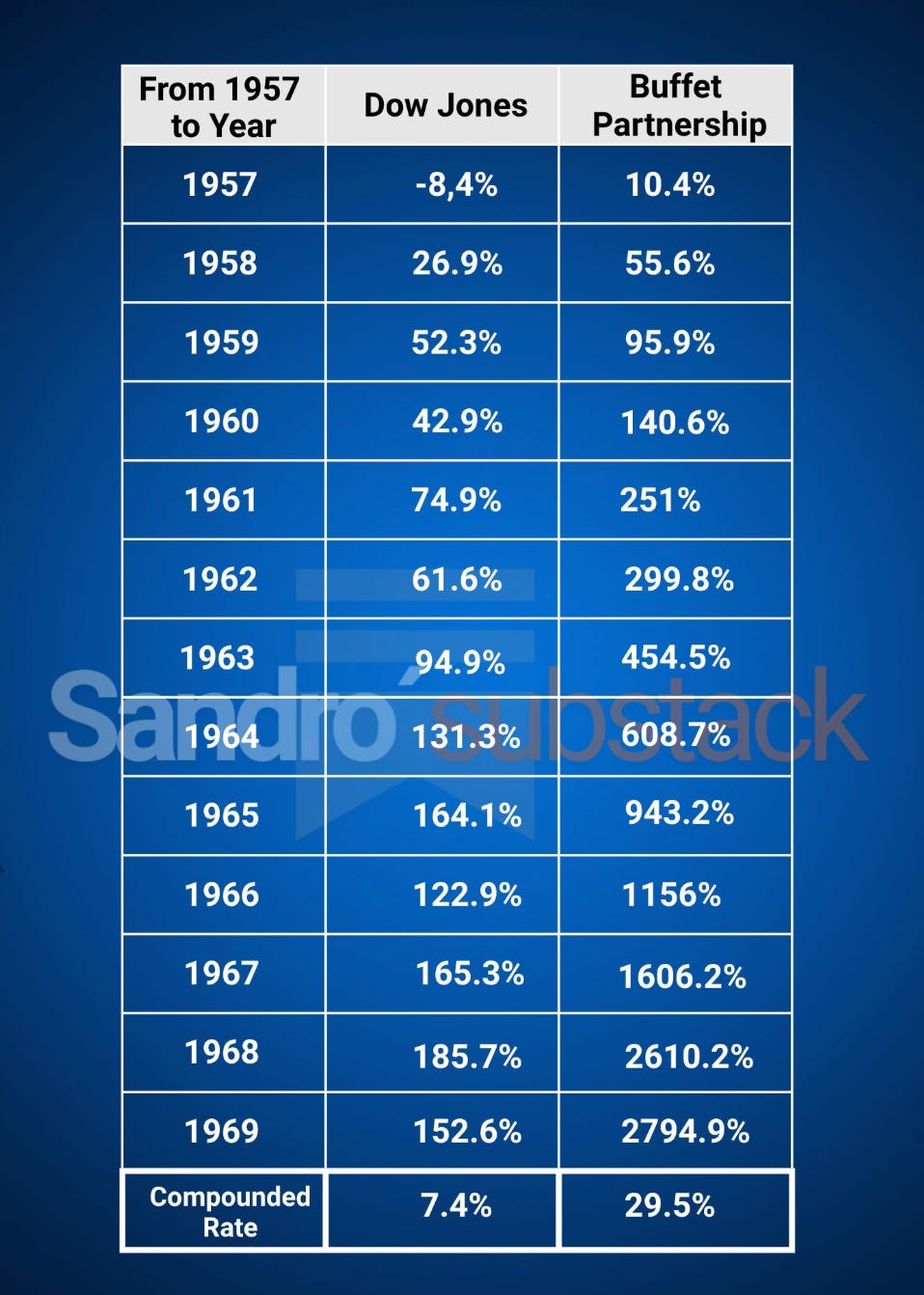
From 1957 to 1969, Buffett’s partnerships compounded at 29.5% per year, turning $1,000 into nearly $26,000, while the Dow Jones barely moved.
The early portfolio
Marshall-Wells (1950)
Greif Bros. Cooperage Corporation (1951)
Cleveland Worsted Mills (1952)
Union Street Railway (1954)
Philadelphia and Reading (1954)
British Columbia Power (1962)
American Express (1964)
Studebaker (1965)
Hochschild, Kohn & Co. (1966)
Walt Disney Productions (1966)
My posts about Buffett’s first investments with small amounts of money can be found here:


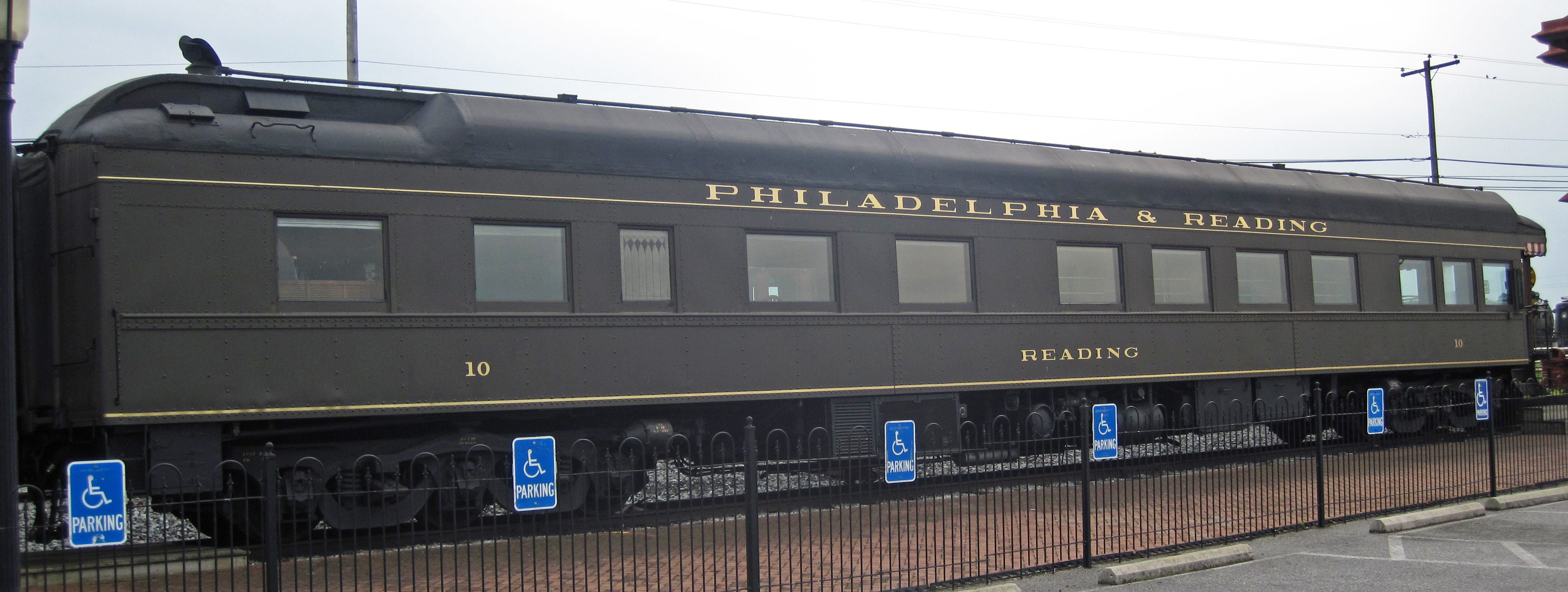
This post focuses on Philadelphia & Reading (1954), a once-dominant anthracite company that played a central role in powering America’s industrial northeast. For generations it supplied coal to factories, railroads, and millions of households, but by the early 1950s the entire anthracite industry was in terminal decline. Demand was collapsing, cheaper fuels were taking over, deep mines were being abandoned, and most producers were racing toward bankruptcy.
The Biggest Bet of His Early Career
“I’ve owned stock in an anthracite company. There are probably people in this room that don’t know what anthracite is.” - Warren Buffett, 1998 Berkshire Hathaway Annual Meeting
Warren Buffett’s first major strike was not Coca Cola or Geico because it was actually a dying coal company that everyone else hated. In 1952 Buffett began buying shares of Philadelphia & Reading at roughly $19 per share but shortly after the floor fell out and the price collapsed to $9. Most investors would have viewed this as a disaster and sold immediately but Buffett did the opposite. As the price imploded he doubled down and by the end of 1954 he had poured $35,000 into the stock which was the largest single investment of his life up to that point.
To understand why you have to look at the business the way he saw it. The market saw a ghost but Buffett saw a free lunch. Philadelphia & Reading was a former giant in the anthracite coal industry which was a sector being wiped out by the shift to gas and oil. The company carried the ultimate scarlet letter since it had gone bankrupt in 1937. For Wall Street bankruptcy is a signal to run away but for Buffett it was an invitation. He knew that when a company emerges from bankruptcy it often writes down its assets to rock bottom levels so the new balance sheet looks clean but drastically understates the true value of the equipment and land. Buffett was not buying a failing business. He was buying a fortress of assets that was mispriced by fear.
He anchored his decision on a metric called Net Current Asset Value. By late 1954 the stock traded around $13.38 but the liquidation value of the cash and receivables alone was $9.16 per share. This meant the liquid assets covered almost all debts. But there was a hidden kicker involving the culm banks. The company owned massive piles of coal waste which were not even listed on the balance sheet but new technology meant this waste could now be burned for energy. Buffett calculated this free option was worth an extra $8 per share so he was effectively buying a dollar for 50 cents and getting a free energy business thrown in.
If the story stopped there it would be a classic value investment but Philadelphia & Reading became something much more important. Under the leadership of Mickey Newman the company stopped trying to save the coal business and started a radical new strategy to liquidate the past to fund the future. They sold off the mines and used the cash to acquire Union Underwear which was the maker of Fruit of the Loom. This was a stroke of genius because the coal business had generated massive losses for years so the company could use those losses as a tax shield. The profits from the new underwear business were virtually tax free.
Suddenly a dead mining company had transformed into a cash generating holding company. The results were immediate and explosive. By 1956 the company was earning over $7 per share meaning in just two years of profit the business covered nearly the entire cost Buffett had paid for the stock. As Newman continued to sell waste coal and buy profitable businesses in steel and manufacturing the earnings compounded.
When the company was finally acquired in 1968 the outcome was staggering. Investors who had bought in during the dark days of the early 1950s did not just double their money since they saw a return of roughly 20x. For Buffett Philadelphia & Reading was more than just a profit because it was the architectural drawing for his future. It proved that you could take a distressed asset rich company and fix its capital allocation to turn a dying industry into a dynasty.
Finding the Next Hidden Fortress
I am currently holding a few companies in my portfolio that have recently emerged from bankruptcy and look exactly like Philadelphia & Reading did in 1954.
The reason these opportunities exist today is because of how accounting works after a crash. When a company comes out of bankruptcy it is forced to mark down the value of its machinery and land to a rock bottom liquidation price. This means the assets sit on the books for a fraction of their real worth. The debt is gone and the assets are still world class but the balance sheet effectively hides the true power of the company.
Most investors are too lazy to dig past the stigma of bankruptcy so they leave these cheap assets for the rest of us. I have identified two specific companies that fit this perfect setup where the financial statements are hiding the real value.
If you want to see exactly what I am buying and understand the deep value hidden in these new balance sheets you can read my full analysis in the links below.


Finding these stocks is great for your portfolio but terrible for your social life. Try explaining to your spouse at dinner that you just invested the family savings in a bankrupt company that nobody wants. It is a lonely road but at least I will be able to afford a very comfortable couch to sleep on when she kicks me out of the bedroom. 😂

Cheers, Sandro
Thank you for teaching me a subject I knew very little about! I will make a mental note not to forego the idea of investing into a clean slate. Very good insight.