


“He’d find something that was selling for one-fourth of liquidating value. He’d load up. So for a long period of time, he had a happy hunting ground. All he had to do was go through lists of liquid securities and slowly buy them, and he could get these ridiculous bargains.” - Charlie Munger
This post is part of a series that steps inside Warren Buffett’s mind, exploring how he invested small sums of money at the very start of his career. In those early years, Buffett was buying businesses below their liquidation value — meaning he could close them, sell the assets, and still walk away with a profit.
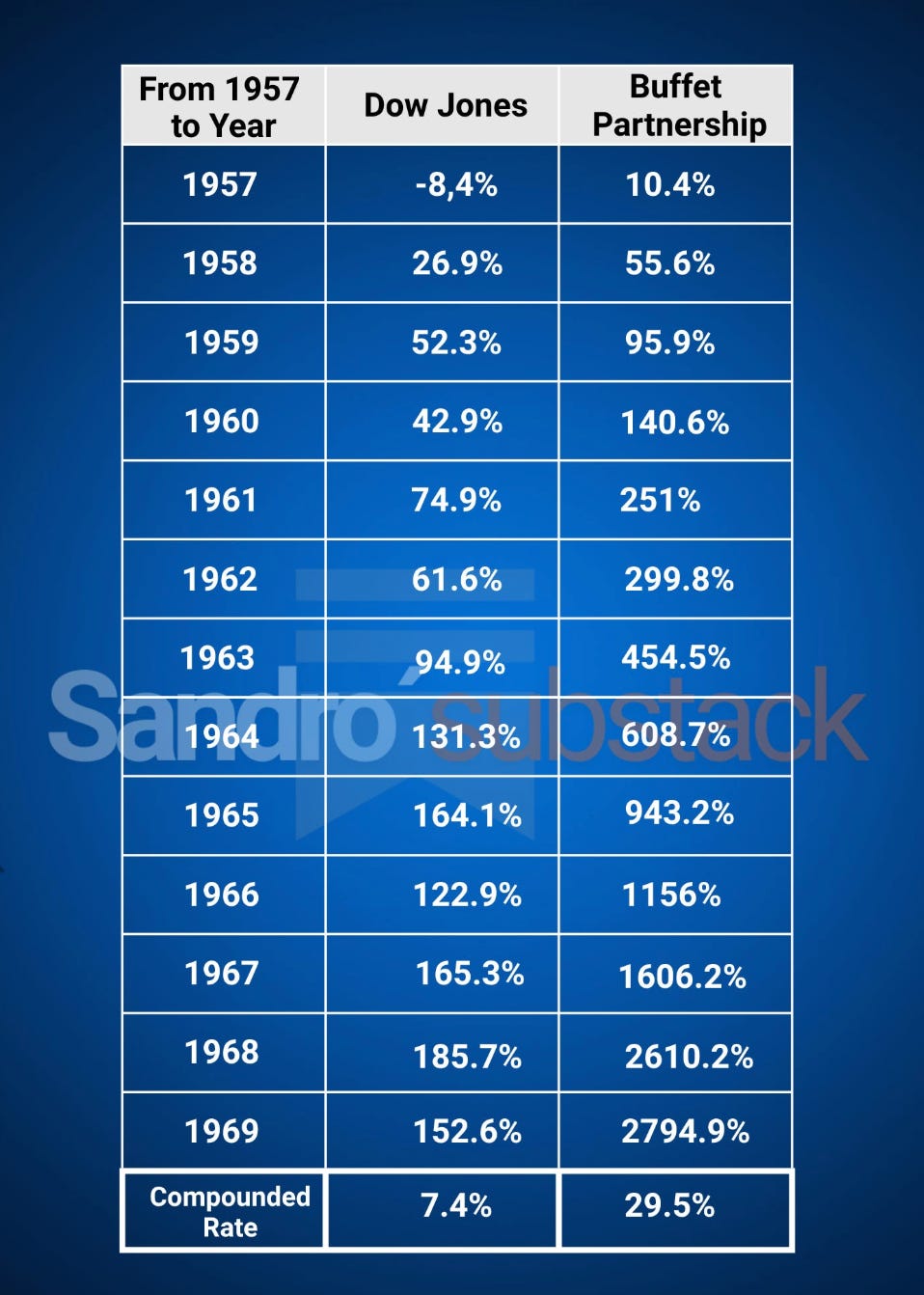
From 1957 to 1969, Buffett’s partnerships compounded at 29.5% per year, turning $1,000 into nearly $26,000, while the Dow Jones barely moved.
The early portfolio
Marshall-Wells (1950)
Greif Bros. Cooperage Corporation (1951)
Cleveland Worsted Mills (1952)
Union Street Railway (1954)
Philadelphia and Reading (1954)
British Columbia Power (1962)
American Express (1964)
Studebaker (1965)
Hochschild, Kohn & Co. (1966)
Walt Disney Productions (1966)
My posts about Buffett’s first investments with small amounts of money can be found here:


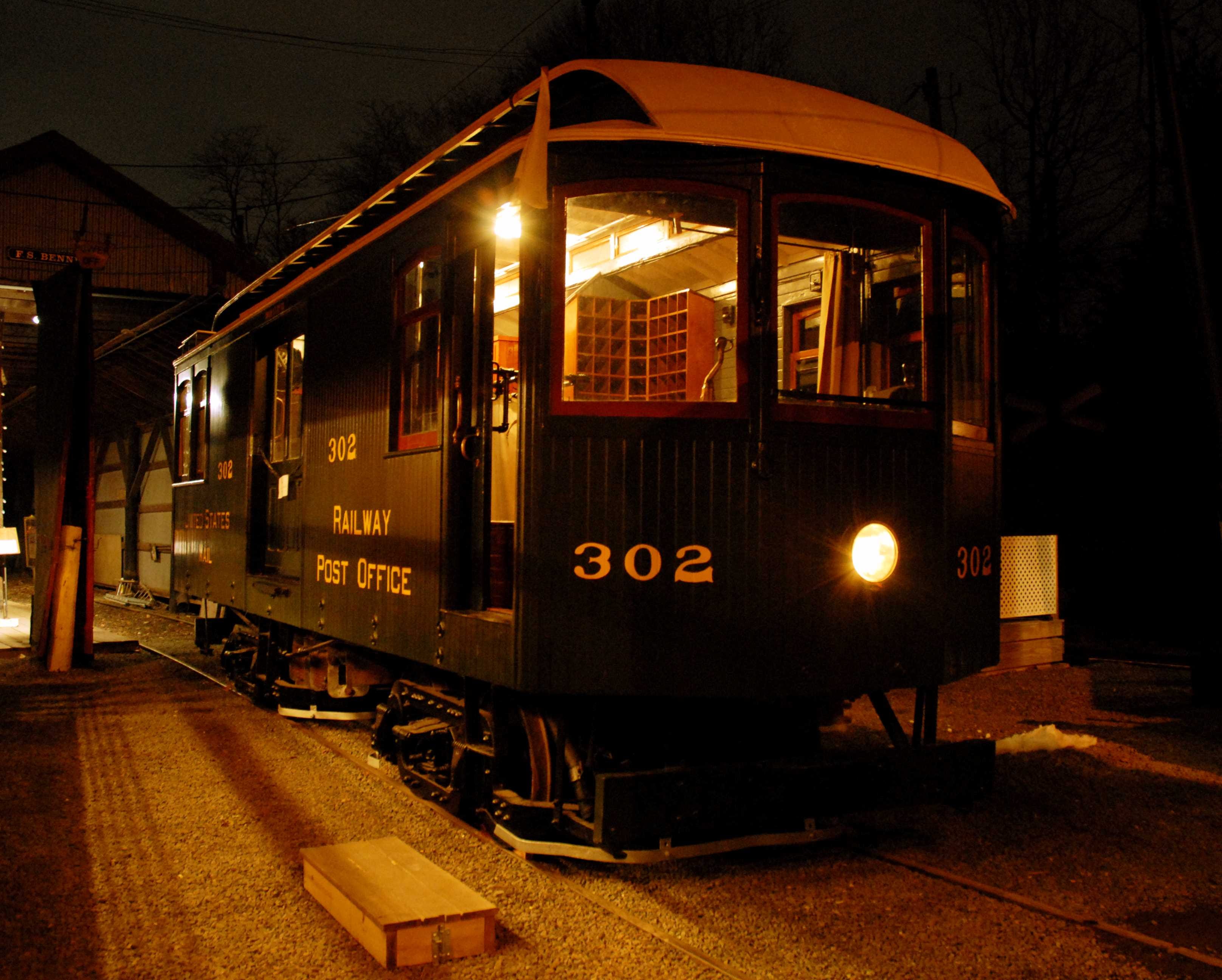
This post focuses on Union Street Railway (1954), a small Massachusetts bus operator that once formed the backbone of public transportation in New Bedford. For decades the company moved thousands of workers, students, and families every day, but by the early 1950s the entire street-railway industry was collapsing. Cars were taking over, operating costs were rising, ridership was shrinking, and most transit companies were headed toward extinction.
This was exactly the kind of forgotten, asset-rich situation the young Warren Buffett loved. Union Street Railway traded far below the value of its cash, bonds, land, and buses. The market had completely written it off, even though the balance sheet told a very different story.
For Buffett, opportunities like this were a gift. While others focused on growth and glamour, he quietly accumulated shares in businesses that were worth more in liquidation than as going concerns. Union Street Railway became one of his purest early examples of buying a dollar for thirty cents.
Why Buffett Bought Union Street Railway
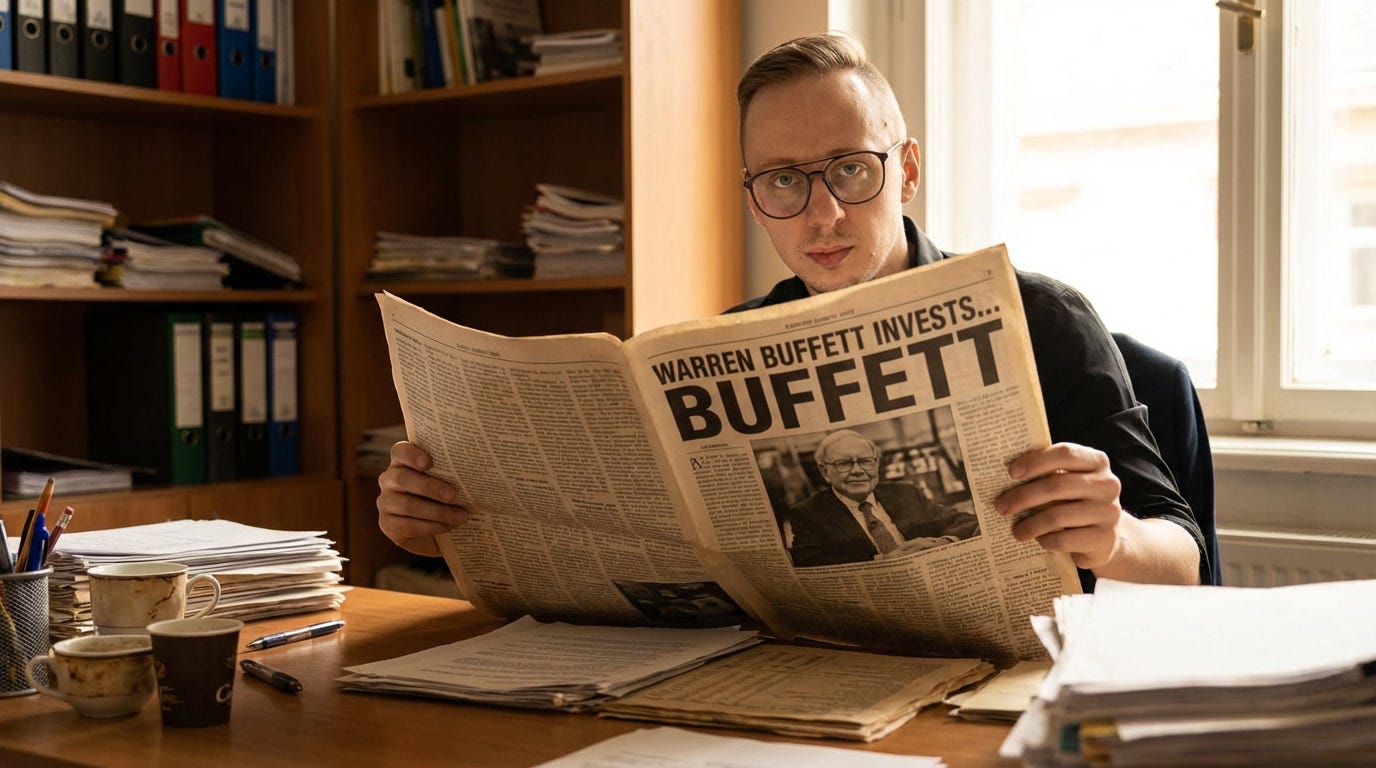
In the summer of 1954, Buffett boarded a bus to New Bedford, but he wasn’t going on vacation. He was on his way to inspect a company Wall Street had already declared dead. The street-railway and bus industry was collapsing, passengers were disappearing, and one operator after another was shutting down. For most investors this was a perfect reason to run away. So how much did he paid?
The stock traded around 30 to 35 dollars per share, which looked perfectly normal for a small, declining bus company. But Buffett wasn’t looking at revenue or profit. He went straight to one question: how much cash, bonds, and hard assets does this company have compared to its share price? He found this directly on the balance sheet:
Assets
Cash: $88,000 ($4.23 per share)
U.S. government securities: $1,099,000 ($77.71 per share)
Accounts receivable: $14,000 ($0.95 per share)
Net equipment: $63,000 ($4.36 per share)
Net land & buildings: $156,000 ($10.76 per share)
Special deposits: $46,000 ($2.92 per share)
Accident insurance trust: $20,000 ($1.42 per share)
Materials & supply: $23,000 ($1.52 per share)
Prepayments: $5,000 ($0.19 per share)
Total assets: $1,514,000 ($104.06 per share)
Liabilities
Outstanding ticket liability: $55,000 ($3.66 per share)
Total liabilities including tickets: $183,000 ($12.43 per share)
Total liabilities: $128,000 ($8.77 per share)
Liabilities were modest relative to the company’s asset base. All liabilities combined came to $183,000 ($12.43 per share). After deducting everything, the company still had a tangible book value of $1,331,000 — about $91.40 per share.
Buffett was buying shares for $30–35 while each share carried more than $91 in tangible value, a textbook case of paying thirty cents for a dollar.
What Happened After Buffett Bought
Once Buffett entered the position, the company made moves that Wall Street barely noticed but that dramatically increased shareholder value. The first big shift was an aggressive share repurchase program. Union Street Railway bought back so many of its own shares that the total share count dropped by roughly 23%. That immediately boosted the value of every remaining share Buffett owned — the same pool of assets was now spread across fewer claims. Tangible value was no longer just a bit over $91 per share; it realistically moved into the roughly $110–115 per share range once the buybacks and their impact on book value are taken into account.
The second catalyst was the monetization of “sleeping” assets on the balance sheet. Special deposits, reserves, old trust accounts and other frozen items gradually turned into cash. The balance sheet kept getting cleaner and more liquid, with more net cash per share appearing month after month. It was a classic liquidation-value story unfolding in real time. So how much did Buffett likely make?
I wasn’t able to find any surviving record of the exact date or price at which Buffett sold his shares. But back then Buffett strictly followed the Graham playbook of buying below liquidation value and selling when the market price moved toward that level. Only later under Munger’s influence would he learn that truly exceptional businesses can compound for decades and often deliver upside surprises. At this stage of his career he wasn’t playing that game yet.
Given this, the most logical exit point is when Union Street Railway traded somewhere around 70–90% of his estimate of intrinsic value. If the real, adjusted value per share had climbed into the $110–115 range, then a plausible selling range is roughly $80–100 per share.
With an entry around $30–35, that implies a return of 200% to well over 300%, likely within two to three years.
From Union Street to Offshore: The Next Deep Dive
The most important thing in investing is to learn how to value a business. It’s also the toughest to explain. What you really want a course on investing to be is how to value a business. That’s what the game is about. If you don’t know how to value a business, you don’t know how to value a stock.
In the next post we will step out of 1954 Massachusetts and move into today’s offshore world to apply the exact same Buffett-style framework to Valaris — an offshore company that the market, much like Union Street Railway, had already written off as dead.
We are going to analyze how much cash the company holds, the approximate value of its entire fleet, the strength of its current backlog, and the total debt that must be deducted. From this we will estimate its liquidation value — what Valaris would be worth if everything were shut down and sold.
Then we will shift to intrinsic value. We will assume a realistic dayrate range for the offshore cycle between 2026 and 2032 and estimate how much cash Valaris could generate across that period. That will allow us to build a grounded, conservative intrinsic value range the same way Buffett would have done in the 1950s.
If young Buffett could make money from dead railways, we can probably manage a few offshore rigs. Just don’t ask me to physically inspect all drillships — I’ve got some limits. 😅
Cheers Sandro
What I find particularly interesting is that this can be interpreted as a trade. 300% in a few years...