


“The best investors are not investors at all. They are entrepreneurs who never sold.” - Nick Sleep
Between 2001 and 2014, a English fund manager named Nick Sleep wrote letters to the people who trusted him with their money. Twenty five of them. Over two hundred pages. By the time he closed the fund and walked away, it had returned 921 percent and beaten the world index by more than 800 points.
I read every page. Not for the results, those are famous. I read them to learn expensive lessons cheaply.
And the letters do not show a man who already knew. They show a man figuring it out in real time, on the page. You watch him hold the most valuable idea of his generation in his hands and not quite recognize its face. It is like reading a detective novel where you already know who did it, and you are screaming at the detective who is staring straight at the answer and writing down the wrong name.
That is what makes it useful. Not the genius. The slowness of the genius. Because if it took him years to see what was right in front of him, the same blind spot is sitting in your portfolio tonight, and you do not know which holding it is either.
Here is how his mind changed, one turn at a time. (It follows my first piece on how he built the fund, here, but you do not need it to follow this.)

Watch him see.
One. Selling is the expensive mistake
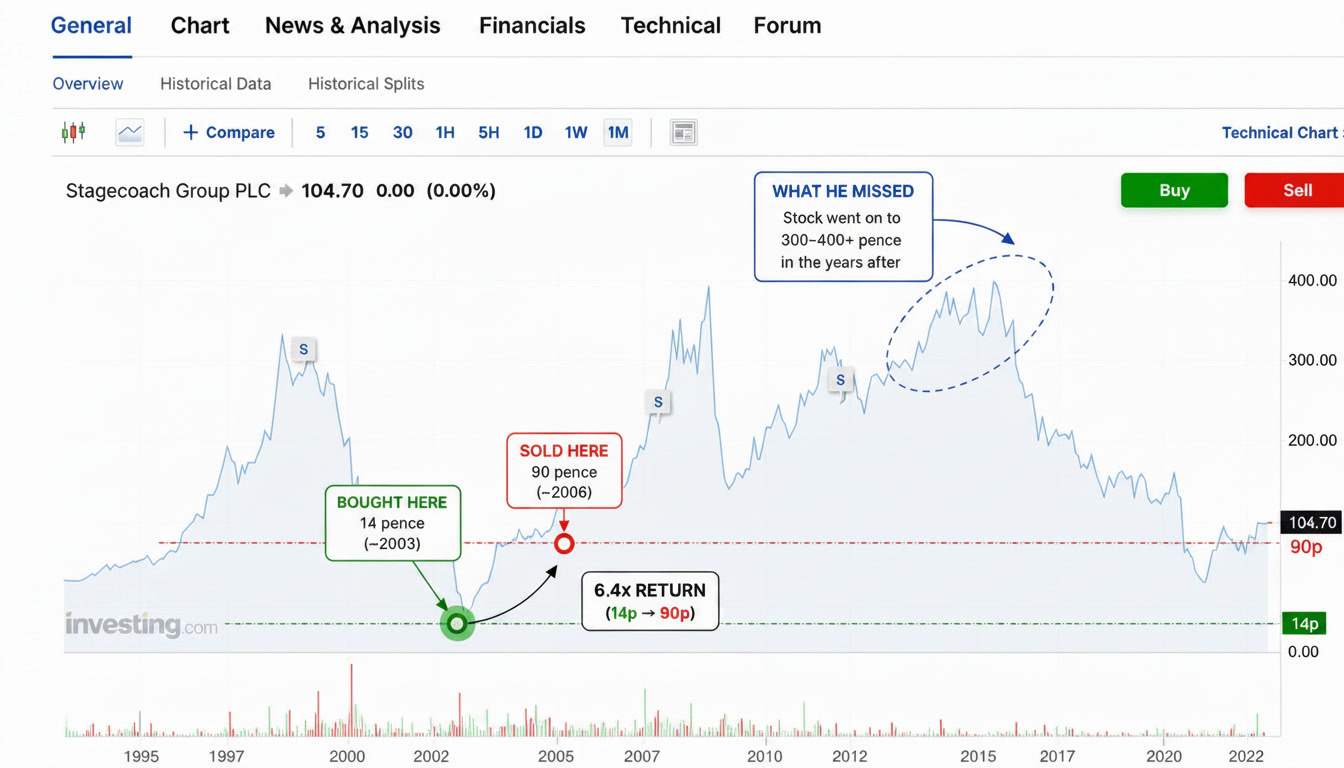
Sleep starts as a bargain hunter, buying cheap broken things. In late 2002 he buys a wrecked British bus company, Stagecoach, for pennies. It works perfectly. The founder returns, fixes it, the stock recovers, and Sleep sells into the bounce, pleased with himself.
Then he watches it keep climbing for years. Without him.
It nags at him until he finally says it outright.
“Our greatest error was the sale of Stagecoach, not the purchase of Conseco. Mathematically this error is far greater than the equivalent sum invested in a firm that goes bankrupt.”
He owned Conseco, and it lost money. He is saying that selling a winner too early cost him more than the stock that actually went to zero. A loss ends. A winner you sold keeps rising on your screen forever, billing you in regret.
The expensive mistake is rarely the thing that blows up. It is the thing you let go of, that goes on without you.
Two. Culture is what a company does when no one is watching
The company he keeps circling is Costco. What converts him is not a number. It is a story.
Costco lands a once in a lifetime deal on two million pairs of designer jeans, cheap enough to mark up hard and still beat every rival in America. Free money, and no customer would ever know. A buyer suggests exactly that. The founder refuses.
“Sinegal insisted on the standard mark up, arguing that if I let you do it this time, you will do it again. The contract with the customer must not be broken.”
Sleep sees the whole engine in that one moment. Costco hands its scale back to shoppers as lower prices, every day, and they reward it with loyalty that compounds for decades. He names the model, scale economies shared, and it becomes his entire philosophy.
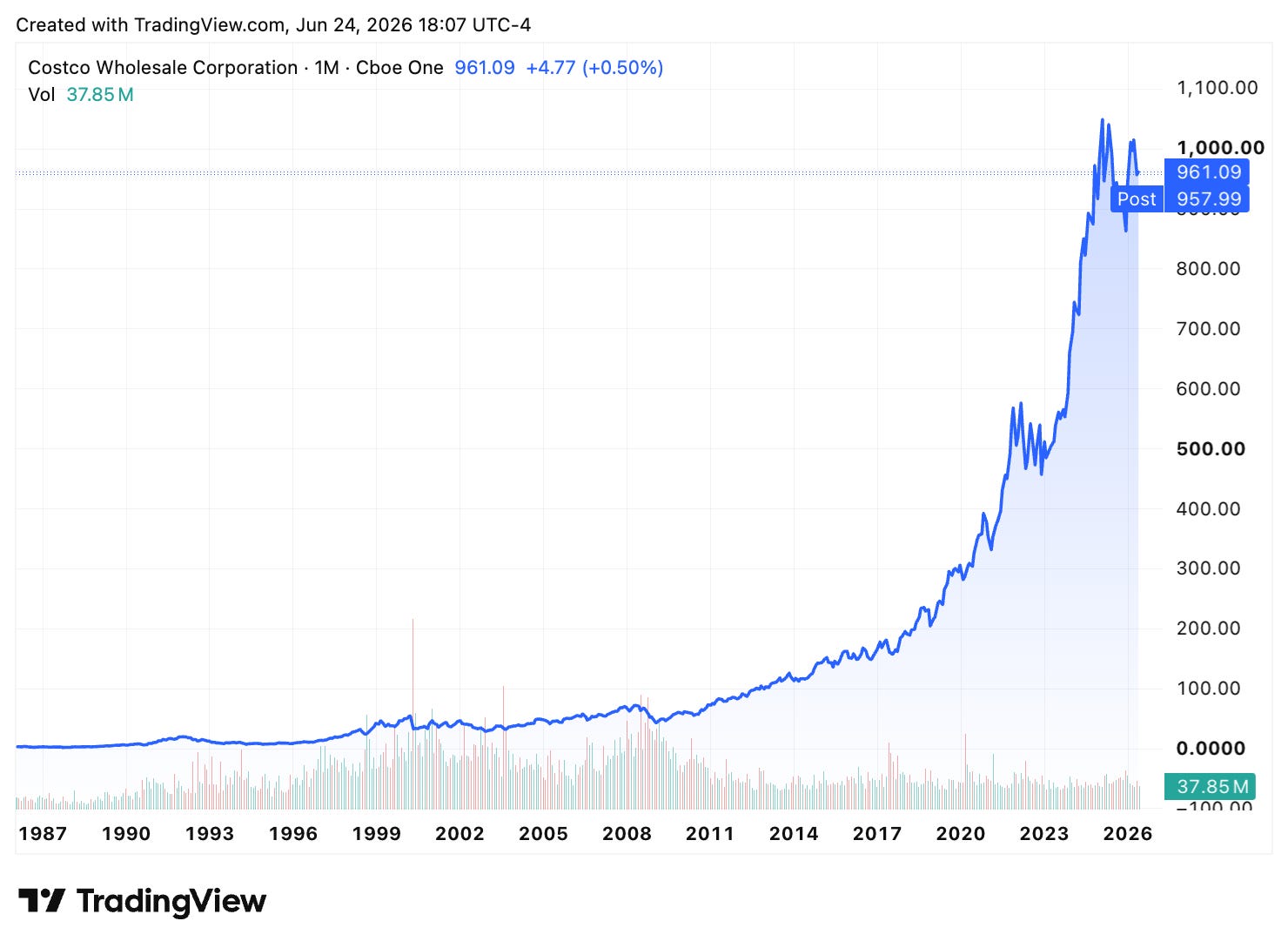
He buys around thirty nine dollars a share and figures it might reach the eighties or nineties over the years.
It trades near nine hundred and fifty today.
Three. He stares at the answer and writes down the wrong one
It is 2004. Sleep reasons it out from scratch. What would the most valuable company on earth look like? He lists the ingredients perfectly. A vast market. Rising barriers. Almost no capital tied up, so cash pours out the bottom.
Then he names the company that fits.
“A business such as eBay could be the most valuable in the world. So no, Costco is not perfect. Perhaps we should own eBay as well.”
eBay.
And here is the knife. He is writing about Amazon in the same letters. He has already noticed it might be walking the exact Costco path he loves. The better answer is on the previous page, in his own handwriting, and one of the sharpest investors alive points at eBay.
Before you judge him, see what he saw. At the end of 2004, eBay was worth 77 billion dollars. Amazon was worth 18. eBay was four times bigger, and the press was full of confident pieces explaining Amazon had no chance against it. Pointing at eBay was the obvious, sensible, consensus answer. He was simply early, and being early looks exactly like being wrong, even from inside your own head.
And the deeper reason he missed it is the most human thing in all the letters. He admits, years later, that Costco and Amazon and even a small insurer he owned all ran on the same engine, and he had filed them under three different industries without ever seeing it.
“My mistake in not recognising that these businesses share similar roots might be termed a framing error.”
The single best idea of his career was in his hands the whole time. He just kept calling it three different names. The genius was never that he saw it. It was that he kept looking until he did.
The lesson I have taped to the inside of my skull. Having the right map does not save you if you circle the wrong city. Listing the ingredients is not the same as recognizing the dish.
Four. His caution was cowardice in disguise
After all that work, Sleep writes a line that his first mistake was not buying Costco. It was not buying enough.
“Already your manager may have made his first mistake investing in Costco. From not buying enough.”
He works through the Kelly criterion, the math of how much to bet when the odds favor you, and the answer is merciless.
“Even if one is, say, 75 percent certain of being right, the correct weighting remains high at 47.5 percent.”
Forty seven percent. In one stock. He sees that all his careful four and five percent positions were never prudence. They were fear wearing the costume of discipline. He had believed in his best ideas too quietly.
So he lets Amazon grow to a sixth of the whole fund, warns his investors the ride will get rougher, and holds anyway.
For a rare business with a low chance of dying, spreading your money thin is not safety. It is cowardice with good manners.
Five. Doing nothing is the hardest job in the world
Then 2008 arrives and tries to kill him.
The fund falls 45.3 percent in a single year. His biggest position is cratering. His peers are dumping shares into the panic. Every nerve is screaming to do something, sell something, save something.
He does nothing. He sits in his chair and lets the businesses compound. And he explains why in what may be the best sentence in the whole collection.
“Buy shares in a great business at a reasonable price and let the business grow. This requires just one decision, to buy the shares, but in reality it requires daily decisions not to sell as well.”
Almost nobody manages it, he notes dryly, because doing nothing is the enemy of high fees. Munger seals it. You make your real money sitting on your assets.
In 2009 the fund rises 71.5 percent.
Hold both numbers a second. Down 45, then up 71, and you are still not back to even. That is the brutal arithmetic of a crash, the hole is always deeper than the climb out feels. He sat through every day of it without flinching, because the daily decision not to touch a great business is harder, and rarer, than any decision to act.
Anyone can buy. Sitting still while the position grows indecently large is the actual skill.
What he was holding the whole time
Look at what was in this man’s hands while he doubted himself.
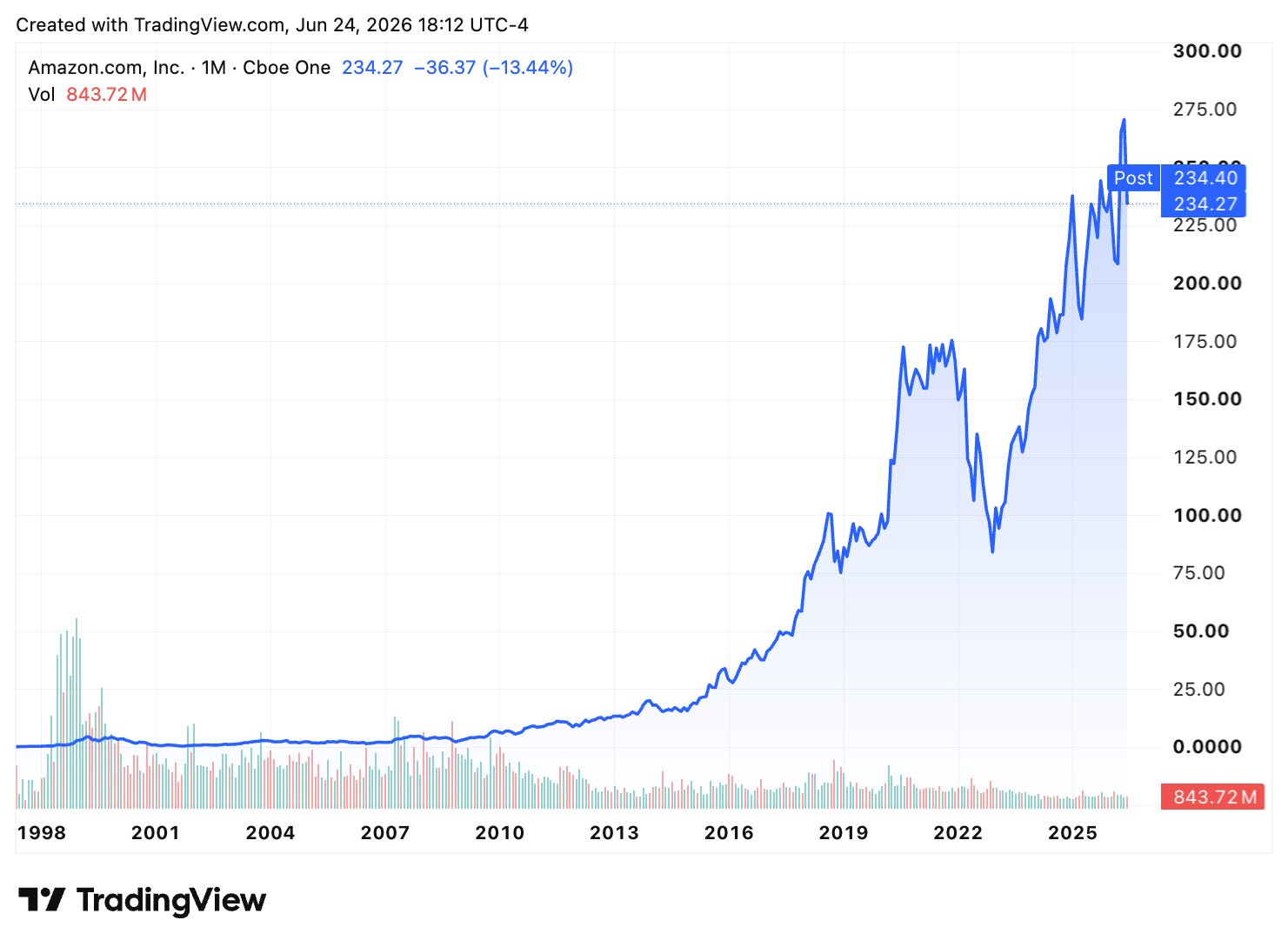
Berkshire Hathaway, around seven hundred and thirty thousand dollars a share today. Costco, which he wanted at thirty nine, near nine hundred and fifty now. Amazon, which he bought at around thirty dollars, would now be worth roughly fifty five thousand dollars at today's price after four stock splits.
He was holding the future. All of it. And even with it sitting in his account, he spent years circling eBay, sizing his bets too small, filing his best idea under the wrong name, fighting the urge to sell.
None of that was failure. That was the work. The letters are not the record of a man who was always right. They are the record of a man who kept looking until he saw clearly, and then had the nerve to sit still. That is rarer than being right, and it is the only part you can actually copy.
Why this is the only thing that matters
Sleep’s edge was never secret information. He read the same filings everyone read. He just stared at the same few companies long enough to finally see what they were, then had the stomach to hold them when everyone around him was selling.
Remember the line he opened my mind with. The best investors are not investors at all. They are entrepreneurs who never sold.
He built his thesis, and he held it through the doubt, the crashes, the years of being called wrong. Decades later, his entire fortune sits in the same three names he carried out of those letters. Amazon. Costco. Berkshire. He found them, he understood them, and then he simply never let go.
The one time his conviction cracked, he sold half his Amazon because it had grown too large for his comfort, and bought a little ASOS instead. Even he could flinch. The difference is he spent the rest of his life learning not to.
So I will leave you where the letters left me.
Open your portfolio tonight. One of those holdings you have half decided to sell is the one you are meant to hold for the rest of your life. You found it. You understood it. The only question left is whether you have the nerve to do nothing while it works.
The biggest investment mistake is not what you buy. It is what you cannot hold.
Cheers, Sandro
Part of the formula for a good investable company is that you trust the management. Meg Whitman did a terrible job at eBay; who could have known she would be so bad? She "bought Skype" but really just bought the running network and left the founders with the technology. Amazing.
It was shocking to watch eBay come out of the dot-com crash with such a strong franchise and never do anything with it.