


“People say, ‘How can you sell this for such a low price?’ I say, because it’s total crap.” - Gerald Ratner, Royal Albert Hall, April 23, 1991
Since 2012 Signet Jewelers has bought back about 56 million of its own shares. The share count went from 87 million to 38 million. It has destroyed more stock than it has left. Most people have never heard of Signet. Everyone has heard of Kay, Zales and Jared. Same company.
And it got here by accident.
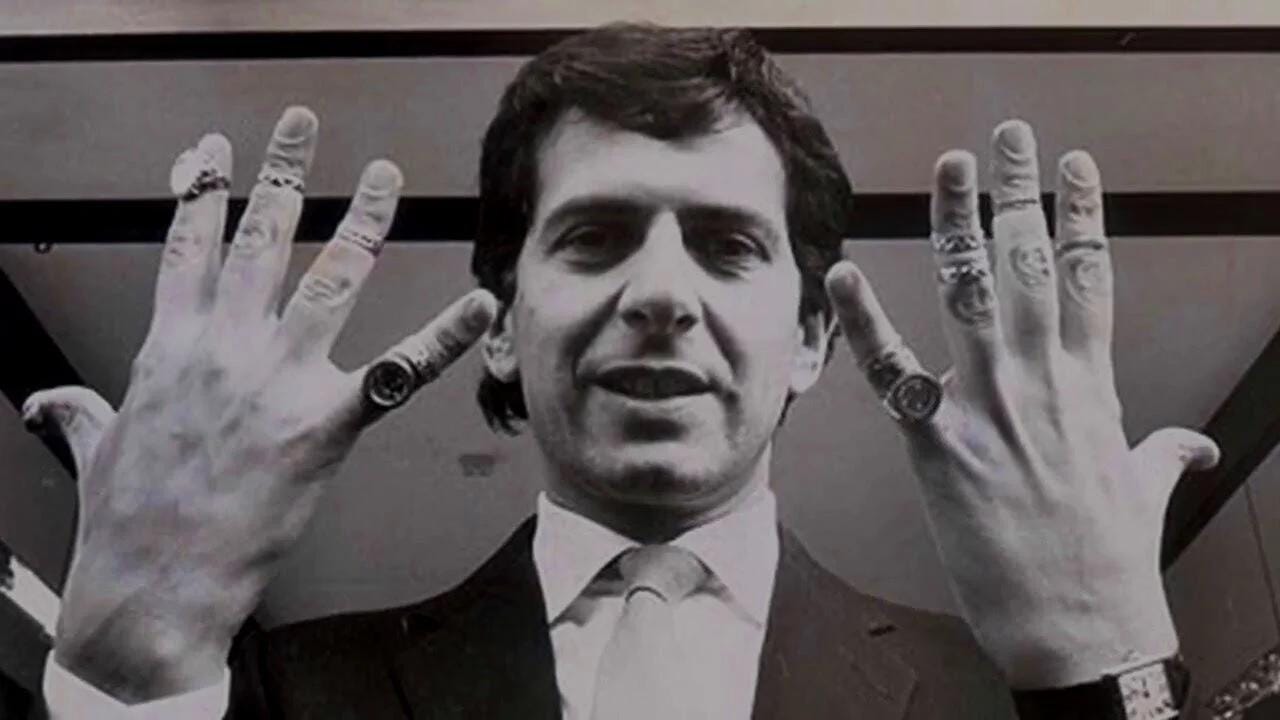
In April 1991 Gerald Ratner, who ran the biggest jewelry chain in Britain, stood in front of six thousand people and explained why his sherry decanter cost 4.95 pounds.
“Because it was total crap.”
He added that his earrings cost less than a prawn sandwich and would not last as long.
The company lost about 500 million pounds of market value. A profit of more than 110 million pounds became a 122 million pound loss. By the end of 1992 Ratner was gone. In 1993 the company renamed itself Signet so that nobody would have to say Ratners out loud, closed three hundred British shops, kept the American chains it had bought almost by chance, and spent the next thirty years becoming the largest diamond retailer on the planet.
Last month I wrote about Dillard’s.

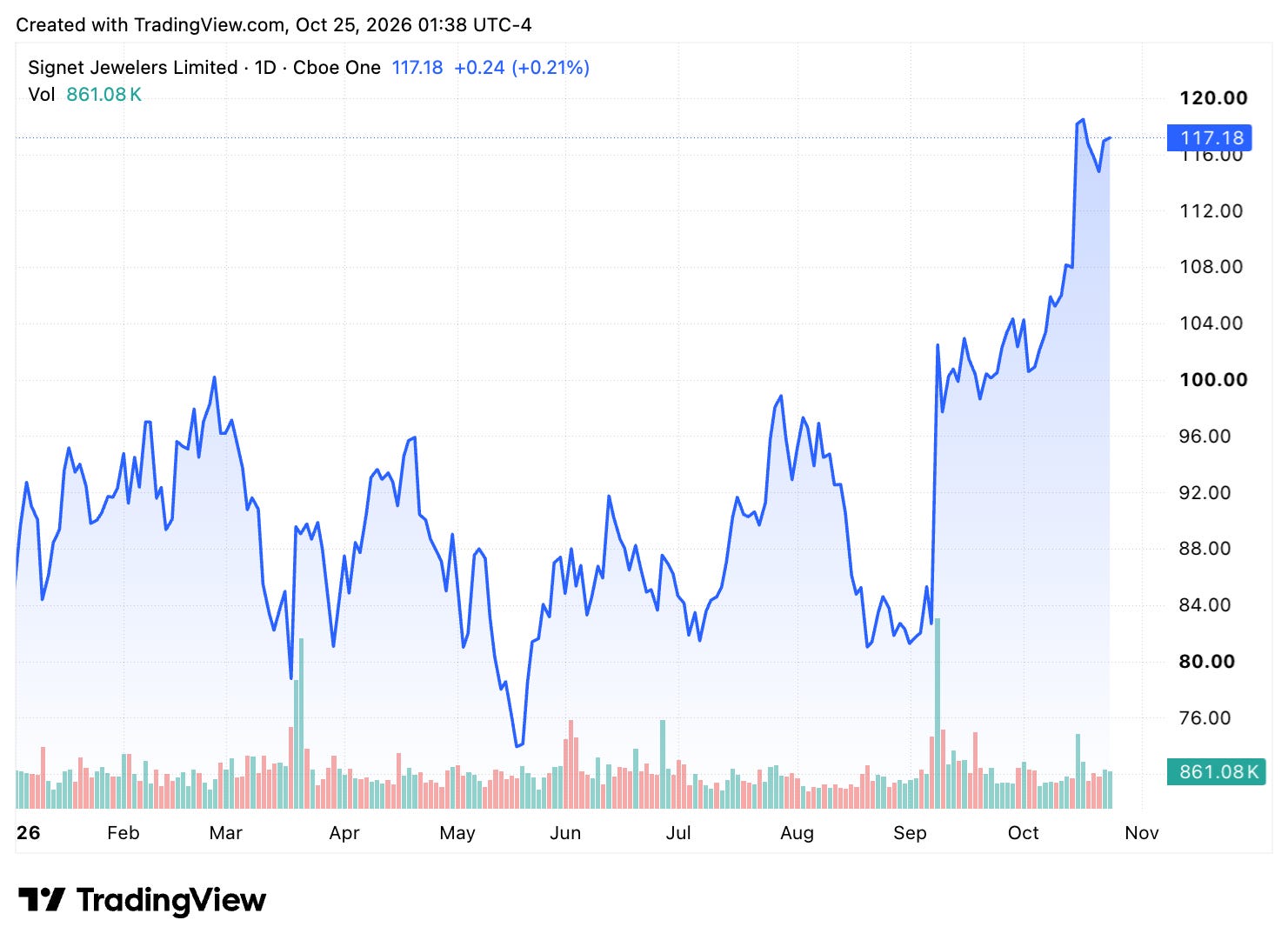
A hated department store, a family that bought back shares for twenty years, a stock that went up 23 times. That story is over. The money was made. The trick now is finding the next one while it is still hated, and nothing on Wall Street is hated the way diamonds are hated today. A writer on Value Investors Club published the short case on Signet. About 15 percent of the shares are sold short. In September Charles Schwab put it on a list of ten heavily shorted American companies. The stone that used to be the most expensive thing a young man ever bought is now made in a factory in India and sold by the kilo.
So this is where the autopsy starts.
