


“How did you go bankrupt?” “Two ways. Gradually, then suddenly.”
— Ernest Hemingway, The Sun Also Rises
Updated as of September 1, 2026. Sources are Xinhua, Bloomberg, Reuters, CRU, Sxcoal, Argus, Kallanish and the Australian Resources and Energy Quarterly.
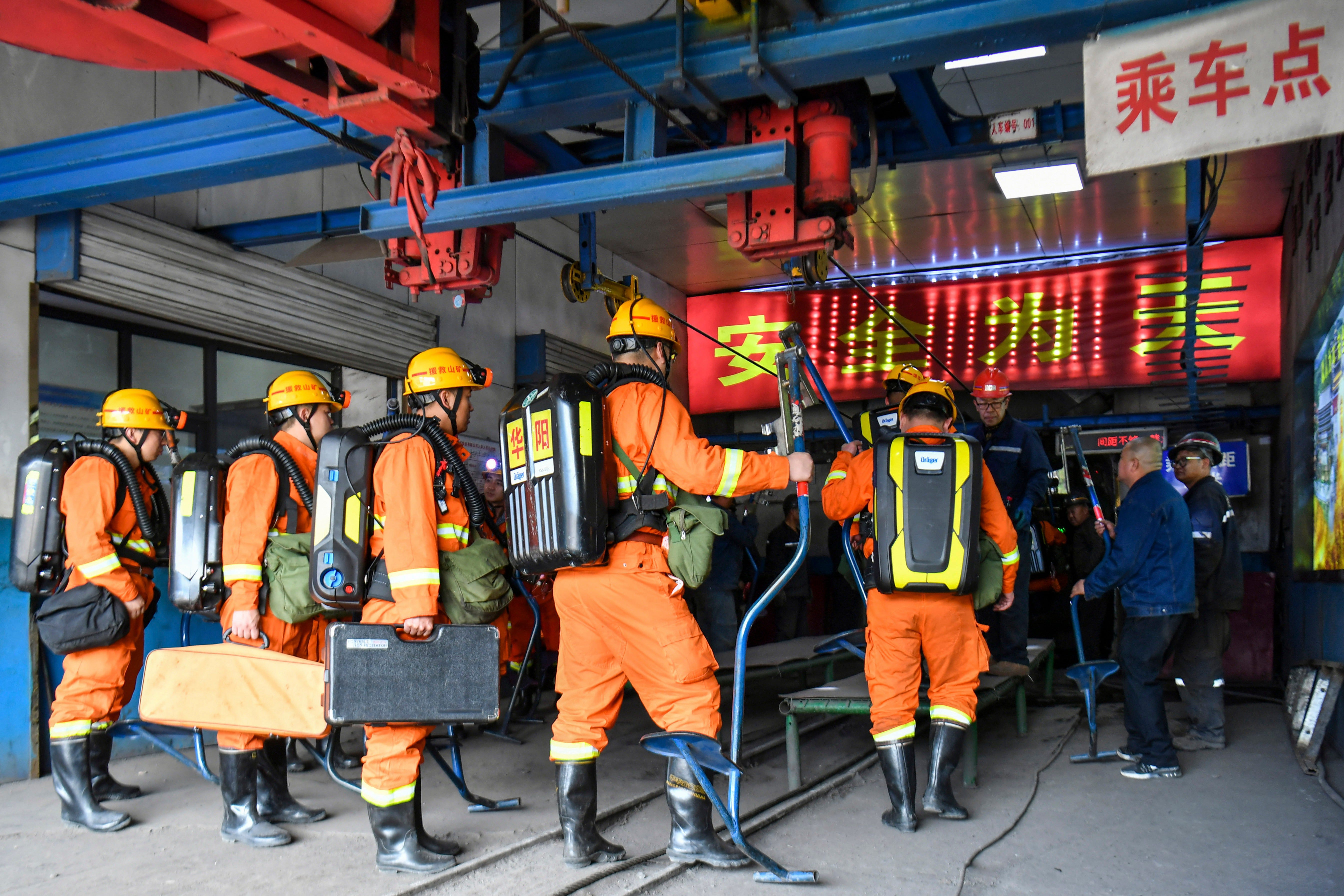
May 22. Shanxi province. 19:29 local time.
Two hundred and forty seven men were underground at the Liushenyu mine when the gas ignited. Eighty two did not come up.
Within days, Beijing dispatched twenty four inspection teams into all thirty one provinces with orders to find every mine digging past its permit. Shanxi produces a third of China’s coal. More than 130 million tonnes of annual coking coal capacity went dark, almost overnight.
To understand what happens next, you need to understand the strangest commodity market on Earth. It will take a few minutes, and at the end of it you will know why this market is currently holding its breath.
A small market with a civilization-sized job
Metallurgical coal is not the coal you burn for electricity. It is the coal you bake into coke, and coke is what strips the oxygen out of iron ore inside a blast furnace. 770 kilograms of it go into every tonne of steel made the traditional way, and about seventy percent of the world’s steel is still made the traditional way.
There is no substitute. Hydrogen steel lives in pilot plants and press releases. In the physical world of 2026, no coke means no iron, and no iron means no steel.
Now look at how little of this stuff actually moves. The seaborne trade is around 300 million tonnes a year. The world pours two billion tonnes of steel. In dollar terms, the whole seaborne met coal market is worth on the order of $60 billion a year. Apple spends more than that just buying back its own stock, a comparison I enjoy for reasons regular readers will understand. 🙂 A market this small carrying a job this large is a structural absurdity, and it gets better.
Only four countries export it in size. Australia, the United States, Canada, Russia. Australia alone is about half of the seaborne trade, and around 85 percent of Australia’s share comes out of one state, Queensland, moving down a handful of rail lines into three ports. India, Japan, Korea and Europe import nearly everything they use. China mostly supplies itself, until the day it doesn’t.
And none of this can be fixed quickly. A new coking coal mine takes five to ten years from decision to first tonne, the best geology is already taken, and banks stopped financing coal years ago. Higher prices cannot summon new supply. They can only ration demand, and you are about to see why demand refuses to be rationed.
One more detail, and it is the one that loads the spring. Most tonnes move on long-term contracts. The freely traded spot market is a thin sliver on top. So when anything goes wrong anywhere, every desperate buyer on the planet converges on the same few spare cargoes.
Economists would say that both supply and demand are inelastic. I use a different word.
Nervous.
The tape
Do not take my word for it. Take the tape’s.
In 2008, the annual benchmark roughly tripled, to about $300 a tonne.
In 2011, Cyclone Yasi and a La Niña summer flooded Queensland’s mines. The quarterly contract hit $330, a record at the time. One weather system.
In 2016, Beijing cut the number of days its mines were allowed to work from 330 to 276. Not a war. Not a disaster. A calendar change. The price went from $75 to over $300 in six months. Beijing relaxed the rule in November and the price came back down almost as fast.
In 2020, China banned Australian coal for political reasons. By October 2021 the Chinese import price hit $410, an all-time high, while the Australian export price sat far below it. The same rock briefly carried two prices, split by a border and a grudge.
In 2022, Russia invaded Ukraine. The benchmark went above $650.
At the peak of that last panic, the Australian government’s own commodity desk observed that met coal was moving more than $15 per day, “well above the typical level of under $1 per day.”
Fifteen years. Five detonations. The triggers had nothing in common. Weather, a calendar, politics, war. And notice that every spike collapsed nearly as fast as it formed. The 2022 record halved within a year. Nervous cuts in both directions, which is exactly why nobody can model this market. The structure never changed. Small market. Four sellers. No substitute. Thin spot. When this market is asked a question, the price does all the talking.
Why demand cannot blink
It is my favorite piece of industrial logic anywhere.
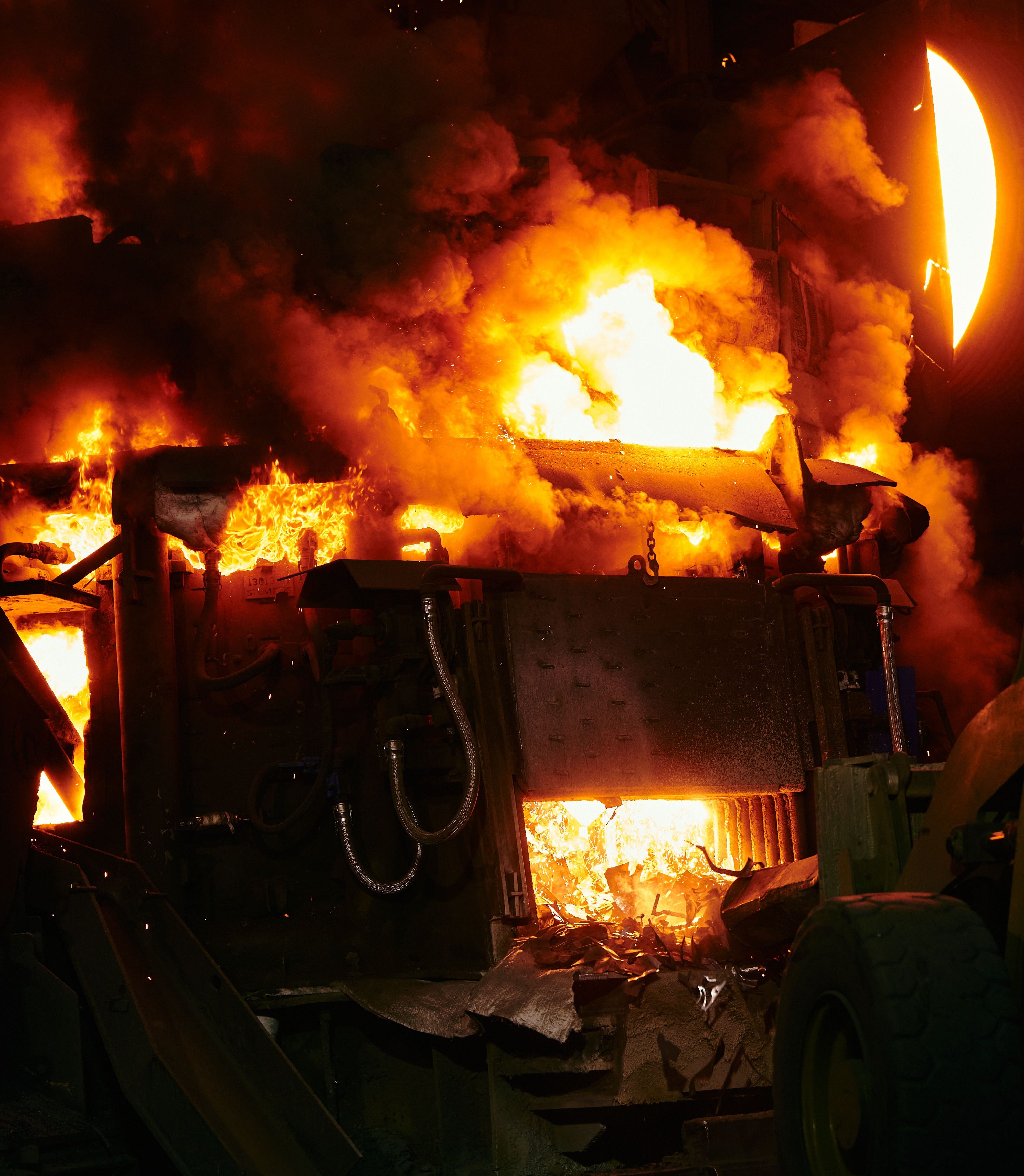
A blast furnace runs continuously for fifteen to twenty years. Inside it sits molten iron at fifteen hundred degrees. If the furnace cools, the iron freezes solid in the hearth. Steelmakers call the frozen mass a salamander, and they remove it with explosives. Then they rebuild the furnace. A full reline costs $300 to $400 million and months of zero production.
So the steel mill does not stop buying coal. It cannot afford to.
Walk the math with me. At $150 coal, the coal inside a tonne of steel costs about $115. At $600 coal, it costs $460, which is more than the entire normal cost of making the steel. In 2022 that exact scenario played out, and the result is the punchline of this whole post. European furnaces did go dark that year, because gas and electricity prices went up tenfold. Coal at four times its normal price did not cause a wave of permanent blast-furnace closures. Anywhere. American steel hit $1,955 a short ton that cycle, a record, so the mills passed the coal bill straight to their customers and the furnaces kept breathing.
Demand for this commodity did not flinch at a fivefold price increase. Which means when supply fails, there is no cushion. Nobody steps back. The price simply travels until it finds the number where the panic stops.
That is what nervous means, mechanically.
August 2026
Which brings us back to Shanxi.
Of the capacity switched off in May, 50 to 60 million tonnes was still offline in mid August. The consultancy CRU estimates China is missing a tenth of its domestic supply, “currently 10% of domestic supply” in their words, and expects the shortage to run to year end. Mines that reopened are running at seventy or eighty percent, because it is hard to set records with an inspector standing next to the longwall.
Coking coal futures in Dalian rose 46 percent in August. That is the largest monthly move since the contract began trading in 2013. The previous record, 38 percent, was set in July 2025. The two biggest months in the history of the contract have now happened within fourteen months of each other. The nervous market is getting more nervous.
And yet. The seaborne market moved only half as much. Australian premium coal fell ten percent to $215 on August 7 even as Chinese domestic coal sat near $296. By month-end, seaborne premium had recovered to around $270, up roughly 25 percent for August against Dalian’s 46 percent surge. Chinese low-sulfur coal ended the month near $356 ex-washplant. The raw gap narrowed, but remained close to $85, in a market whose entire history says gaps do not sit open.
How? Because China plugged the hole overland. In July, Mongolia and Russia together supplied 87 percent of China’s coking coal imports. Mongolia shipped 60 million tonnes last year and might reach 80 this year. But Mongolian coal is blending-grade material, not the premium coal that makes premium coke. China has also been draining its port stockpiles and simply making less steel, output is down three percent this year.
Every one of those cushions is finite.
And one cushion is already leaking. In June, Chinese imports of Australian coking coal rose 46 percent year on year. The base is tiny, Chinese purchases of Australian coal had collapsed by a third the year before, but the direction has changed. China is back on the water, selectively, for the premium tonnes Mongolia cannot replace.
Meanwhile the other buyer is standing at the shoreline checking its watch. India imports 95 percent of its coking coal, coal is 40 percent of its cost of making steel, and its imports rose 32 percent last year and another 15 percent through May. Indian mills have spent the monsoon season drawing down stockpiles instead of buying, because Chinese steel exports are crushing their margins and premium coal already averages $236 this year, a quarter higher than last. Priced out of Australian premium, Indian mills have been shopping the discount shelf instead, Russian cargoes, Mozambican cargoes, and American high-vol coal, which has spent all year trading at an unusually deep discount to the Australian benchmark. The discount shelf is where India planned to wait this out. The monsoon ends in September/October. Every year, on schedule, India returns to the spot market to restock.
On August 12, the discount shelf caught fire. Literally. At 2:15 in the morning, carbon monoxide alarms went off at the Longview mine in West Virginia, one of the larger American high-vol coking coal operations. Every miner got out. The coal did not. The mine has been sealed shut to starve the fire of oxygen, roughly three million tonnes of annual supply behind it, with no timetable for reopening. It is the second fire at the same mine in two years, and it burns in exactly the corner of the market where India shops.
One of Australia’s great premium mines, Moranbah North, suffered a gas ignition in March 2025 and has not cut coal since. Five million tonnes a year, dark for seventeen months. A hole in the premium shelf and a fire on the discount shelf, at the same time.
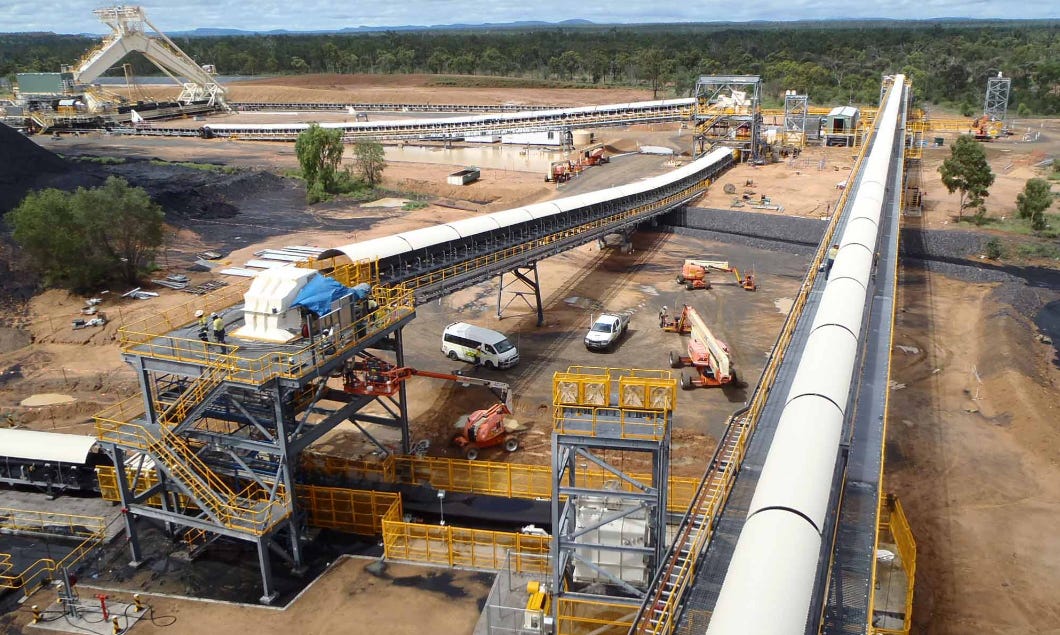
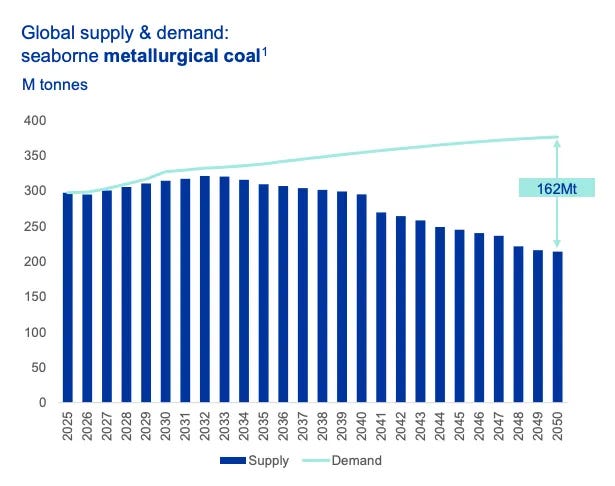
Even BHP, the most sober voice in the industry, wrote in August that strong Indian demand and supply disruptions have “tightened an otherwise balanced seaborne market.”
Gradually, then suddenly
The gap between Chinese and seaborne prices closes one of two ways.
Either the inspectors go home, Shanxi restarts, and the Chinese price falls back to meet the sea. That is the calm ending.
Or the restarts keep stalling, China steps onto the water for premium tonnes at the same moment India comes back from the monsoon, and two buyers ask a thin market one question at once, with five million tonnes of premium supply still missing and the American discount shelf sealed shut.
I do not need to predict which. The tape at the top of this post already told you what this market does when it is asked a question. A calendar change quadrupled it. A flood set a record. A ban created two prices for one rock. A war took it above $650.
Eighty two men died in Shanxi in May, and I will not dress that up as a trading opportunity. It is a tragedy, full stop. But it set in motion the oldest sequence in this market, the one that always starts slowly and never ends that way.
The seaborne price has moved. But next to China, it has barely twitched.
Related metallurgical coal research
What the End of the War in Ukraine Means for Seaborne Met Coal
Alpha Metallurgical Resources (AMR) vs. Warrior Met Coal (HCC)
Gradually, then suddenly.
Cheers, Sandro
Like and Restack. Apparently this is the only coal Substack won’t promote.🙂
Ot must be similar thinking that is part of the rational why long term insiders and already major shareholders have been buying up AMR shares
Good article. In your opinion, which USA met coal producer (AMR, CNR, HCC, METC) has the most coal available for the spot market? Using your five significant spot price increases as examples, to take advantage of the price increase, a producer has to have coal available to sell and ship on spot market and not be bound on longer term fixed price contracts. Do you have an opinion on who can take advantage of the spot price increase the most?